Learn new vocabulary Addition Worksheets for Ages 5-9
4 filtered results
-
From - To
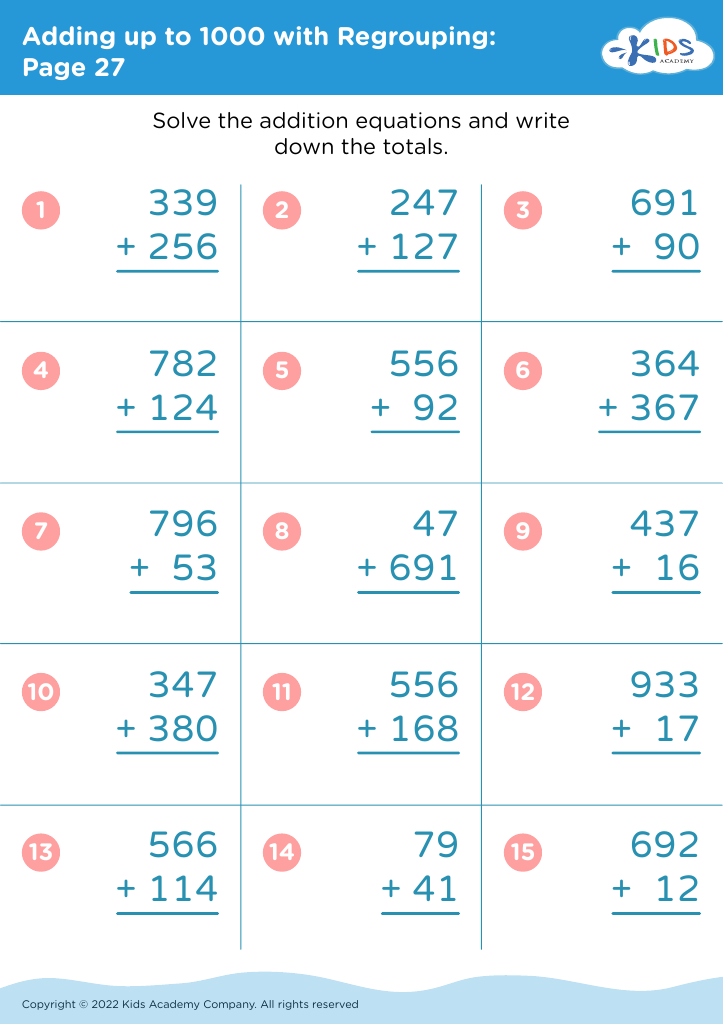
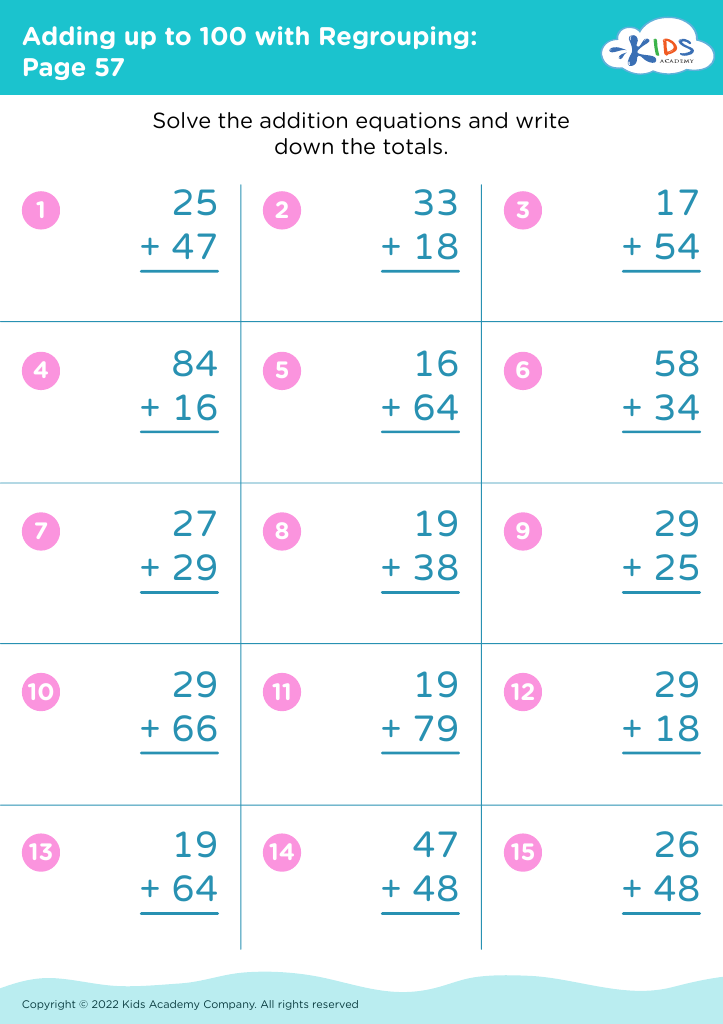
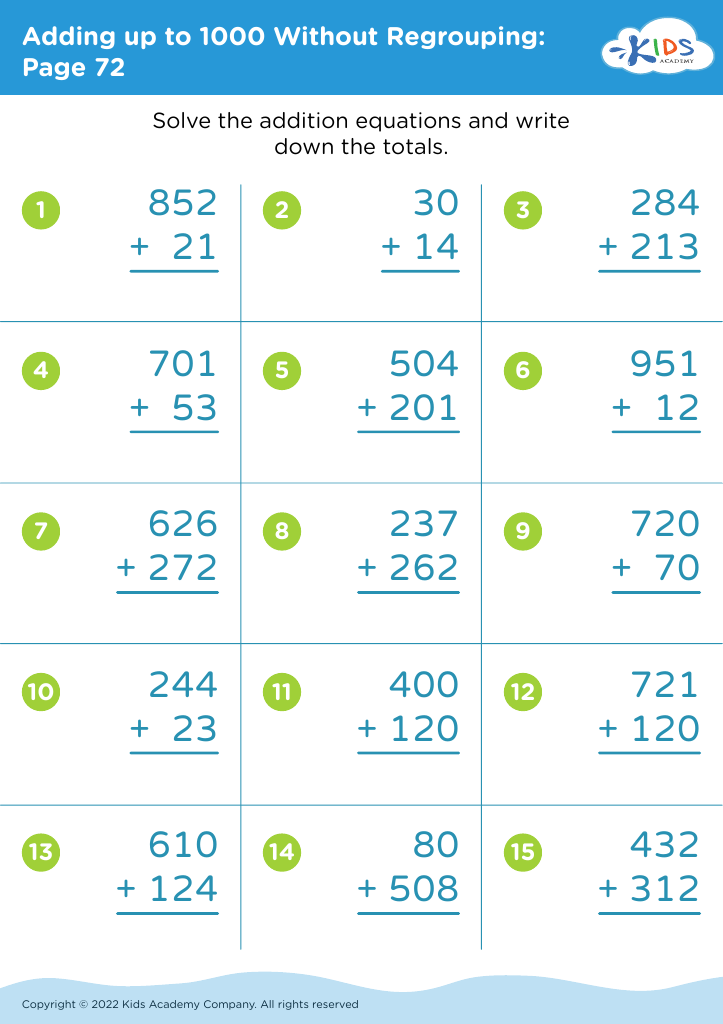
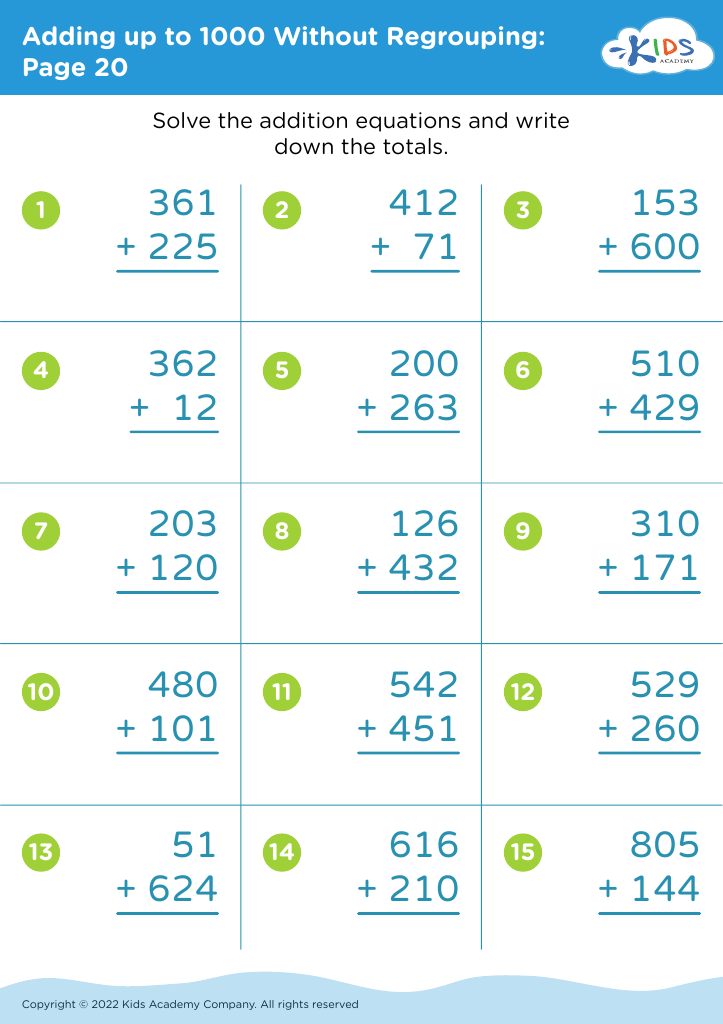
Enhance your child's learning experience with our "Learn New Vocabulary Addition Worksheets" tailored for ages 5-9! These interactive worksheets are designed to teach essential math vocabulary while improving addition skills. Each worksheet includes fun illustrations and engaging activities that stimulate young minds, making learning enjoyable and effective. By integrating vocabulary building with math practice, children will develop a well-rounded understanding of numerical concepts. Perfect for home or classroom use, our resources encourage independent learning and boost confidence in young learners. Explore our collection today and give your child the tools they need to succeed in math and language!








Caring about vocabulary acquisition in children aged 5-9, particularly in the context of mathematical terms like "addition," is crucial for several reasons. First, a solid vocabulary lays the foundation for effective communication and understanding of mathematical concepts. When children grasp terms like "sum," "add," and "total," they are better equipped to engage in math-related discussions and problem-solving.
Additionally, a strong vocabulary boosts overall academic performance. Research shows that children familiar with academic terminology perform better in tests and assessments. It enhances their ability to follow instructions, ask questions, and apply learning in practical contexts.
Furthermore, introducing vocabulary related to addition can help create connections across subjects. For instance, integrating math terms in storytelling improves literacy skills while reinforcing mathematical concepts.
In the social context, teaching vocabulary fosters confidence. Children who understand and use math terms are more likely to participate in class, share their thoughts, and collaborate with peers.
Ultimately, building a rich vocabulary supports cognitive development and prepares children for future educational challenges. Parents and teachers play a pivotal role in this journey by incorporating fun and engaging vocabulary activities, thus nurturing both language and mathematical skills that are essential throughout life.








