Practice writing numbers Addition Worksheets for Ages 5-9
6 filtered results
-
From - To
Welcome to our comprehensive collection of Practice Writing Numbers Addition Worksheets designed specifically for children aged 5 to 9. These engaging worksheets aim to strengthen your child’s understanding of addition while improving their number writing skills. Each activity is thoughtfully crafted to promote both numeracy and fine motor skills, making learning fun and interactive. With colorful visuals and varying difficulty levels, children will enjoy mastering addition concepts at their own pace. Perfect for home or classroom use, our worksheets provide hours of productive practice that help build a solid foundation in mathematics. Start your child's math journey today!
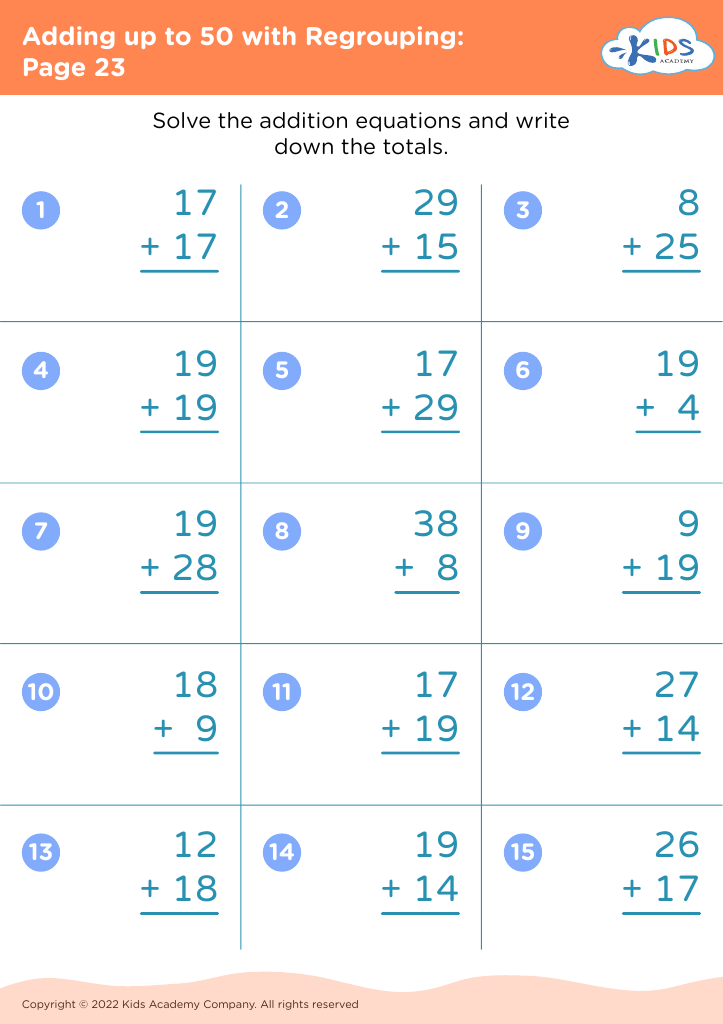
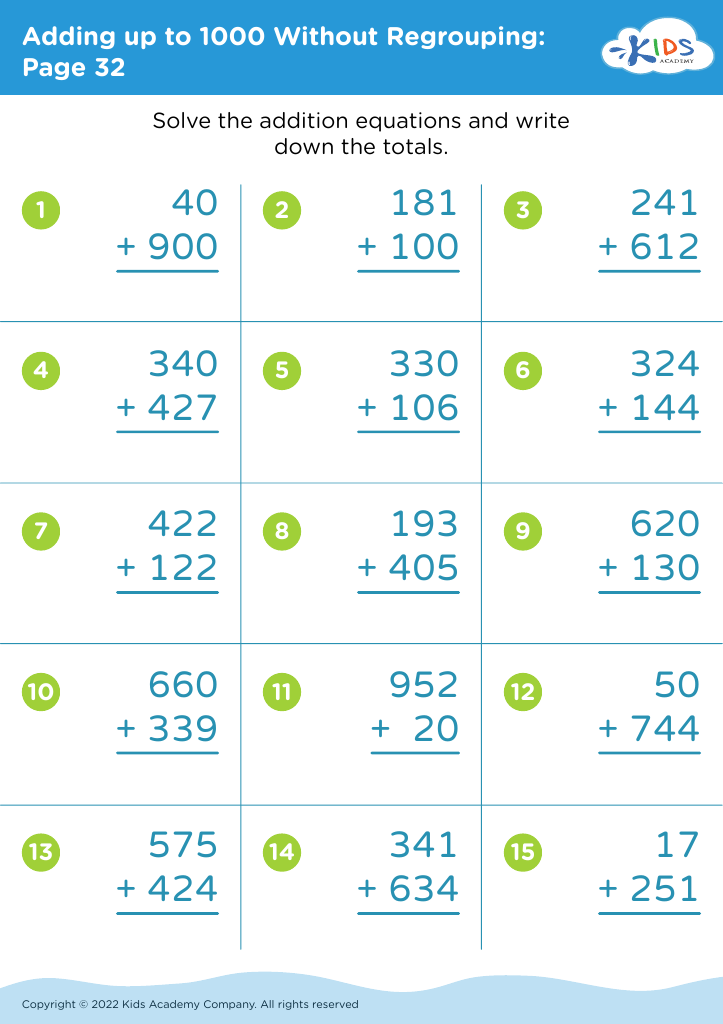
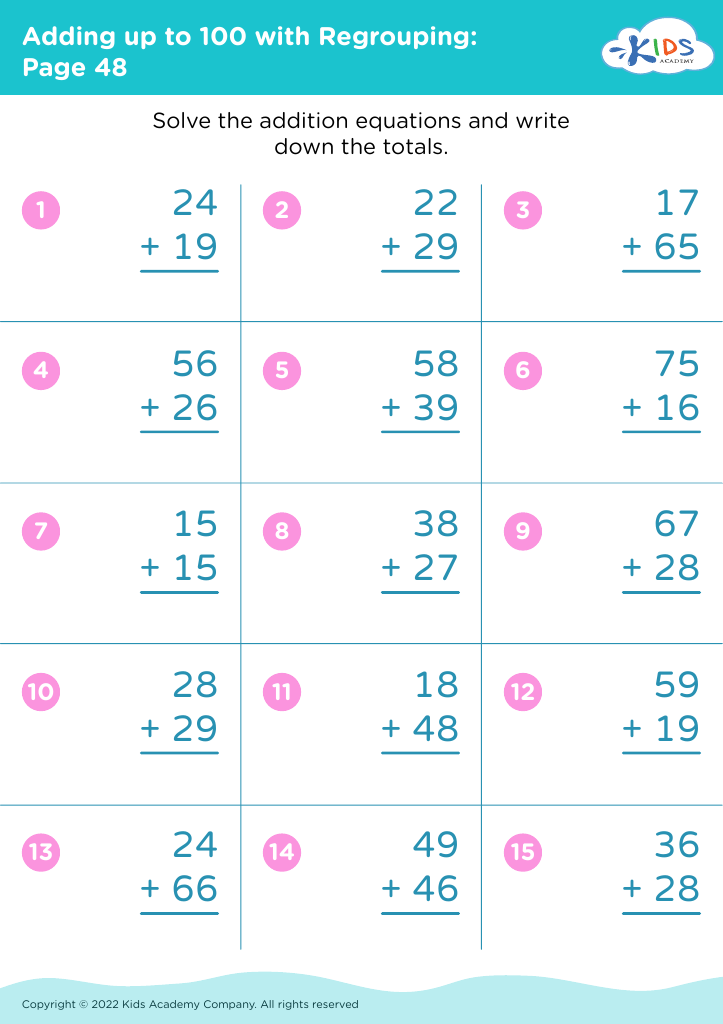
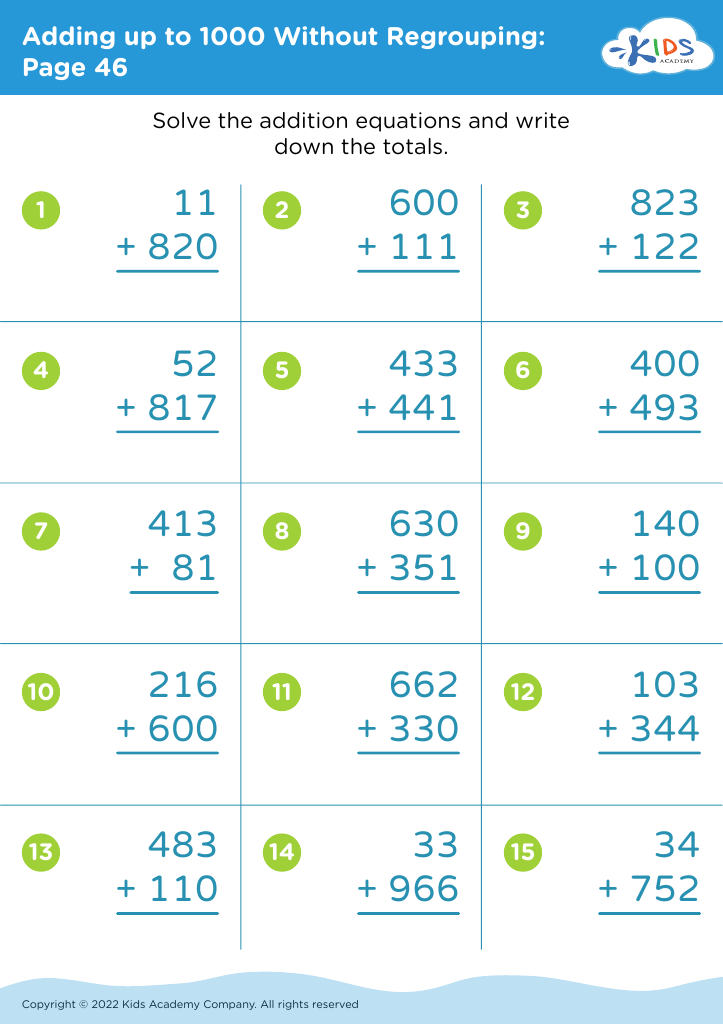
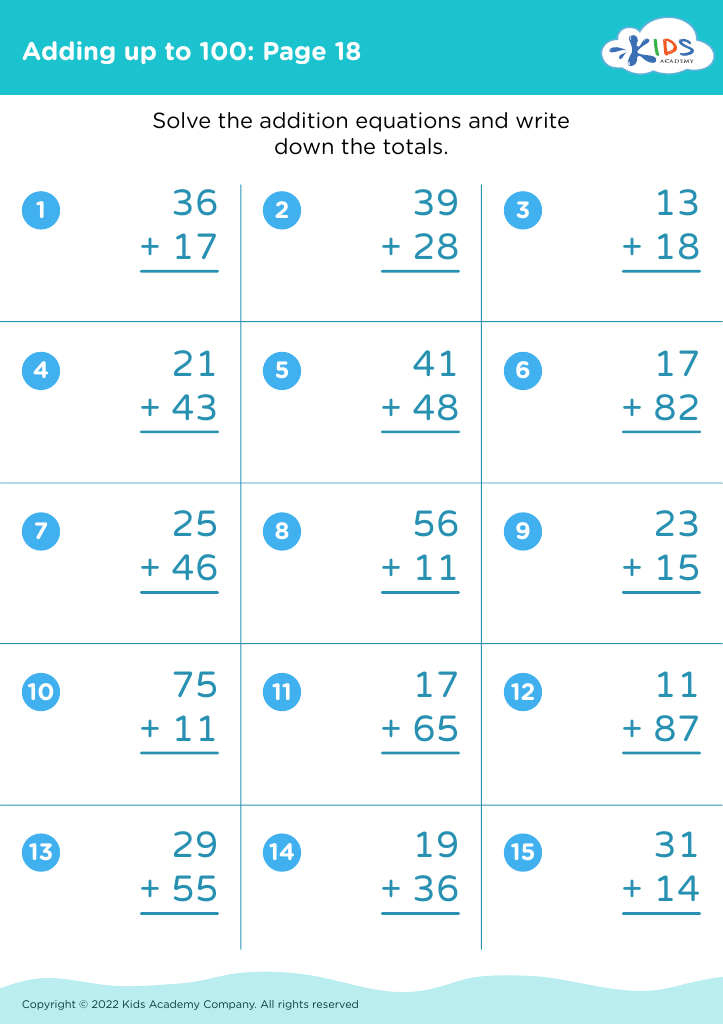
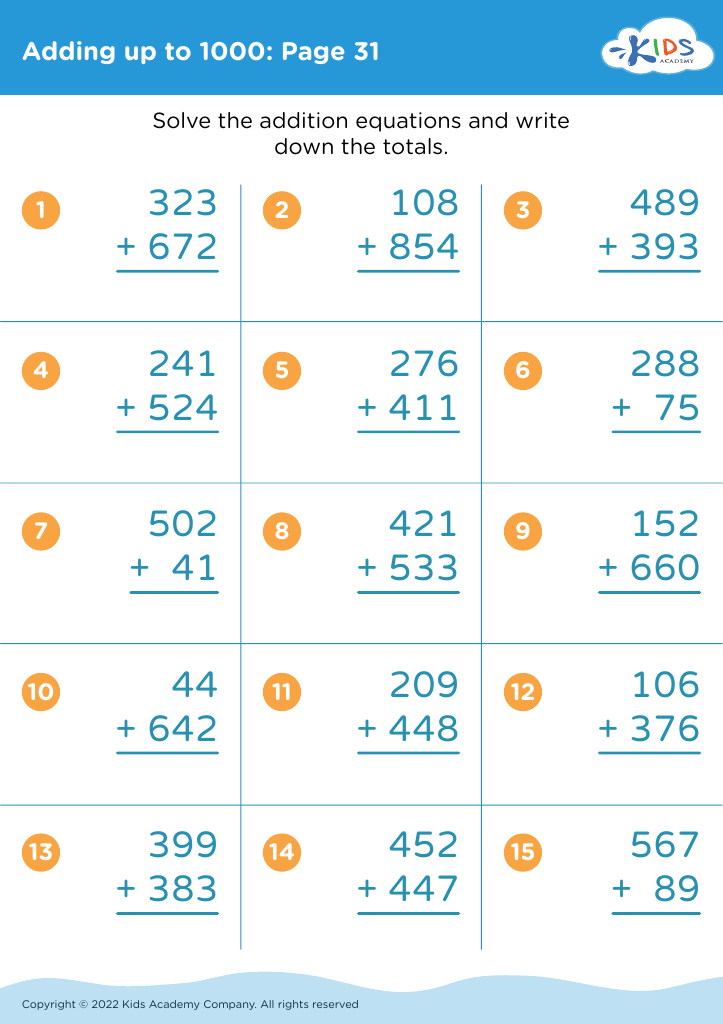








Practicing writing numbers and addition is crucial for children ages 5-9 as it lays the foundation for their mathematical understanding and overall academic success. Firstly, mastering number formation enhances fine motor skills, promoting hand-eye coordination and dexterity that are essential for writing in general. Additionally, writing numbers helps children develop a connection between the symbol and its value, reinforcing their understanding of counting and numerical relationships.
Furthermore, early exposure to addition fosters logical thinking and problem-solving abilities. As children learn to add, they begin to understand concepts such as quantity, patterns, and sequences. This cognitive engagement is vital, as it encourages them to think critically and approach problems with a solution-oriented mindset.
Moreover, practicing addition helps build confidence. As children gain competence in basic arithmetic, they feel a sense of accomplishment, which can motivate them to tackle more complex mathematical concepts as they progress in school.
Ultimately, investing time in practicing writing numbers and addition contributes to a strong academic foundation, supports lifelong learning, and prepares children for future challenges in math and beyond, making it a priority for both parents and teachers.








