Problem-solving abilities Addition Worksheets for Ages 5-9 - Page 2
29 filtered results
-
From - To
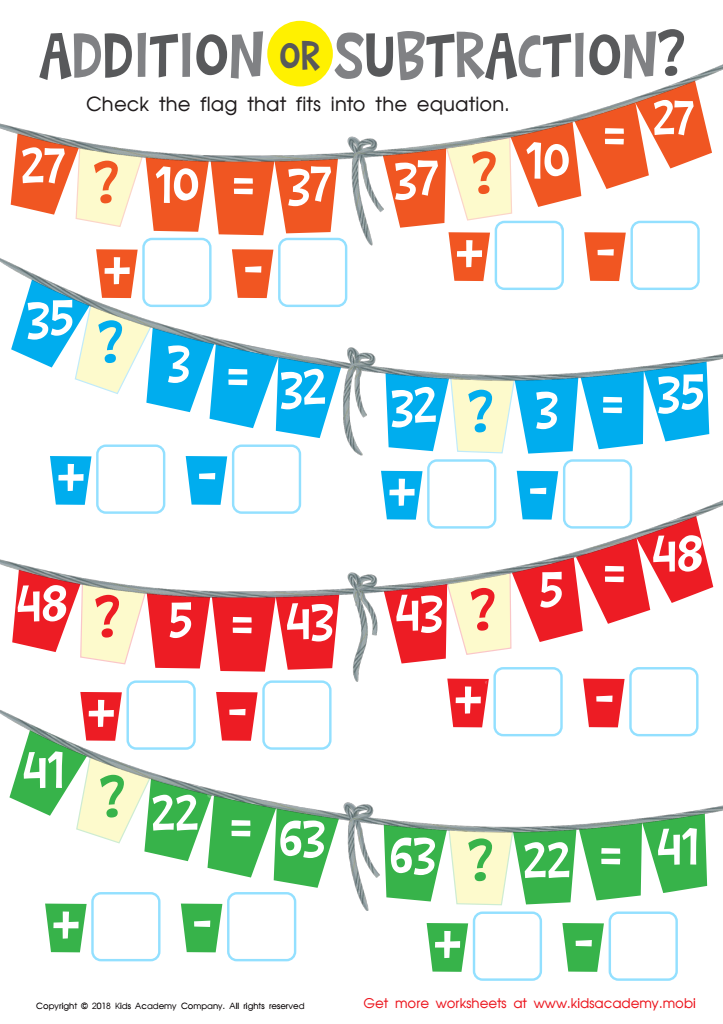
Addition or Subtraction? Worksheet
 Assign to My Students
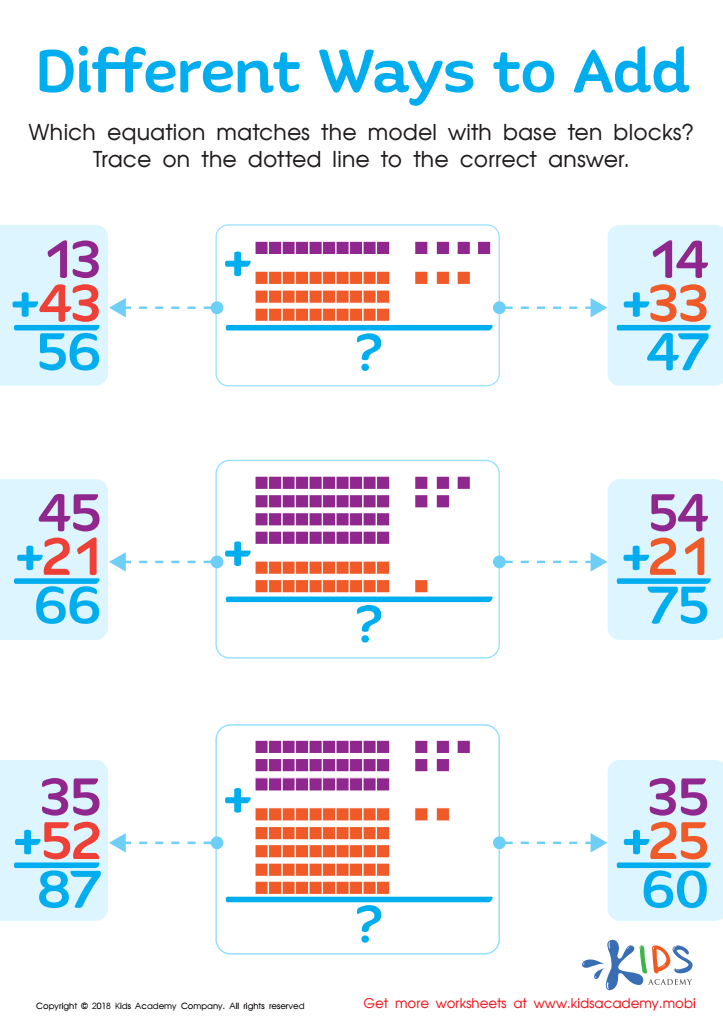
Different Ways to Add Worksheet
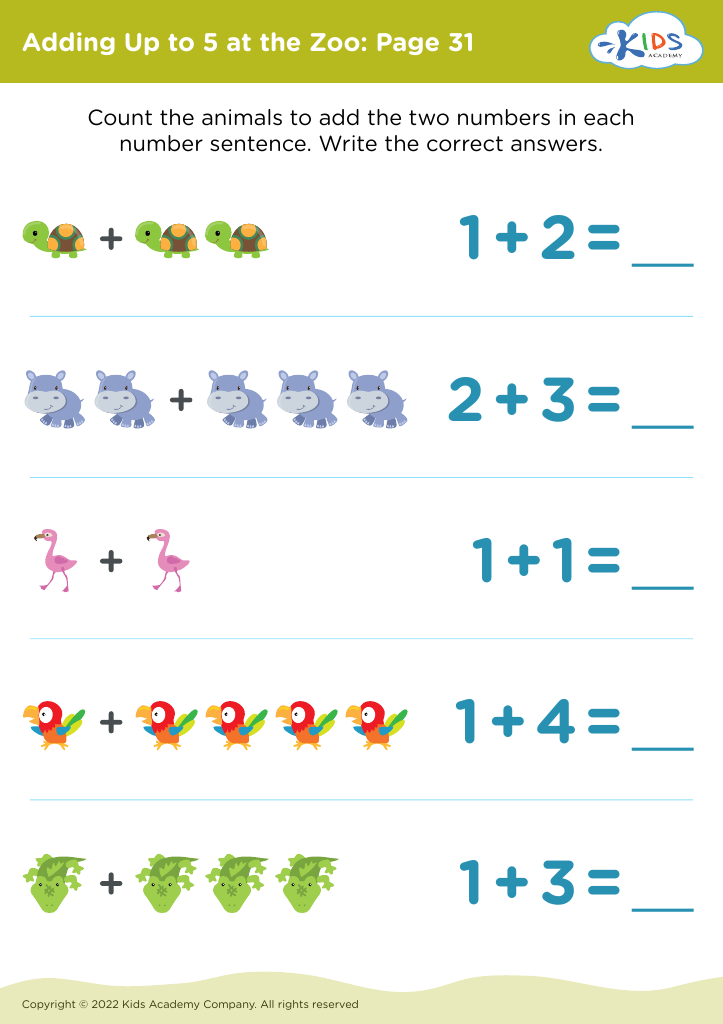
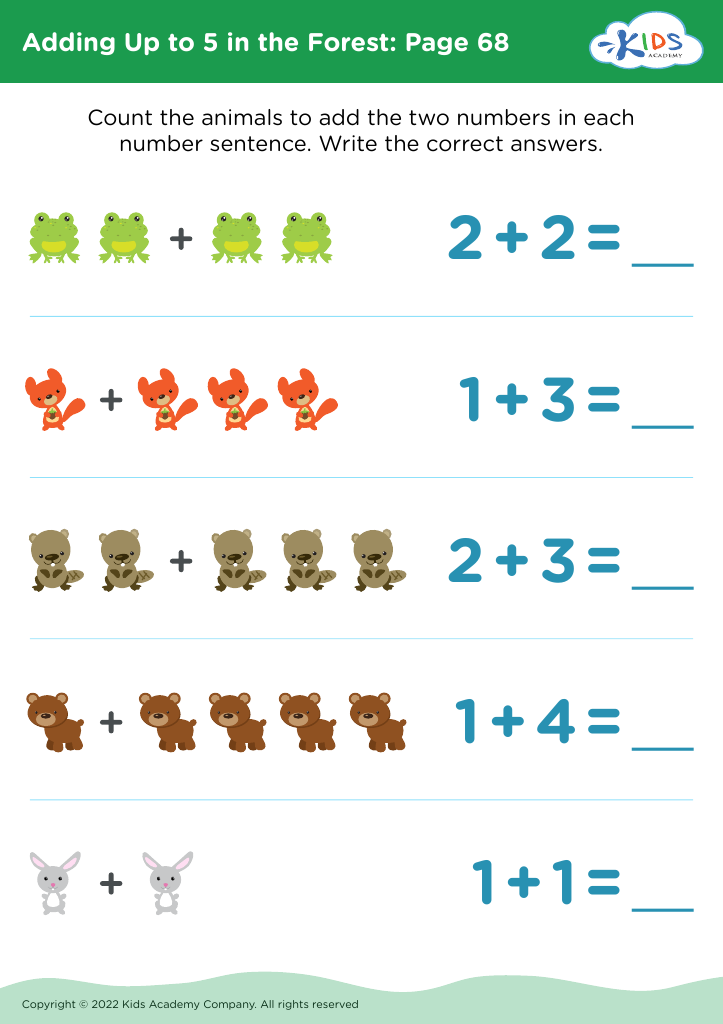
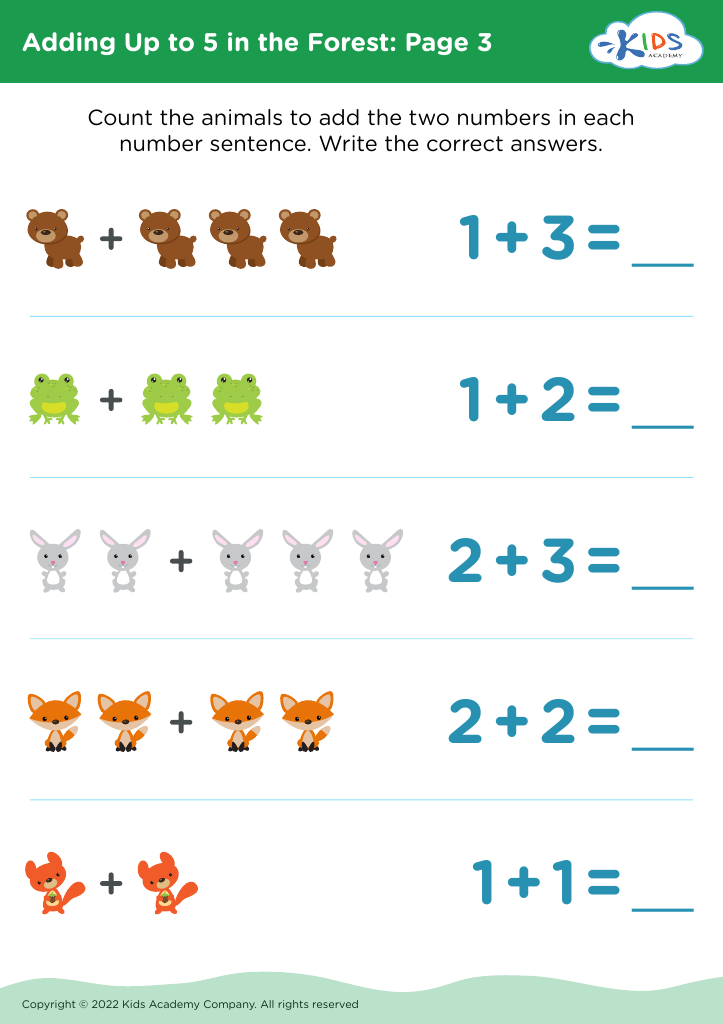








Problem-solving abilities, particularly in addition for children aged 5-9, are crucial for several reasons. First, developing strong addition skills lays the groundwork for broader mathematical understanding. Mastery of basic addition helps children tackle more complex concepts in the future, such as subtraction, multiplication, and even division, enhancing their overall mathematical literacy.
Furthermore, problem-solving fosters critical thinking skills. It encourages children to analyze information, make connections, and strategize solutions, which are essential skills not only in mathematics but in life situations as well. By engaging with addition problems, children learn to approach challenges methodically, boosting their confidence as they navigate various tasks.
Additionally, cultivating these abilities in early learners supports social and emotional development. Collaborative problem-solving activities can teach teamwork, patience, and communication. Children learn to express their thought processes and listen to others, fostering a sense of community within the classroom.
Finally, as parents and teachers nurture these skills, they promote a joy of learning and curiosity in young learners. Problem-solving becomes a fun and engaging process, laying the foundation for a positive attitude toward mathematics and education in general that can last a lifetime.








