Reading clocks Addition Worksheets for Ages 5-9
3 filtered results
-
From - To
Discover our engaging Reading Clocks Addition Worksheets designed for children aged 5-9! Perfect for young learners, these worksheets offer a fun way to develop essential math skills by integrating time-telling with addition practices. Kids will enjoy solving problems that incorporate clock visuals, helping them understand both mathematics and the concept of time through interactive exercises. Our resources are ideal for homeschooling or classroom settings, making learning playful and effective. Enhance your child’s confidence in math and time management with our thoughtfully crafted worksheets that encourage critical thinking and foster a love for learning. Explore the joy of reading clocks while practicing addition today!
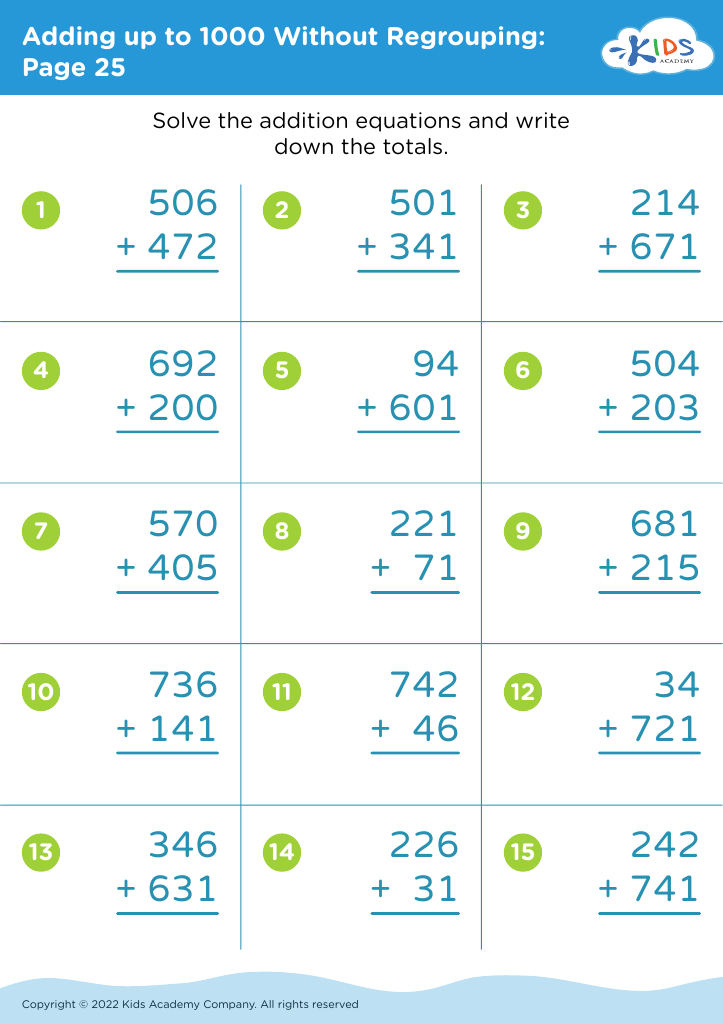
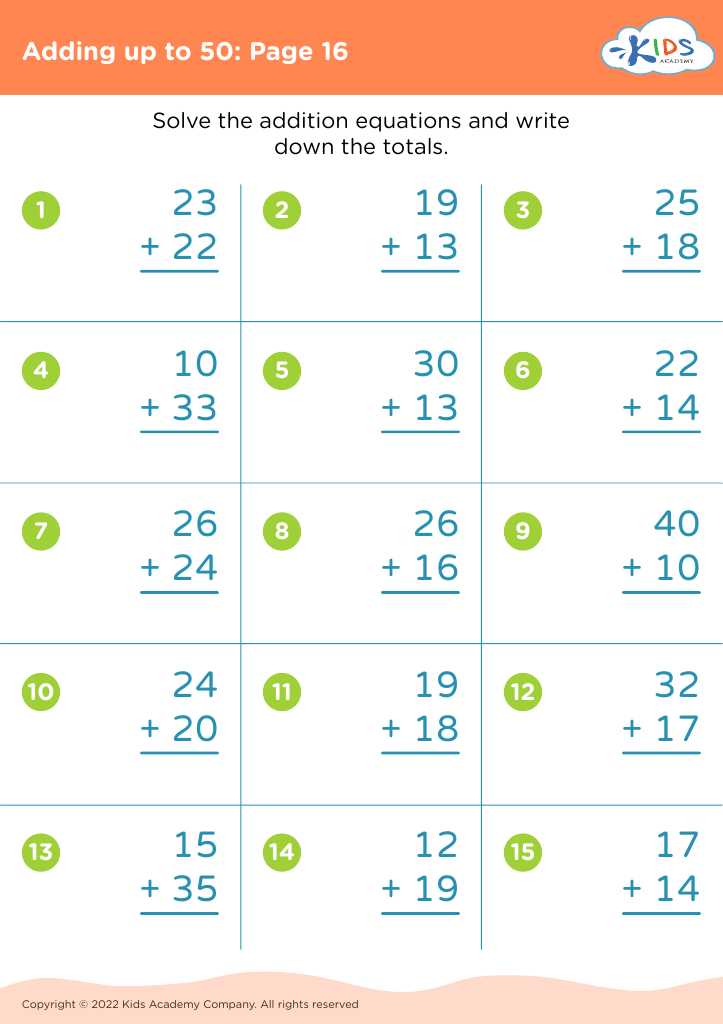
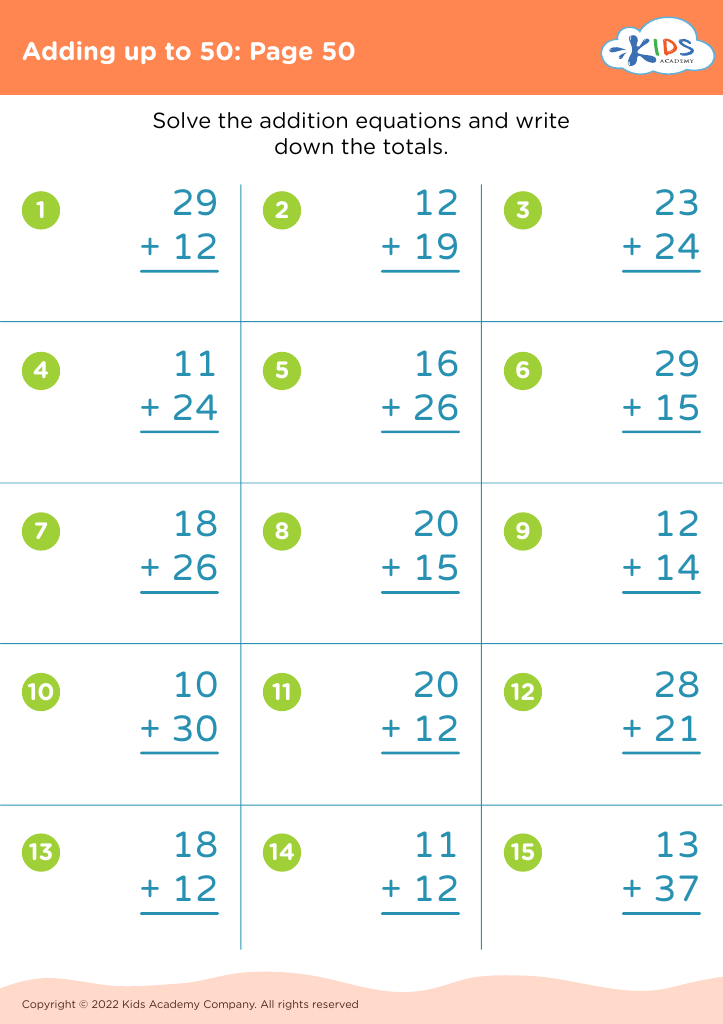








Parents and teachers should prioritize reading clocks and understanding addition for children ages 5-9 because these skills form a fundamental part of a child's early education and daily life. Mastering how to read a clock teaches kids essential time management skills, which foster independence and responsibility. Understanding time concepts helps children organize their routines, encouraging punctuality and an awareness of the passing of day-to-day life.
In addition, mastering basic addition lays the groundwork for all future math skills. Early numerical literacy empowers students to apply mathematical thinking to real-world situations, reinforcing concepts like grouping and counting. When children grasp these foundational concepts, it boosts their confidence, making them more willing to tackle complex problem-solving tasks later on.
Moreover, activities centered on reading clocks and practicing addition are fun and engaging for young learners. By incorporating games, storytelling, or technology, teachers and parents can turn these lessons into interactive experiences, fostering a love for learning. Ultimately, competence in both telling time and handling simple addition enriches a child’s academic journey and prepares them for a lifetime filled with critical thinking skills. Thus, caregivers play a crucial role in cultivating these essential skills that support lifelong learning.








