Sea creatures identification Addition Worksheets for Ages 5-9
3 filtered results
-
From - To
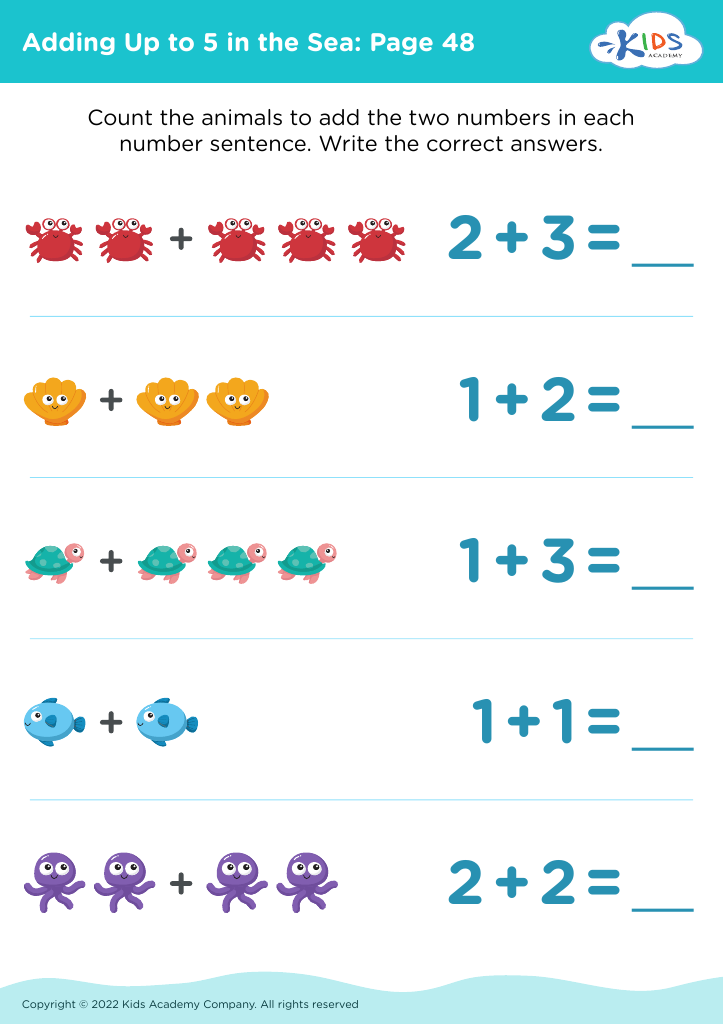
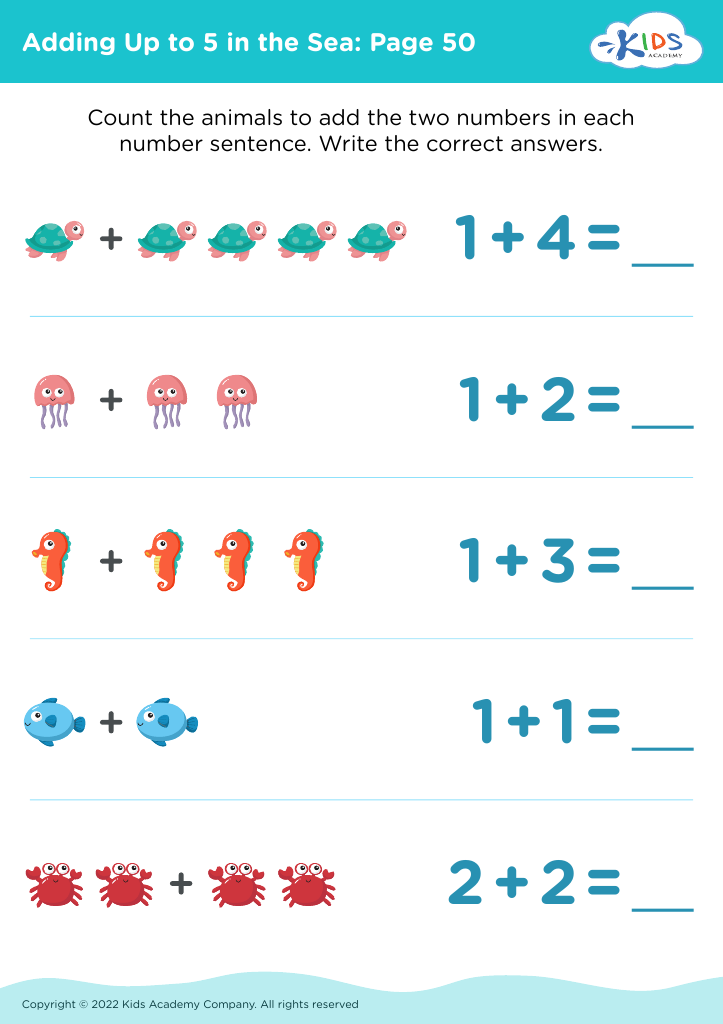
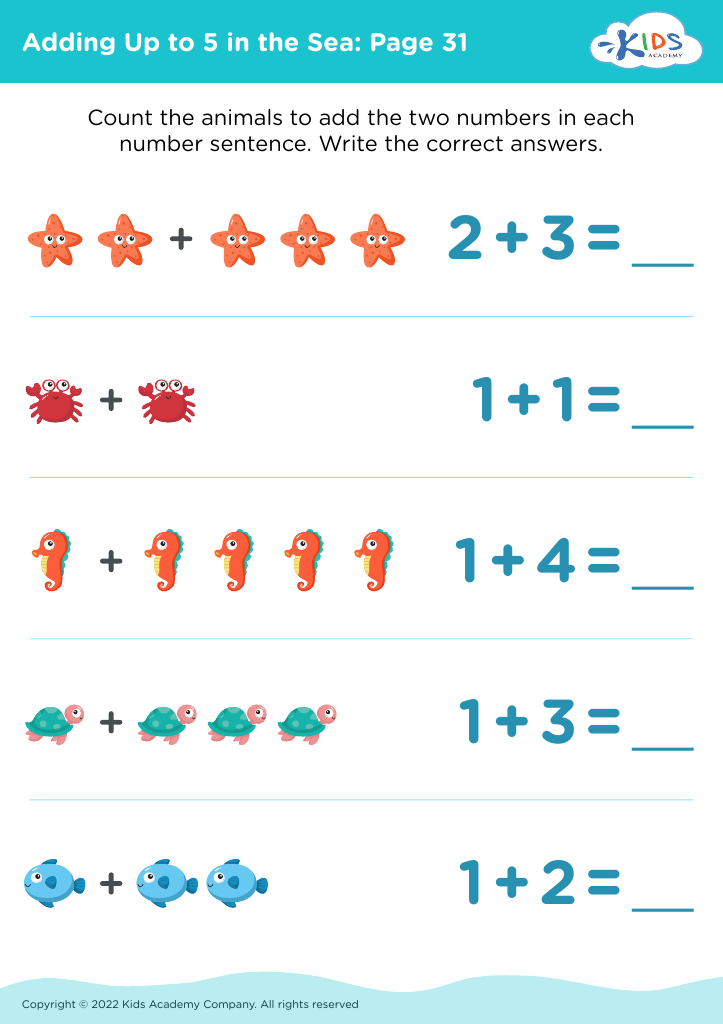
Welcome to our engaging Sea Creatures Identification Addition Worksheets, specially designed for children ages 5-9! These fun and educational resources help young learners develop essential math skills while exploring the fascinating world of marine life. Each worksheet combines colorful illustrations of sea creatures with interactive addition problems, making math enjoyable and visually stimulating. Perfect for classroom activities or homeschooling, these worksheets promote both numerical proficiency and environmental awareness. Encourage your child’s curiosity about ocean inhabitants as they practice addition, match sea creatures, and enhance their cognitive skills in a playful manner. Dive into learning with our vibrant sea-themed worksheets today!







.jpg)
Sea creatures identification is not just an engaging activity for children aged 5-9; it lays the foundation for a deeper understanding of marine biology and environmental stewardship. Parents and teachers should care about this for several reasons.
First, introducing young learners to sea creatures helps them develop observation and critical thinking skills. By recognizing different species, children appreciate biodiversity and learn the importance of each creature within the ecosystem. This knowledge fosters curiosity about the natural world, encouraging a lifelong love for science.
Secondly, early education about marine life promotes environmental awareness. Children who identify and understand sea creatures become advocates for ocean conservation. They learn about habitats, ecosystems, and human impacts on the oceans, empowering them to make informed choices about sustainability.
Moreover, activities centered on sea creature identification enhance fine motor skills and enhance vocabulary. Using tools like field guides or interactive apps, children improve hand-eye coordination while expanding their language skills through descriptive nomenclature.
Lastly, exploring the wonders of the ocean through identification cultivates a sense of wonder and adventure in young learners. By engaging with sea creatures, they can grow into informed and passionate stewards of the environment, ensuring a healthier planet for future generations.








