Understand patterns Addition Worksheets for Ages 5-9
6 filtered results
-
From - To
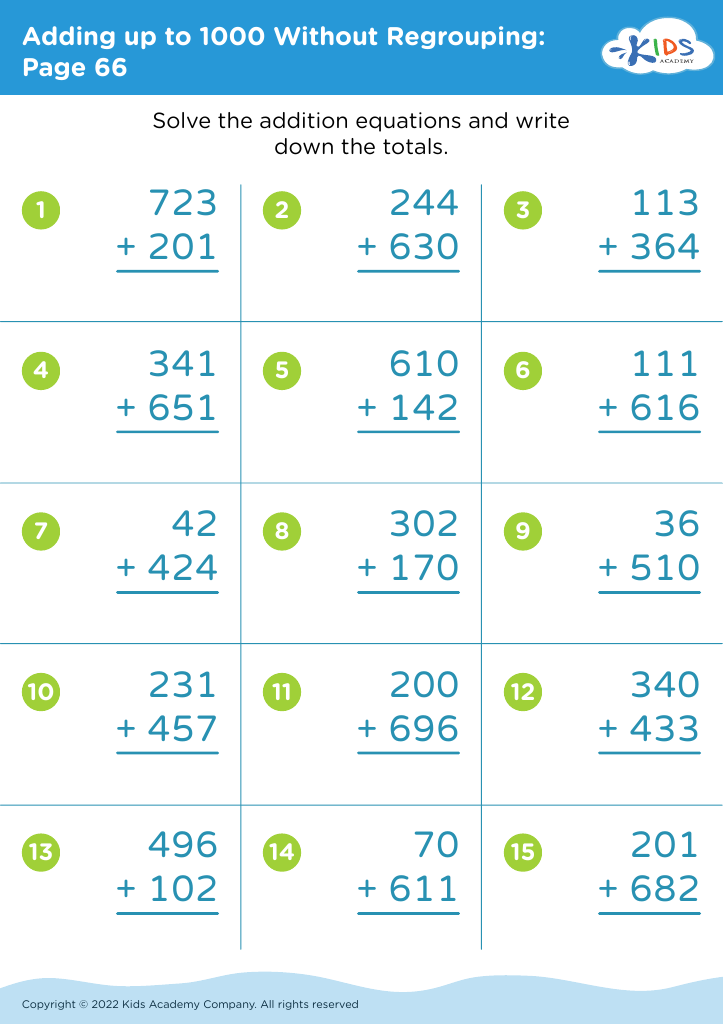
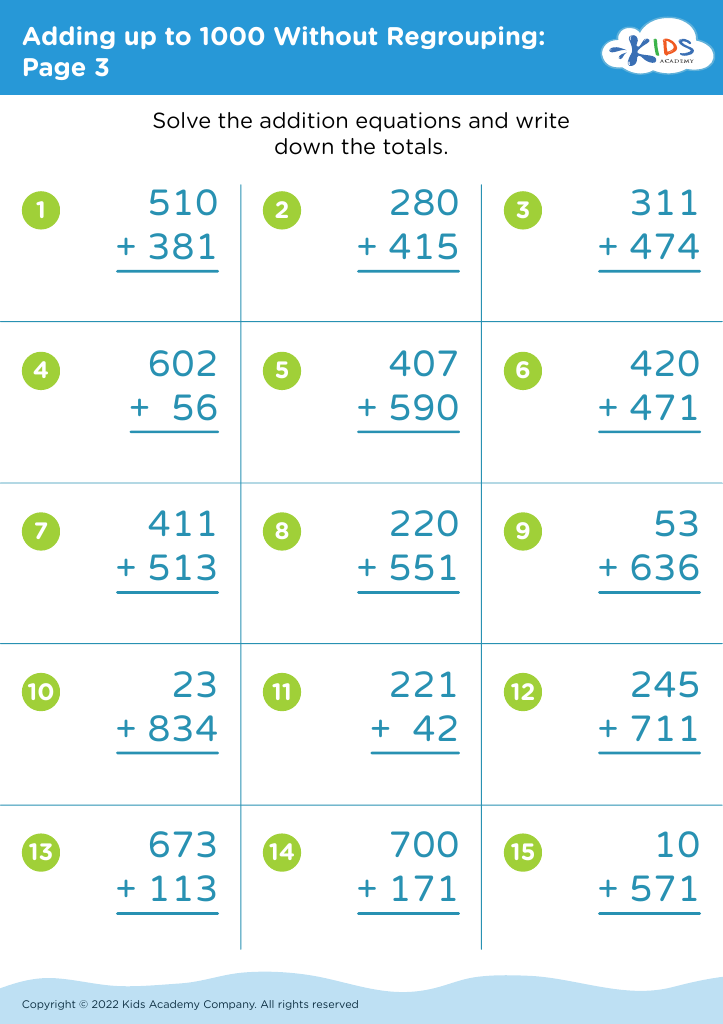
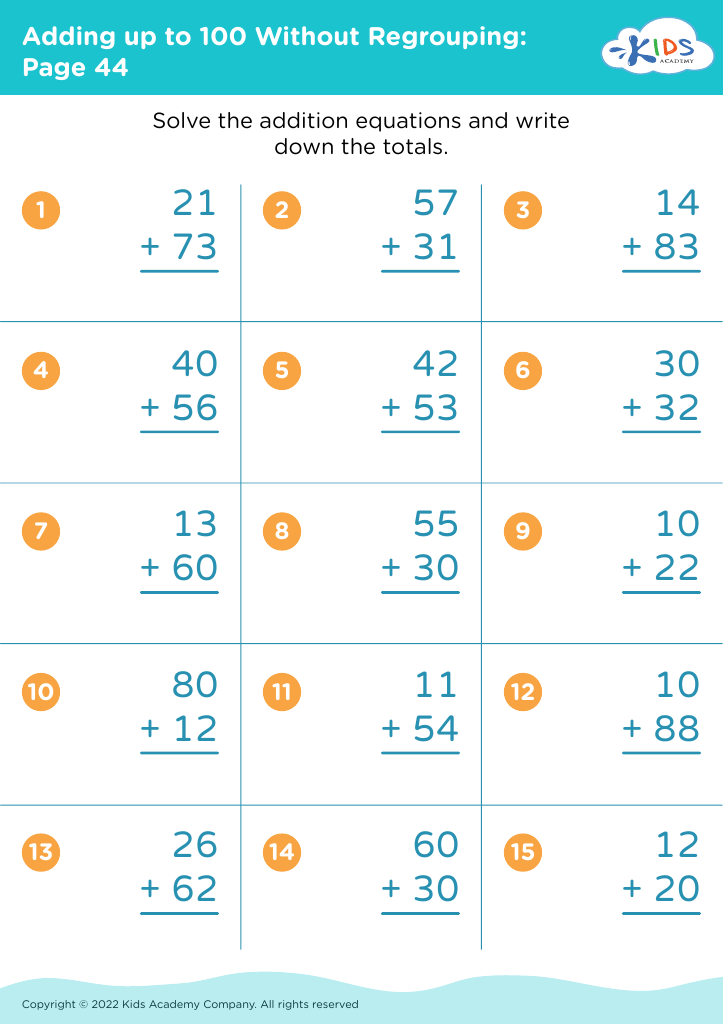
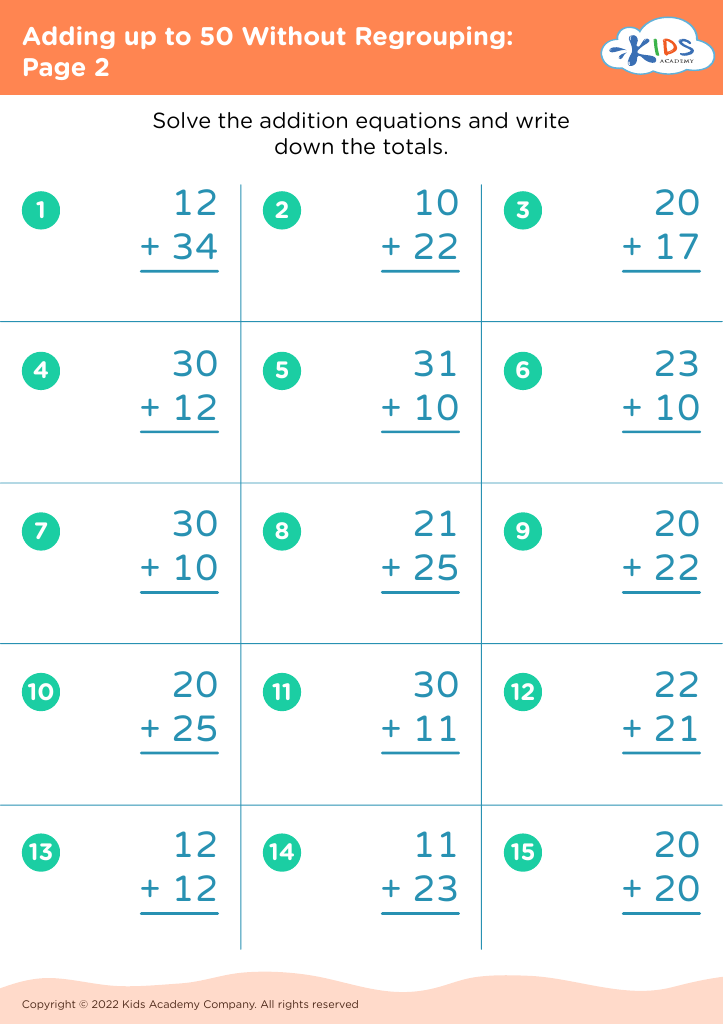
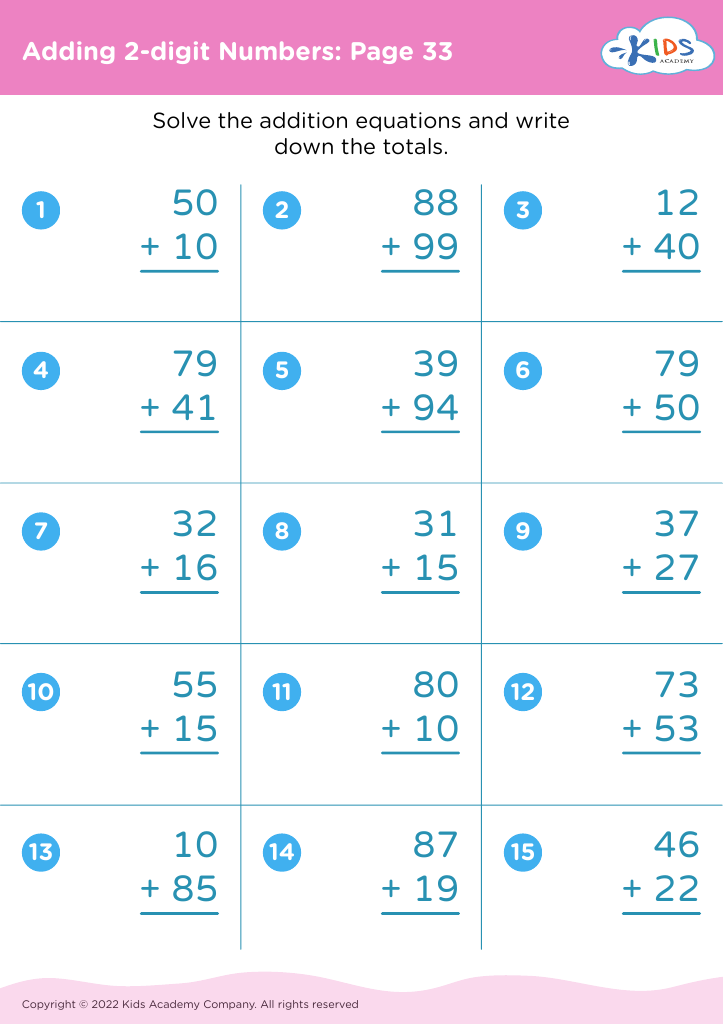
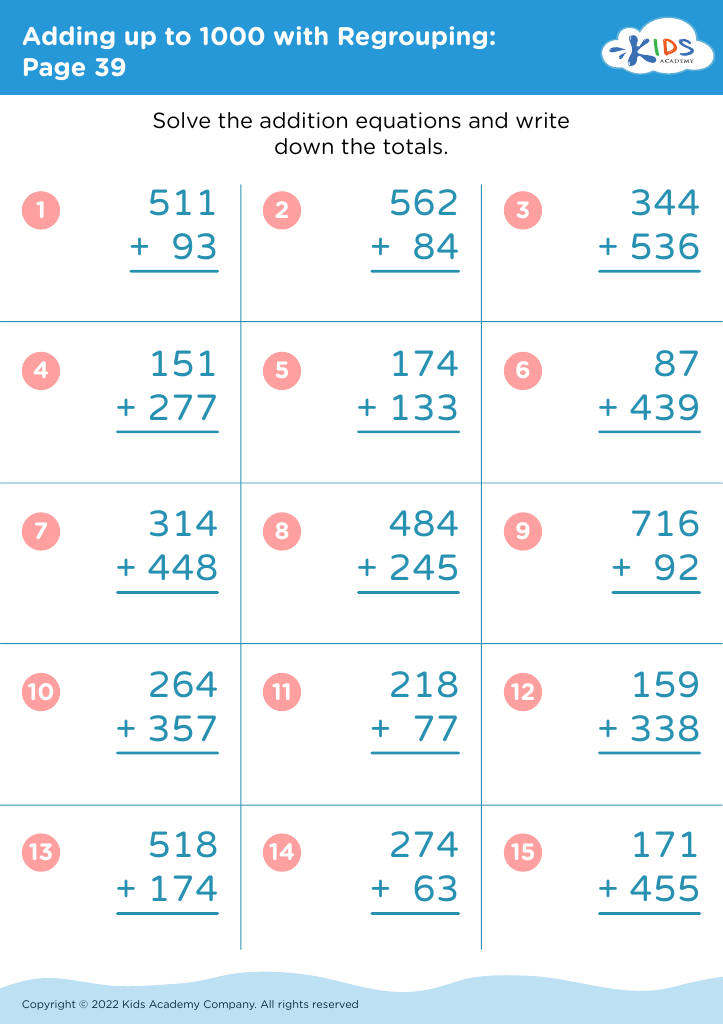
Welcome to our "Understand Patterns Addition Worksheets" designed specifically for children ages 5-9! These engaging and interactive worksheets aim to enhance young learners' ability to recognize and comprehend addition patterns. With a variety of fun activities, kids will develop essential math skills while boosting their confidence in solving problems. Our worksheets encourage not only mathematical understanding but also critical thinking and pattern recognition, laying a strong foundation for future learning. Perfect for home or classroom use, these resources make math enjoyable and accessible. Start your child's journey to mastering addition through the power of patterns today!





.jpg)

Understanding patterns in addition is crucial for children aged 5-9 because it lays the groundwork for their mathematical development. Recognizing patterns helps students make connections within numbers, ultimately enhancing their problem-solving skills. When children learn to identify sequences in addition, they can more easily grasp concepts like number families and skip counting, which fosters a deeper understanding of mathematics as a whole.
Moreover, patterns encourage children to think logically and analytically. For instance, noticing that adding the same number repeatedly generates consistent results builds their confidence in tackling more complex problems. This foundational knowledge also supports future math concepts such as multiplication and division, making transitions smoother as they progress in school.
Teachers and parents play a pivotal role in facilitating this understanding. Engaging children in pattern-related activities can make learning fun and interactive, stimulating curiosity and motivation. Games, songs, or creative storytelling that emphasize addition patterns make abstract concepts tangible. Ultimately, by valuing these early mathematical foundations, parents and teachers empower children to become confident learners ready to take on more advanced mathematics in later grades. This fosters a positive attitude toward math and enhances overall academic success.








