Understanding number sequence Addition Worksheets for Ages 5-9
3 filtered results
-
From - To
Explore our engaging Understanding Number Sequence Addition Worksheets for kids aged 5-9! These thoughtfully designed resources help young learners grasp the essentials of number sequences while enhancing their addition skills. Each worksheet introduces interactive exercises that encourage counting, pattern recognition, and problem-solving. Tailored to promote confidence in mathematics, these activities invite children to explore number relationships through fun, hands-on experiences. Perfect for classroom or home learning, our worksheets provide valuable practice that aligns with early math curriculum standards. Help your child build a strong foundation in math with our vibrant, easy-to-use worksheets today!
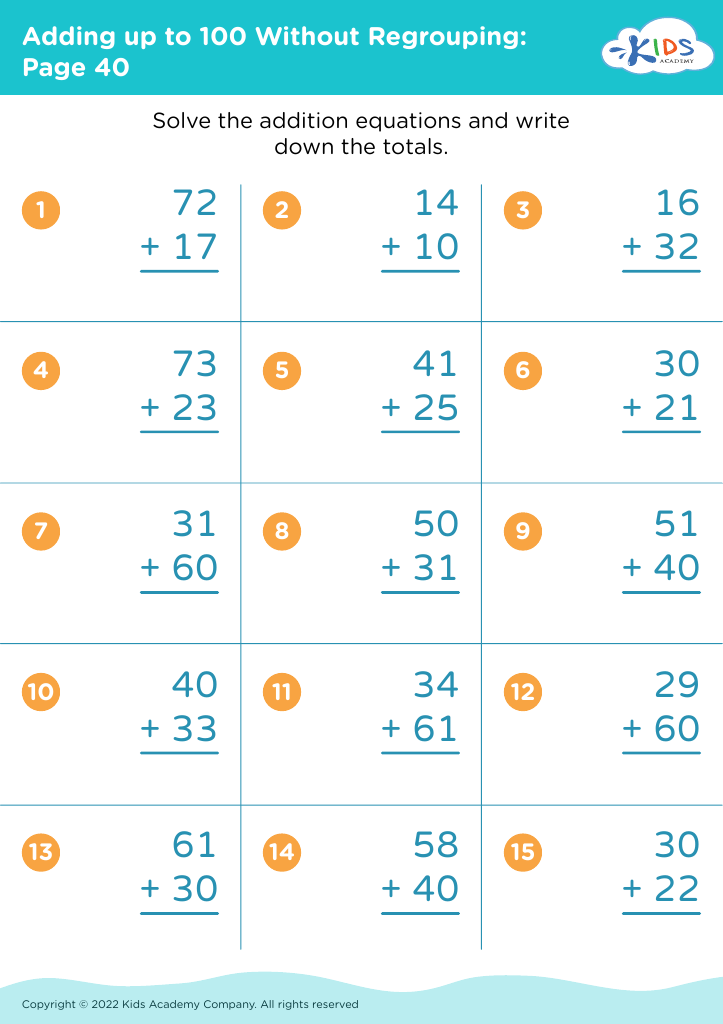
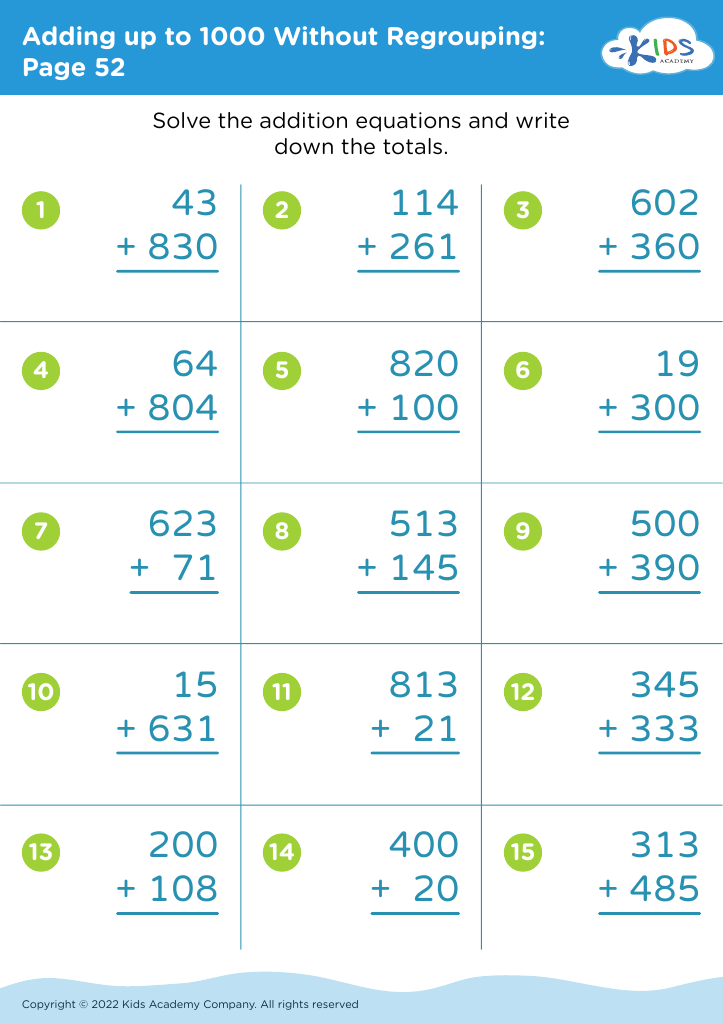
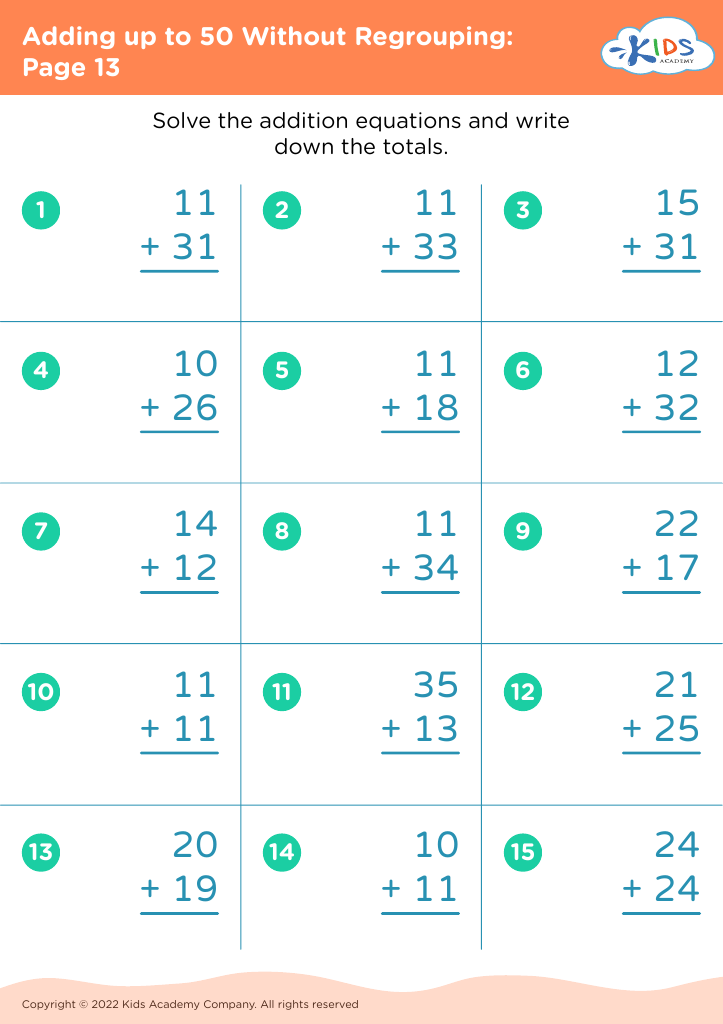








Understanding number sequences and addition is fundamental for children aged 5-9, laying the groundwork for their mathematical development. Firstly, number sequences help children grasp the concept of order and continuity, crucial for recognizing patterns that are intrinsic to more advanced mathematical concepts. Mastery of these sequences builds a solid foundation for addition, enabling children to manipulate numbers confidently.
Teachers and parents should care about this because early mathematical competencies greatly influence future performance in math and related subjects. Engaging with number sequences enhances children's ability to solve problems, promotes critical thinking, and aids in mental arithmetic, skills useful across numerous disciplines and everyday scenarios.
Moreover, as children's confidence in their mathematical abilities grows, their enthusiasm for learning increases. This positive reinforcement encourages a proactive attitude towards education. Additionally, fostering a strong understanding of foundational skills in number sequences and addition can help identify and address learning gaps early on, preventing future challenges in more complex mathematics.
In summary, nurturing these core concepts not only equips children with basic skills necessary for school but also instills a love for learning and a positive mindset towards mathematics that will benefit them throughout their education.








