Understanding number sequences Addition Worksheets for Ages 5-9
3 filtered results
-
From - To
Dive into a world of fun and learning with our "Understanding Number Sequences Addition Worksheets" designed for ages 5-9! These engaging, educational tools help children grasp essential math skills by guiding them through various number sequences and addition exercises. Tailored to develop your child's analytical thinking and number recognition, our worksheets are perfect for both classroom and home practice. Encourage your young learner to explore patterns, enhance problem-solving abilities, and build a robust math foundation. Join Kids Academy to support your child's journey toward math mastery with our expertly crafted and interactive worksheets!
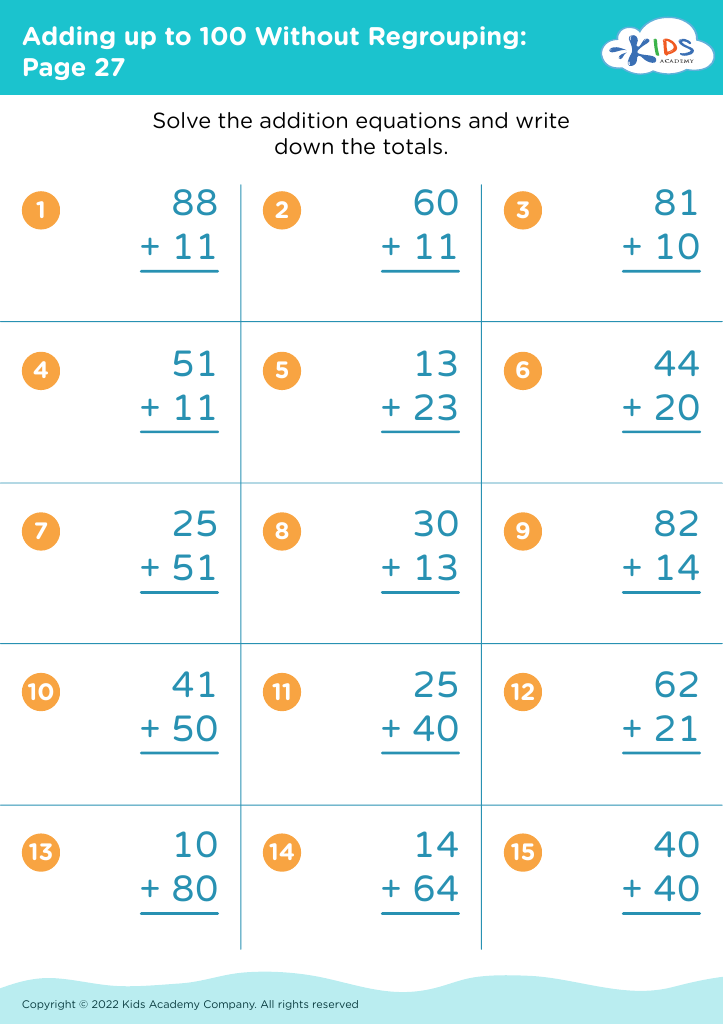
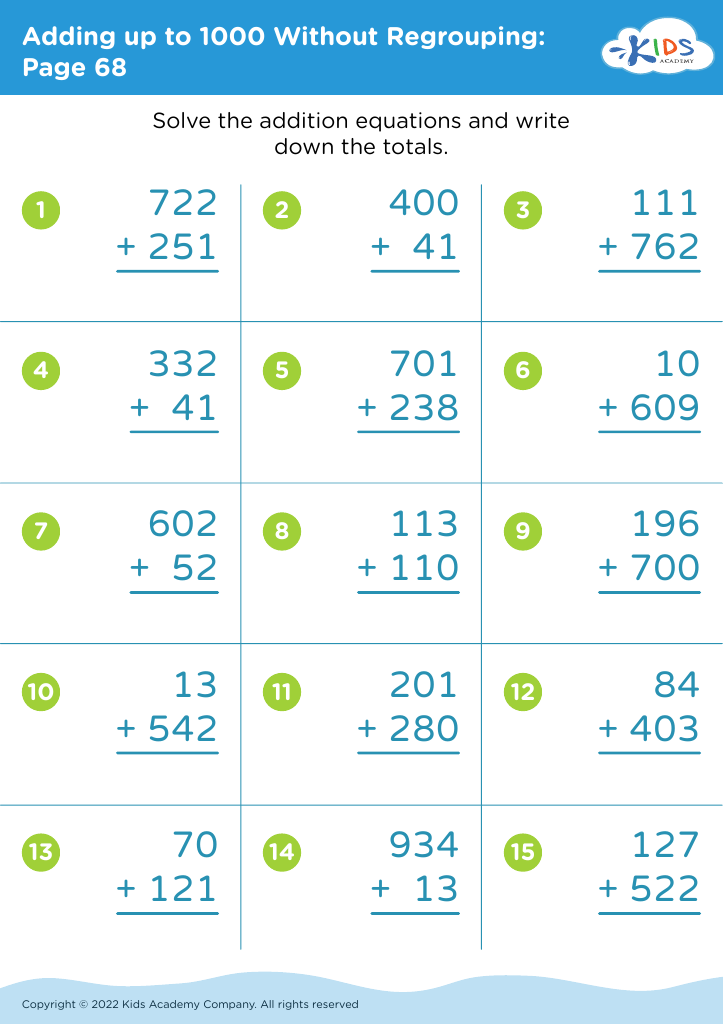
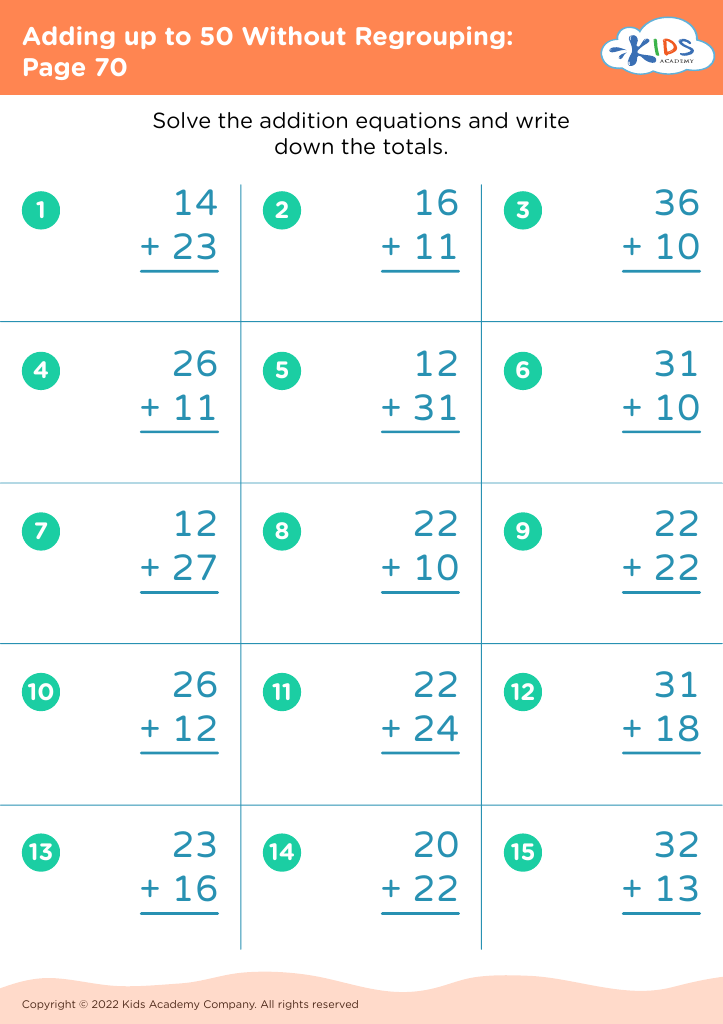








Understanding number sequences and addition is crucial for children aged 5-9 as it lays the foundation for future mathematical learning and critical thinking skills. At this developmental stage, their brains are highly receptive to new information and conceptual understanding. By grasping number sequences and addition, children develop a sense of order, pattern recognition, and the ability to predict future numbers, which are essential attributes in both mathematics and everyday problem-solving.
Number sequences help children understand the concept of time, money, and measurement, which are all grounded in sequential logic. For example, knowing that Tuesday comes after Monday or that 5 follows 4 helps in organizing their world in a coherent way. Addition, on the other hand, is the building block of arithmetic, teaching the principles of in-grouping and cumulative growth which are essential for more advanced math topics.
For parents and teachers, nurturing these skills not only supports academic success but also enhances cognitive abilities such as memory, attention to detail, and logical reasoning. Engaging children with fun and interactive activities like counting games, number puzzles, and everyday practical math application ensures that learning these basic concepts becomes an enjoyable and integral part of their early education, setting them up for a lifelong appreciation and competency in mathematics.








