Understanding sequencing Addition Worksheets for Ages 5-9
7 filtered results
-
From - To
Explore our "Understanding Sequencing Addition Worksheets" designed specifically for children aged 5-9. These engaging worksheets help young learners grasp the concept of sequencing both in addition and real-life scenarios. With colorful visuals and interactive exercises, kids will develop their problem-solving skills as they learn to identify patterns and relationships within numbers. Our resources promote cognitive growth and build a solid math foundation, encouraging independent thinking. Perfect for classrooms or home learning, these worksheets will ensure that your child becomes confident in their addition skills while having fun. Start their mathematical journey today with our thoughtfully crafted materials!
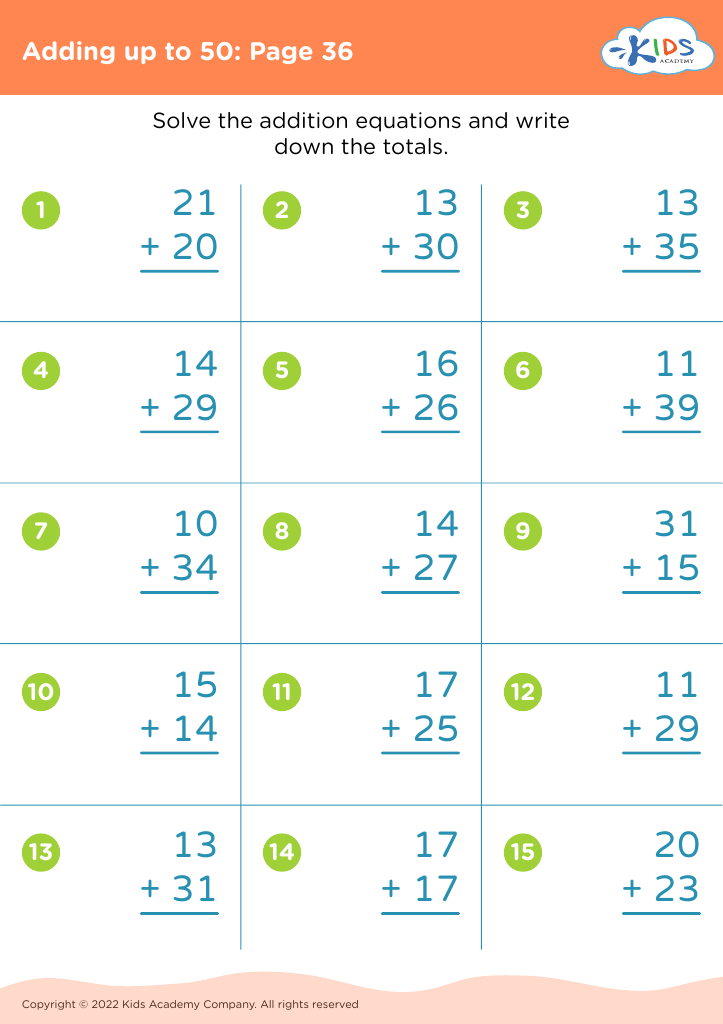
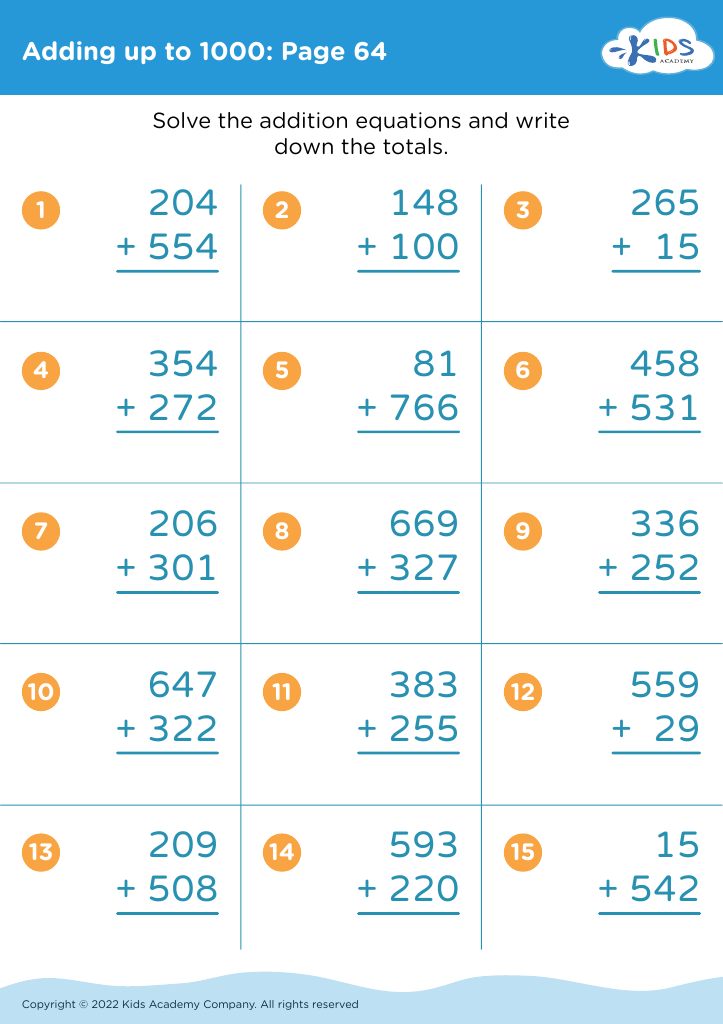
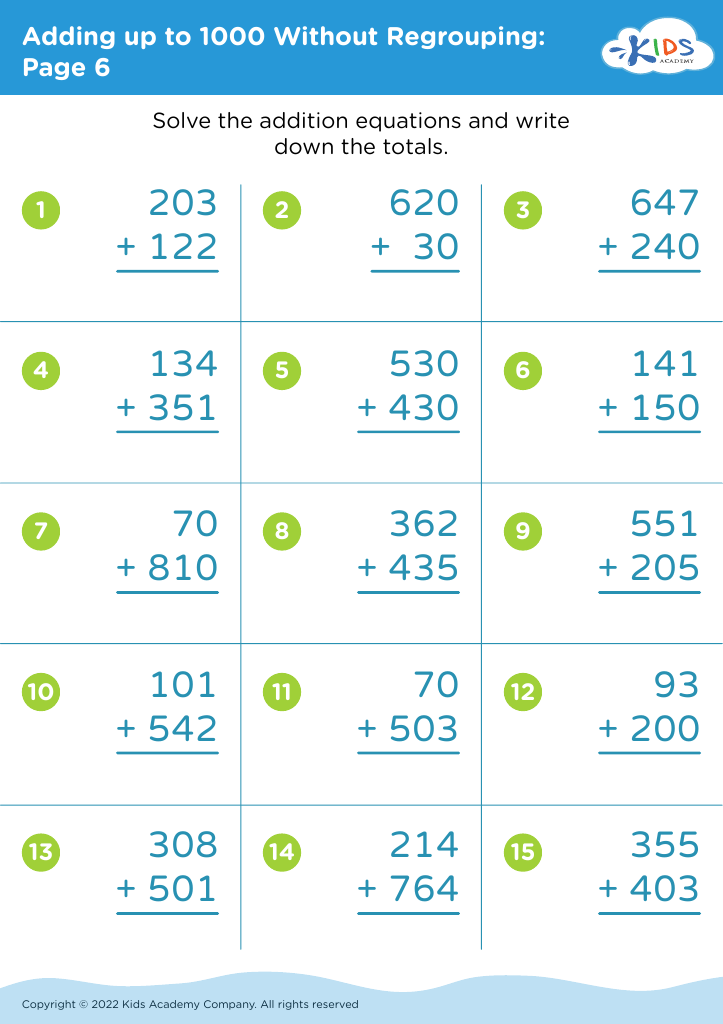
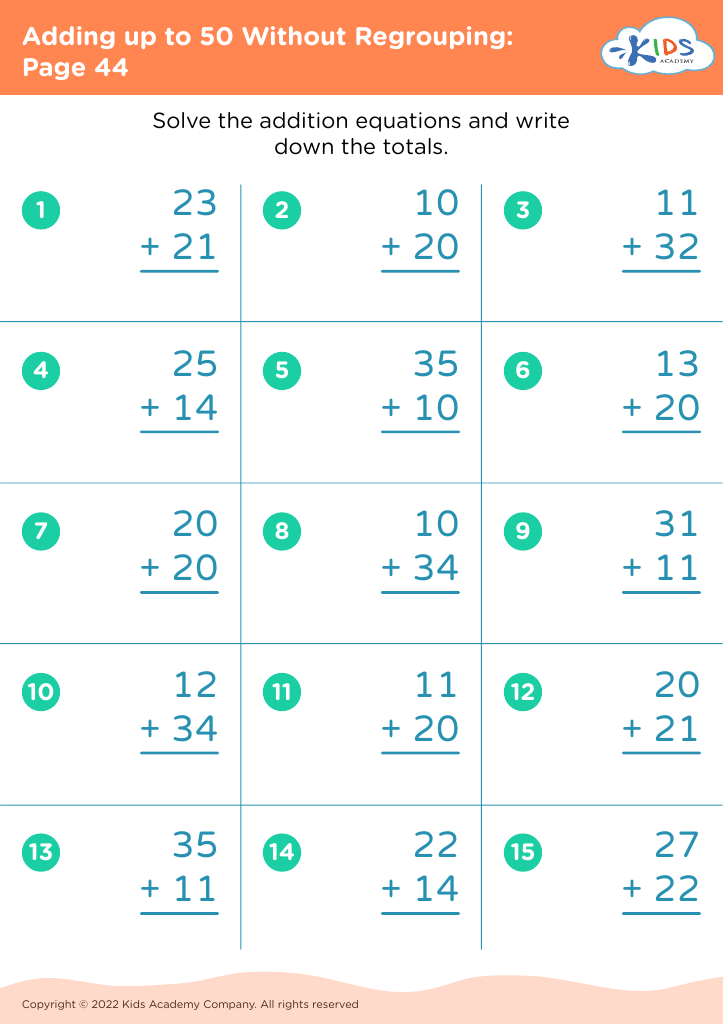
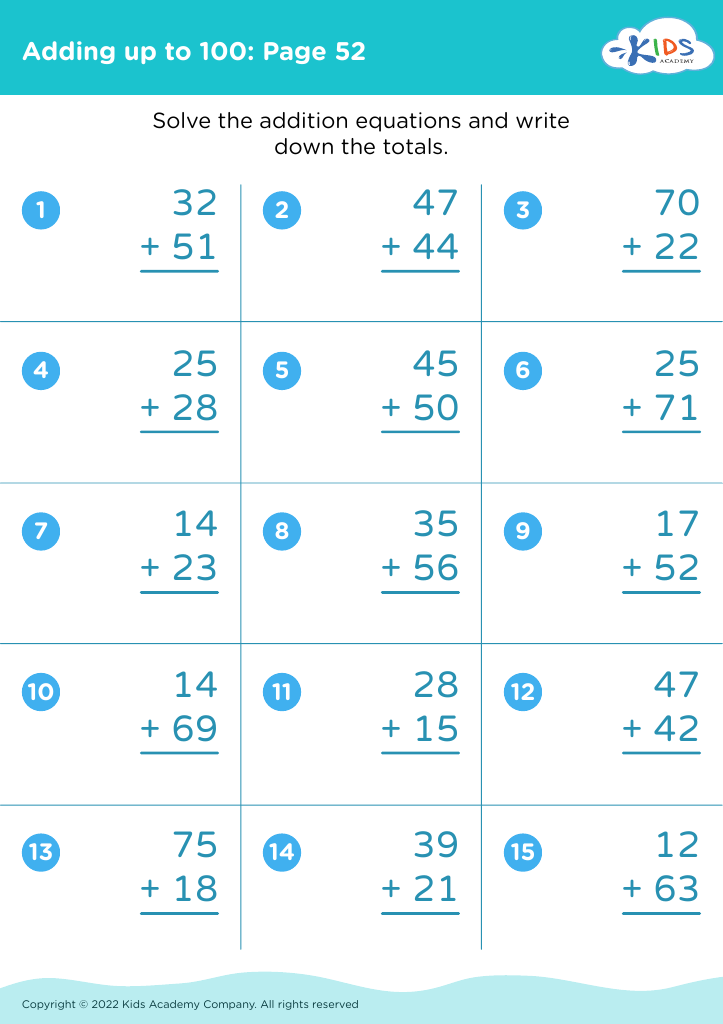
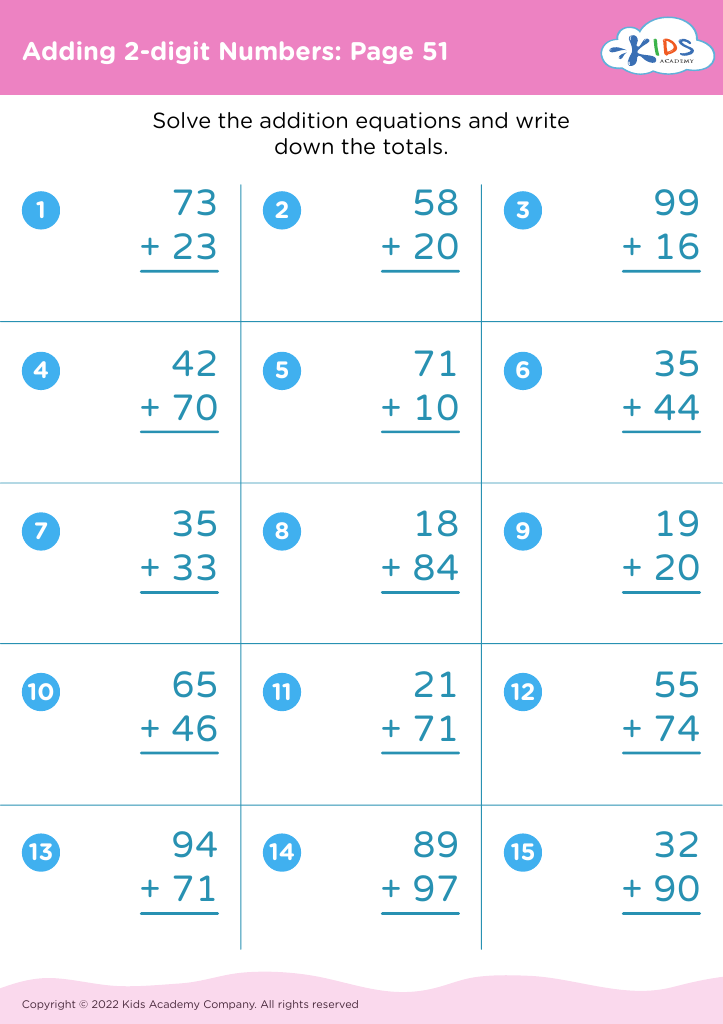
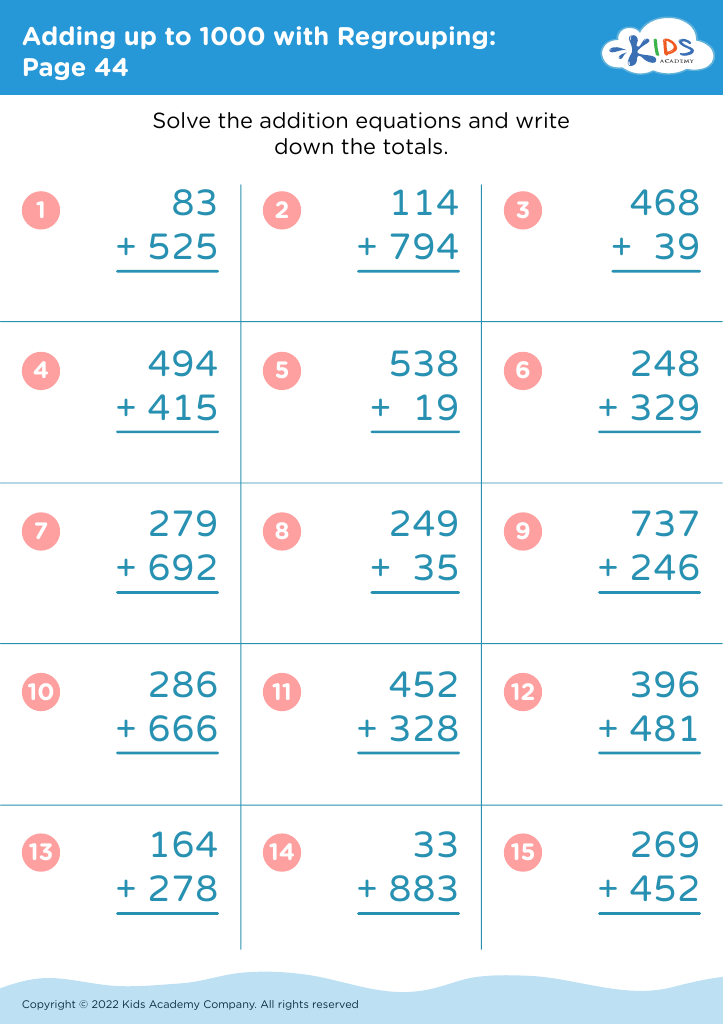








Understanding sequencing in addition is vital for children aged 5-9 as it lays the foundation for their overall mathematical development. When children grasp how numbers can be ordered and added sequentially, they learn to recognize patterns, which is a critical skill in both math and everyday problem-solving. Sequencing helps them understand the concept of "what comes first" and "what comes next," not only in addition but also in other arithmetic operations.
By mastering sequencing, children enhance their ability to perform mental calculations, aiding them in more complex mathematical concepts as they progress through school. This understanding fosters confidence in their skills and encourages a positive attitude toward learning math, reducing the anxiety that many children experience with the subject. Furthermore, it promotes critical thinking and enhances their capacity for logical reasoning—skills crucial for future academic success.
Parents and teachers play a key role in supporting children's learning by incorporating sequencing activities into their daily routines. This engagement not only strengthens the child's math skills but also encourages a meaningful connection with adults, fostering an environment that promotes exploration and curiosity in learning. Addressing sequencing in addition is, therefore, a necessary step toward a child's holistic development in mathematics and beyond.








