Underwater animal identification Addition Worksheets for Ages 5-9
3 filtered results
-
From - To
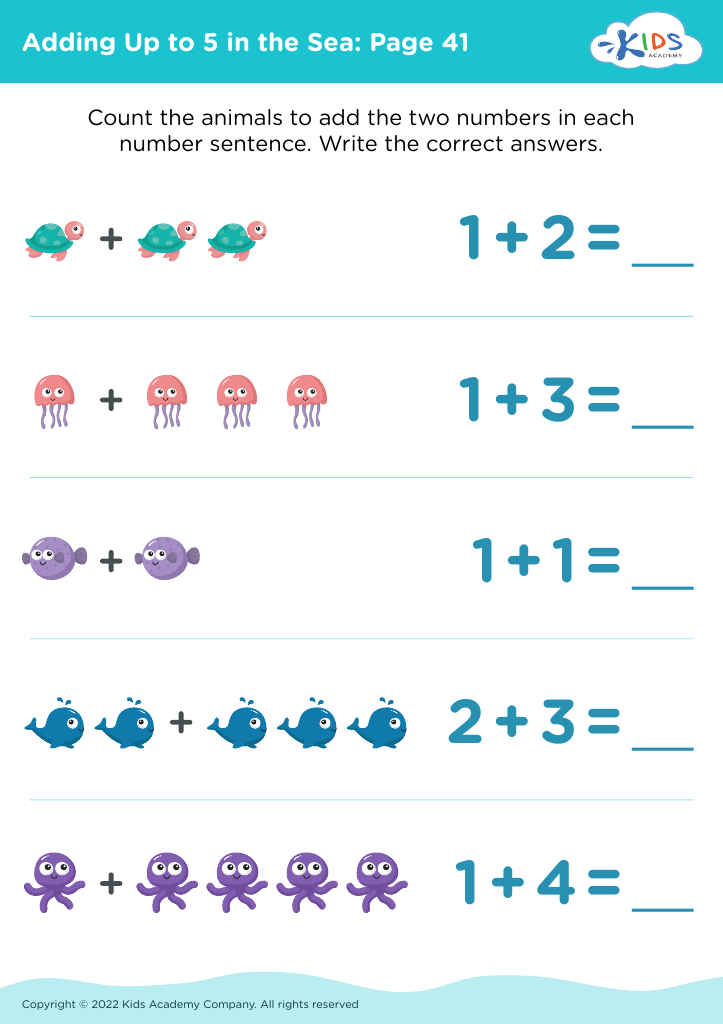
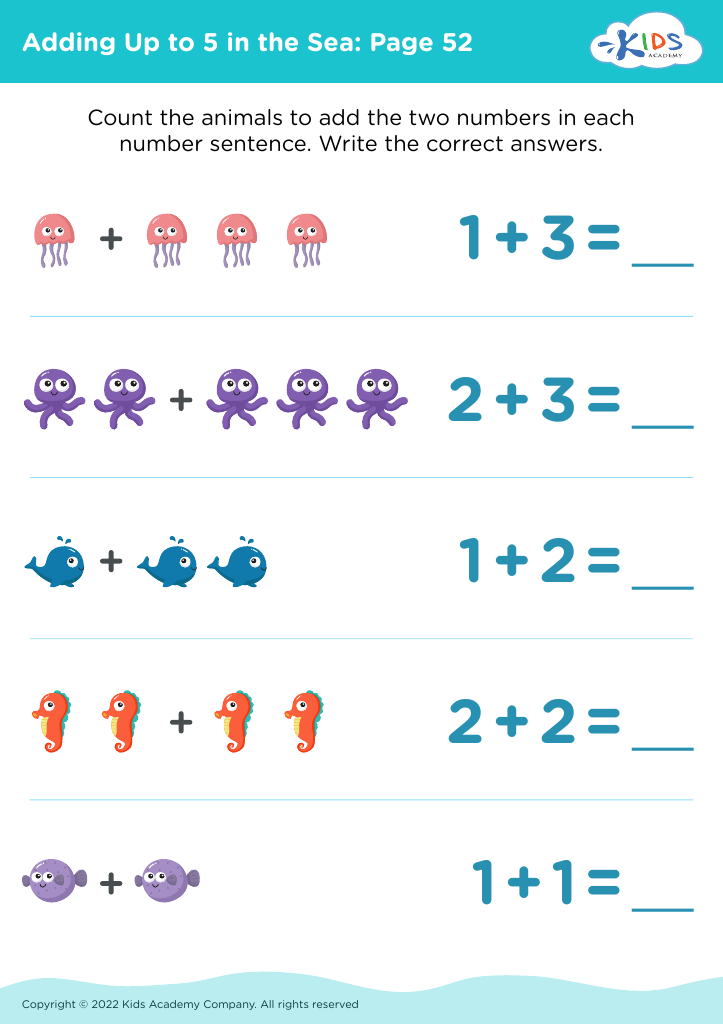
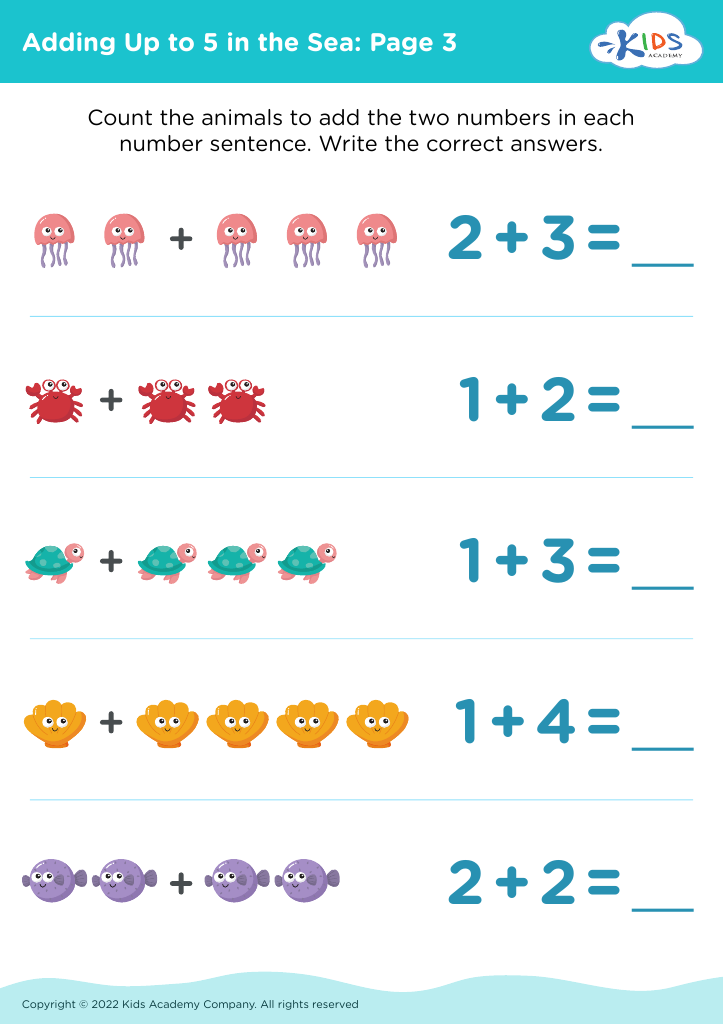
Dive into fun learning with our Underwater Animal Identification Addition Worksheets, specially designed for kids ages 5-9! These interactive printables combine the excitement of ocean exploration with essential math skills. Children will not only enhance their addition abilities but also learn to identify various underwater creatures. Each worksheet features vibrant illustrations and engaging activities that capture young learners' imaginations while reinforcing their understanding of numbers. Perfect for use at home or in the classroom, our worksheets cater to different learning styles and ensure a playful yet educational experience. Make math an underwater adventure today!








Parents and teachers should care about underwater animal identification for children aged 5-9 for several important reasons. First, this activity fosters a love for marine life and promotes environmental awareness. Understanding species diversity helps children appreciate ecosystems’ fragility and encourages them to become stewards of the environment from an early age.
Additionally, underwater animal identification enhances cognitive skills. It introduces young learners to critical concepts like classification, which develops their reasoning abilities. Engaging with colorful visuals or hands-on materials makes the learning experience enjoyable and memorable, reinforcing the identification process.
Furthermore, this topic enriches vocabulary and communication skills as children learn to articulate names and characteristics of various marine animals. This activity can be seamlessly integrated into science, literacy, or art lessons, supporting cross-curricular learning.
By encouraging identification activities, parents and teachers promote observational skills and nurture curiosity. These foundational skills are vital for lifelong learning, fostering an interest in biology and the sciences. Ultimately, emphasizing underwater animal identification provides valuable learning opportunities and nurtures responsible, informed future citizens who understand the importance of ocean conservation.








