Visualization skills Addition Worksheets for Ages 5-9
3 filtered results
-
From - To
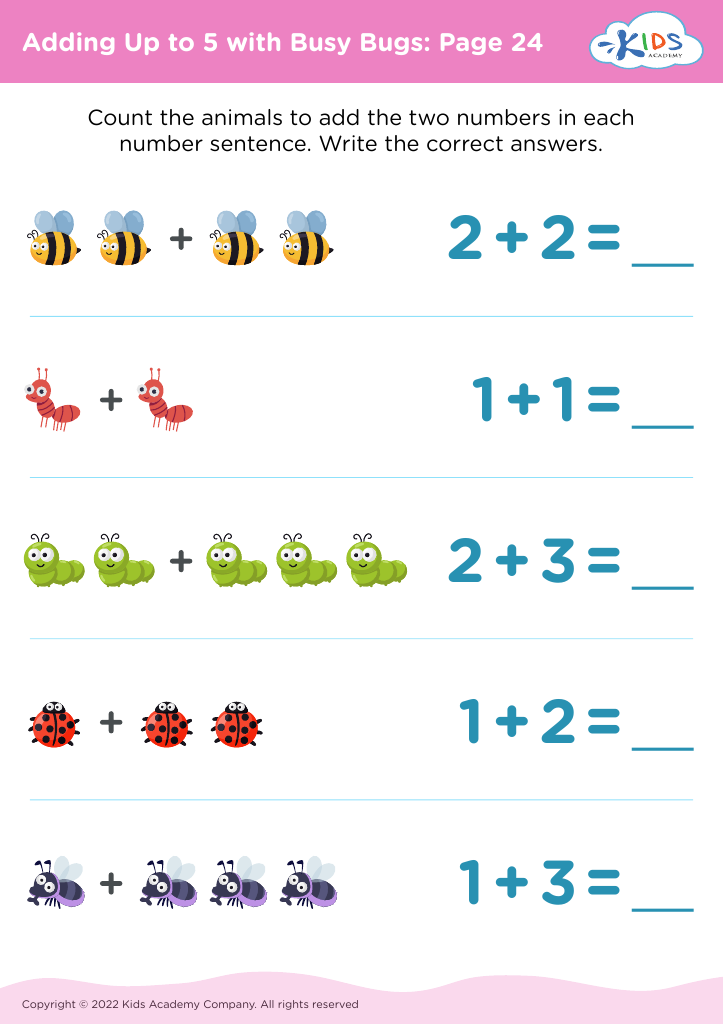
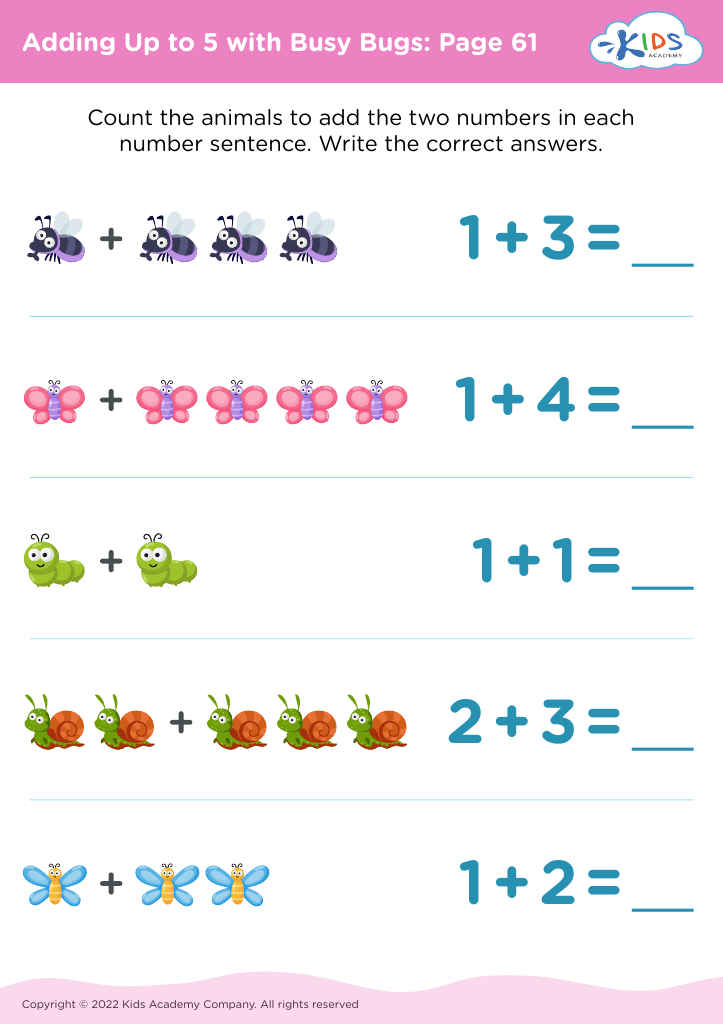
Discover our engaging Visualization Skills Addition Worksheets, designed specifically for children ages 5-9. These worksheets are perfect for helping young learners develop essential visualization abilities while mastering addition concepts. Each activity encourages students to picture numbers and problems in their minds, promoting a deeper understanding of mathematical relationships. With colorful graphics and imaginative scenarios, children will enjoy working through fun exercises that enhance their cognitive skills and boost their confidence in math. Our worksheets provide a balanced approach to learning, making addition not just educational but also enjoyable. Explore our collection today and watch your child thrive in math!
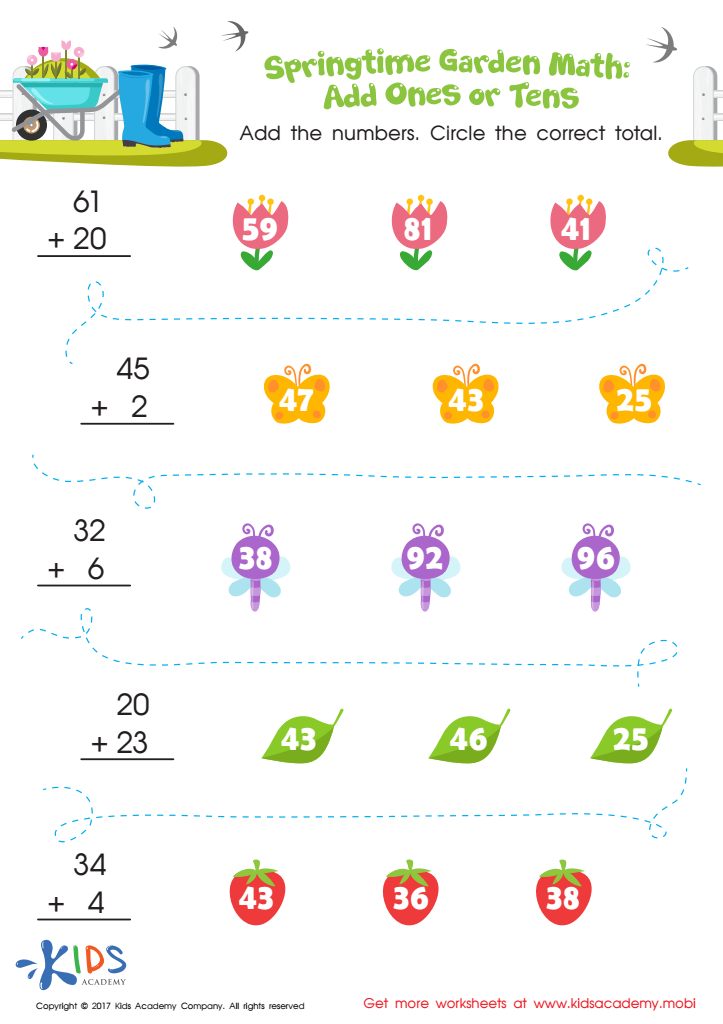
Springtime Garden Math Worksheet
 Assign to My Students





.jpg)


Visualization skills during addition are crucial for children aged 5-9, as they lay the foundation for effective mathematical reasoning and problem-solving. When children visualize numbers and quantities, they develop a mental image that helps them grasp abstract concepts more easily. This skill enhances their ability to comprehend mathematical operations, fostering confidence and enthusiasm for learning.
For parents and teachers, promoting visualization in addition can lead to improved academic performance. Children who can visualize numbers—such as seeing groups of objects or arrays—are better equipped to understand the properties of addition, like commutativity and associativity. This understanding contributes to their overall numeracy skills, which will be essential as they progress through grades and encounter more complex mathematical concepts.
Additionally, visualization helps engage different learning styles. Children who struggle with traditional methods may thrive when they can see math in action, making use of manipulatives, drawings, or interactive tools. By nurturing visualization skills, caregivers and educators empower children to approach math problems with creativity and critical thinking instead of mere memorization. Ultimately, enhancing visualization skills in addition paves the way for a strong mathematical foundation, ensuring children are well-prepared for future challenges.








