Vocabulary development Addition Worksheets for Ages 5-9
5 filtered results
-
From - To
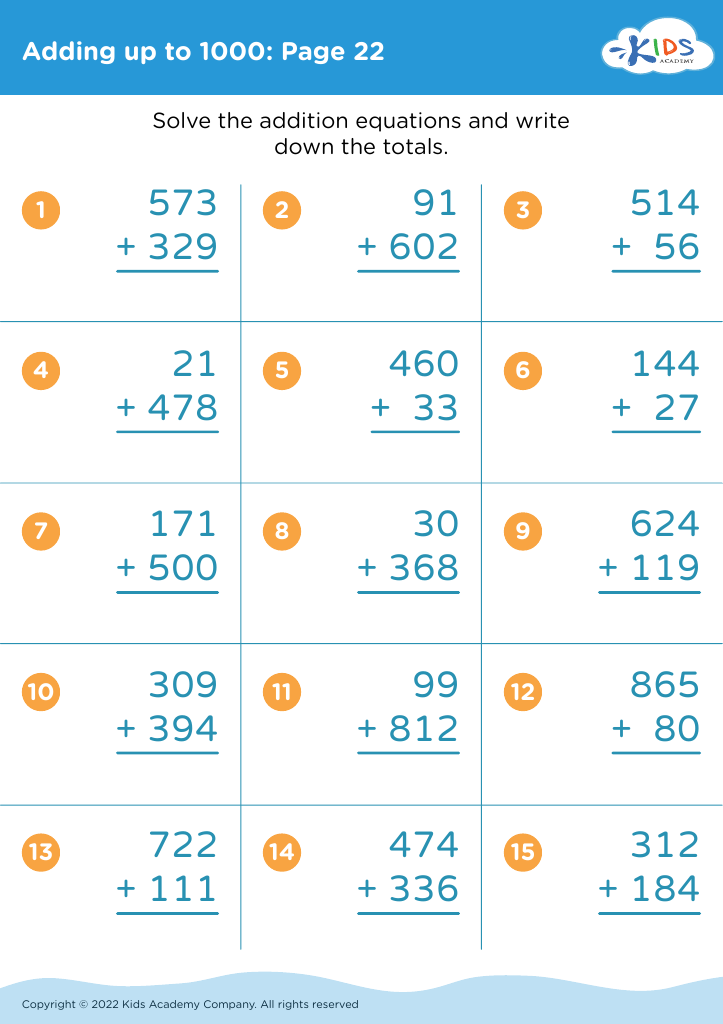
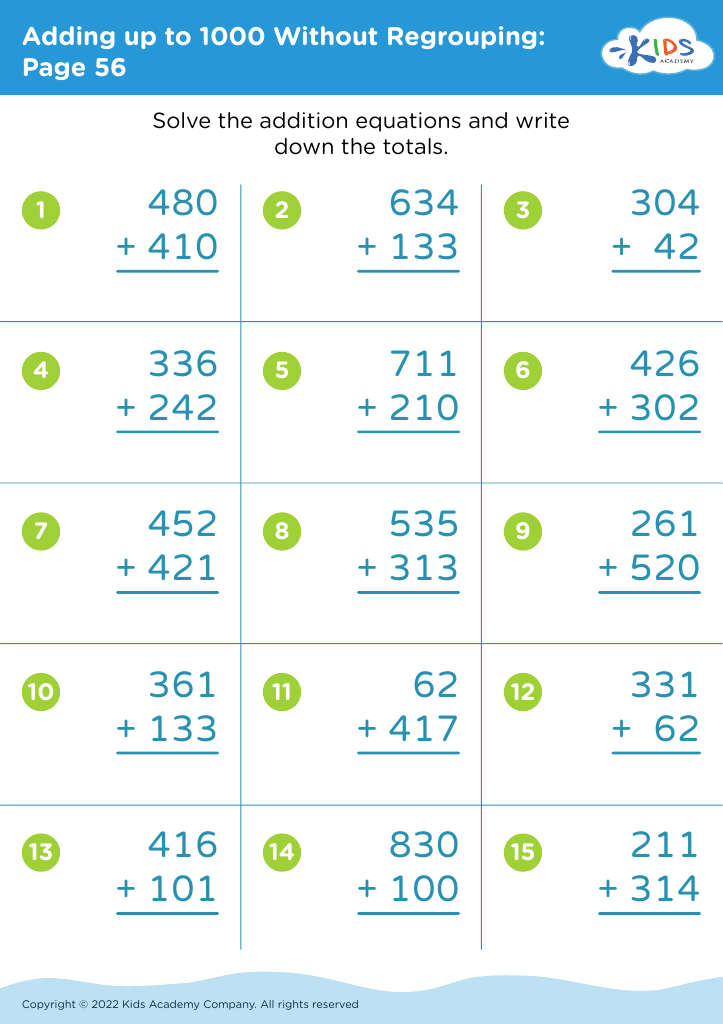
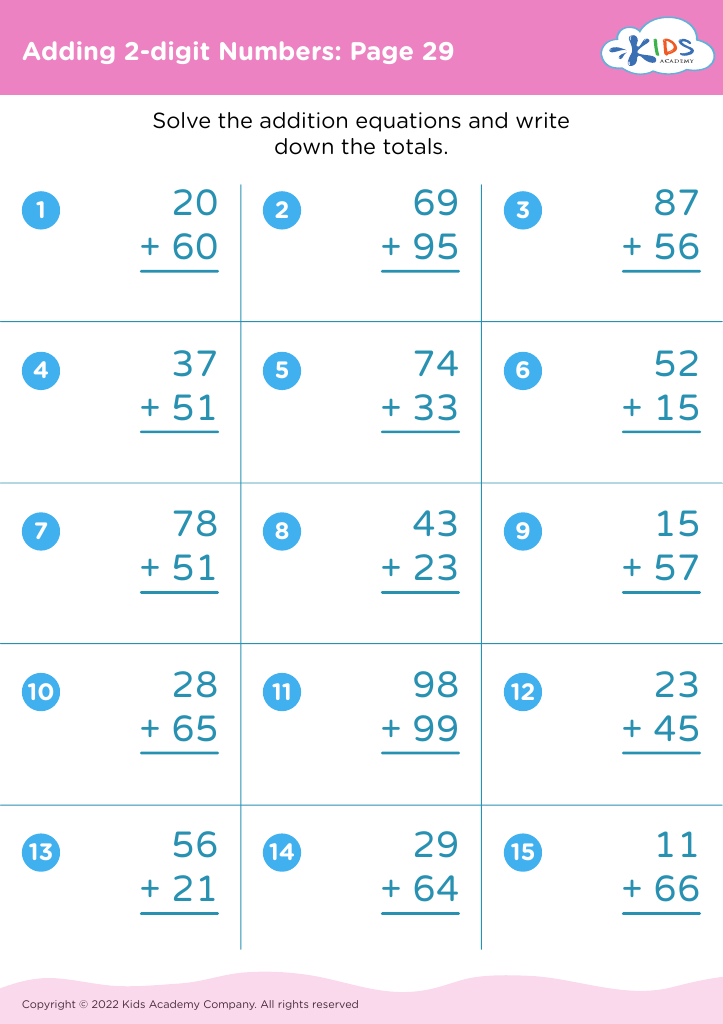
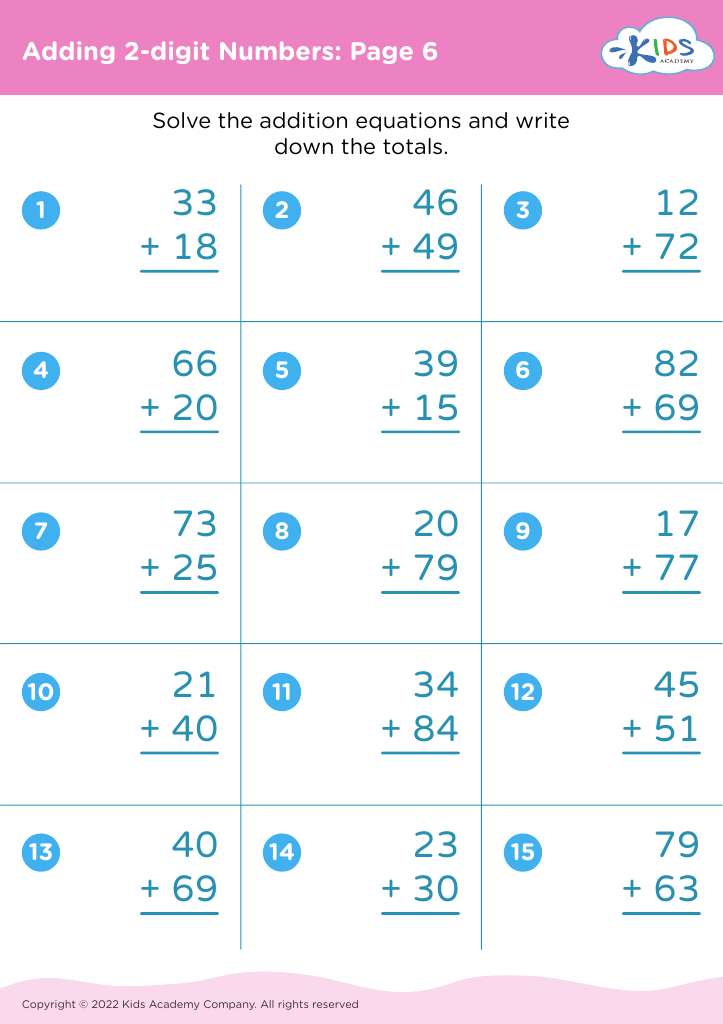
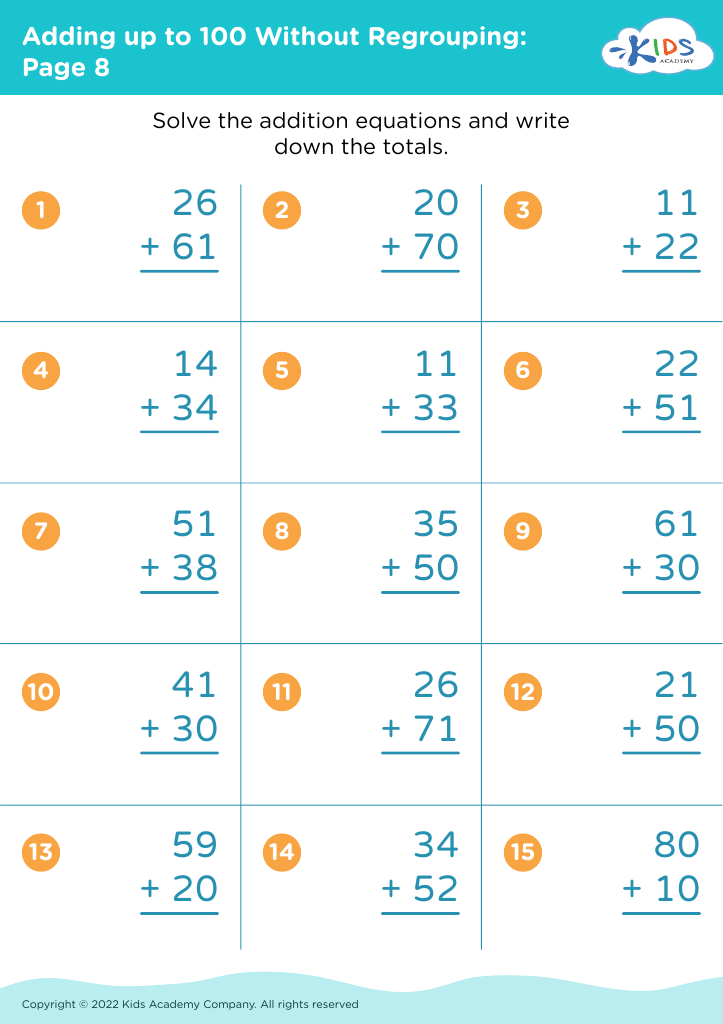
Enhance your child's learning experience with our engaging Vocabulary Development Addition Worksheets, designed specifically for kids ages 5-9. These worksheets combine essential math skills with vocabulary enhancement, helping young learners grasp addition concepts while expanding their language skills. Tailored for early grade students, our user-friendly exercises encourage critical thinking and allow children to connect mathematical operations with everyday language. Whether at home or in the classroom, these printable resources will motivate children to practice addition while developing a rich vocabulary. Foster a love for learning in your child today with our delightful and educational addition worksheets!








Vocabulary development is crucial for children aged 5-9 as it lays the foundation for effective communication and literacy skills. During these formative years, children are rapidly acquiring new words and concepts, which significantly impacts their reading comprehension, writing abilities, and overall academic success. A strong vocabulary enhances their ability to express thoughts, understand instructions, and engage in discussions, fostering their confidence and social skills.
Parents and teachers should prioritize vocabulary growth because it directly correlates with future educational achievement. Research shows that children with a robust vocabulary tend to perform better in school, have higher critical thinking skills, and are more likely to succeed in standardized testing. Moreover, vocabulary acquisition is linked to cognitive development; as children learn new words, they also expand their understanding of concepts and relationships, which nurtures their ability to think abstractly.
Furthermore, engaging in vocabulary-building activities—such as reading together, playing word games, and discussing new words—creates a fun learning environment that stimulates curiosity and encourages a love of language. By investing time in vocabulary development, both parents and teachers play a vital role in shaping a child’s educational journey and helping them become confident communicators.








