Historical Knowledge Arrays Worksheets for Ages 5-9
4 filtered results
-
From - To
Enhance young learners' understanding of history with our engaging Historical Knowledge Arrays Worksheets for ages 5-9. These interactive worksheets blend math and history, allowing children to practice multiplication and array concepts while exploring significant historical events and figures. Designed to ignite curiosity, each worksheet offers age-appropriate activities that foster critical thinking and creativity. Perfect for classroom or home use, these resources help students develop a strong foundation in both subjects simultaneously. Encourage your children to discover the past through fun, hands-on learning experiences with our thoughtfully crafted worksheets, ensuring they build essential skills while enjoying their educational journey!
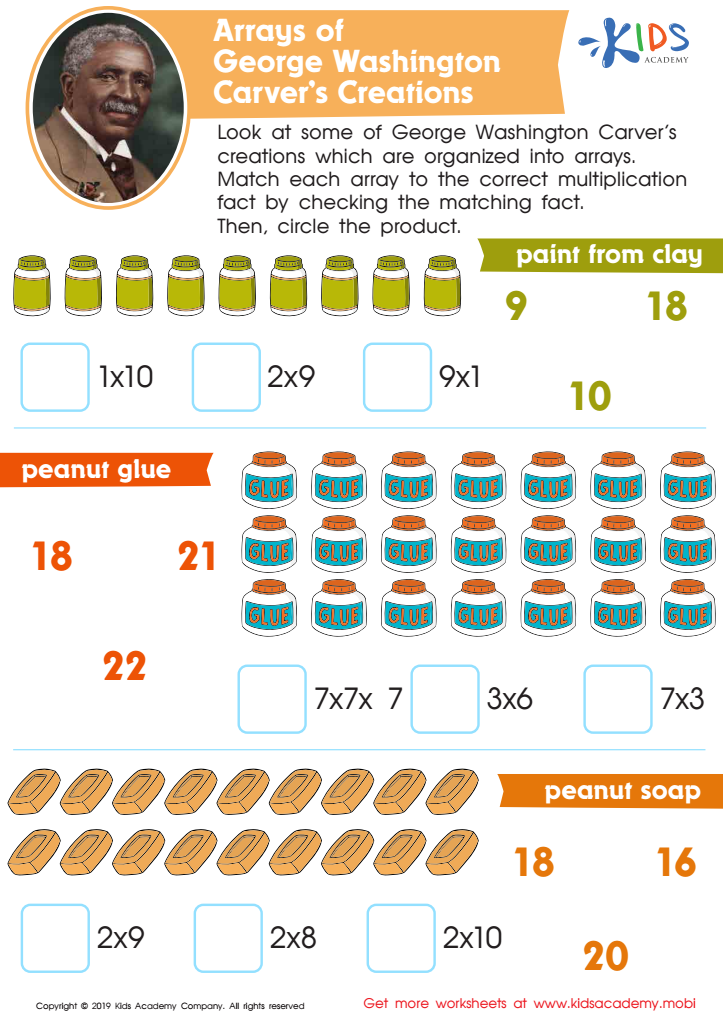
Arrays of George Washington Carver’s Creations Worksheet
 Assign to My Students
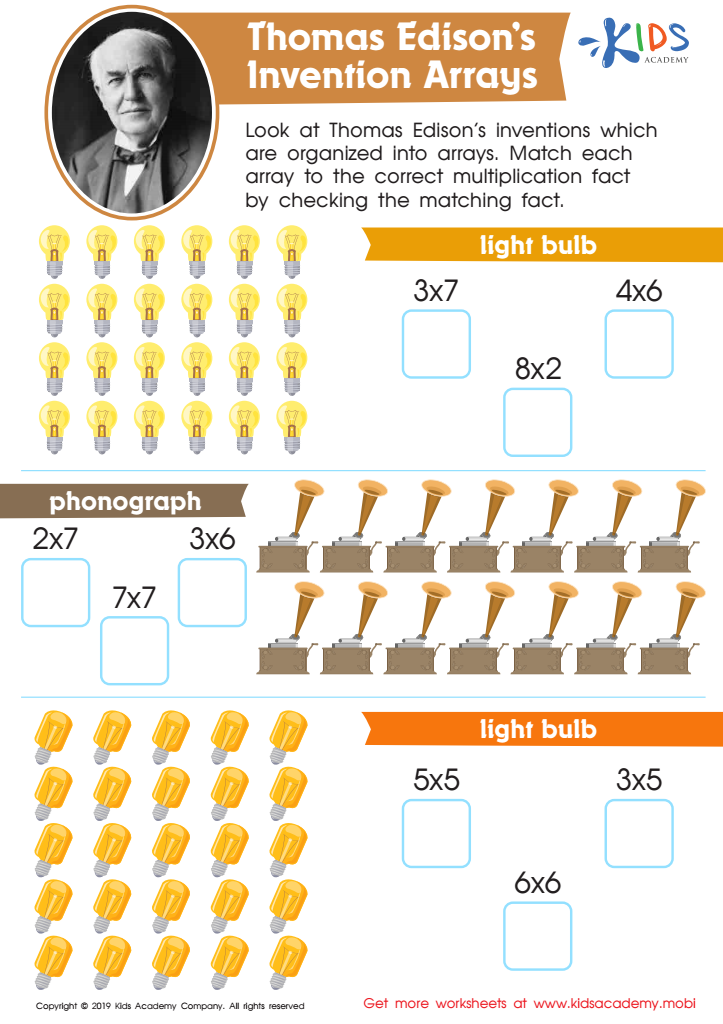
Thomas Edison’s Invention Arrays Worksheet
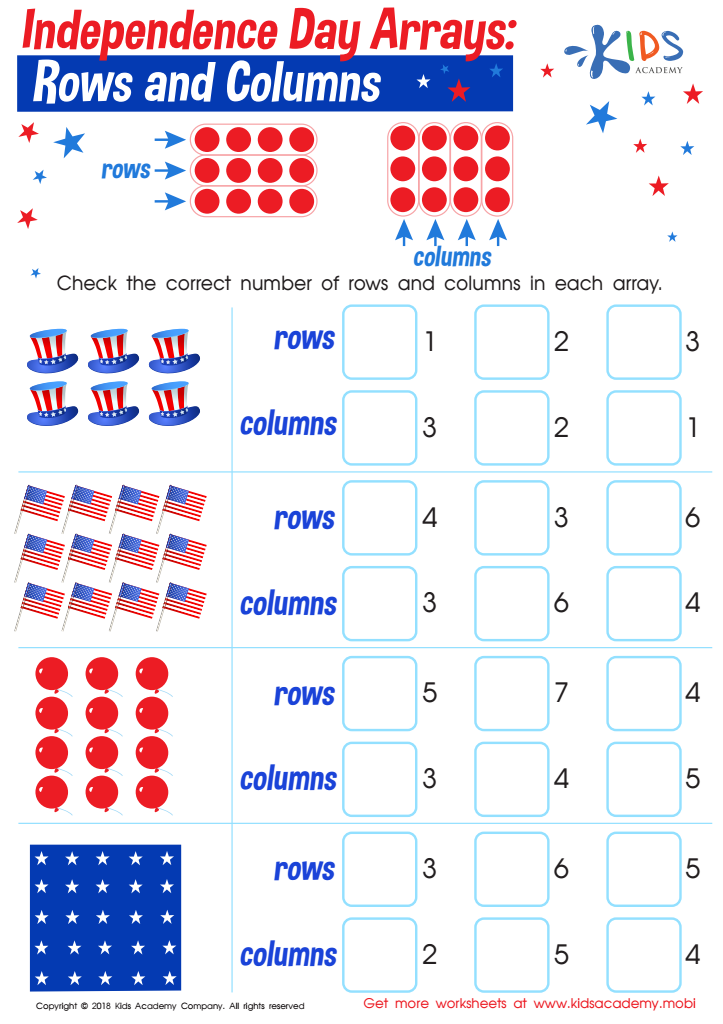
Independence Day Arrays: Rows and Columns Worksheet
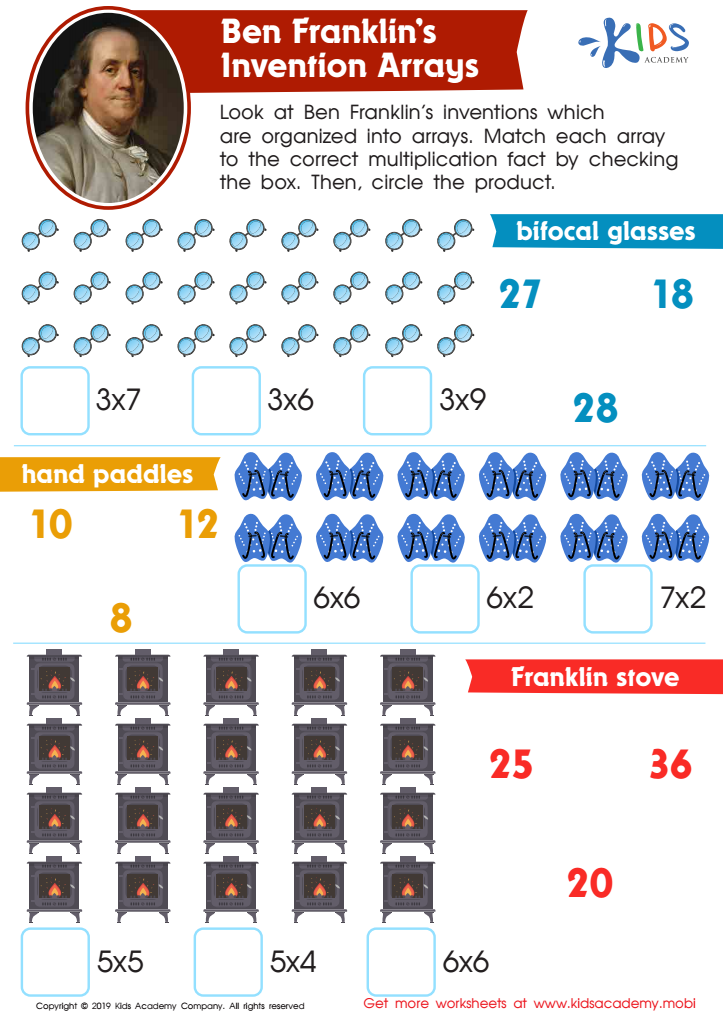
Ben Franklin’s Invention Arrays Worksheet






Parents and teachers should prioritize Historical Knowledge Arrays for children ages 5-9 as these frameworks foster foundational skills crucial for lifelong learning. Historical Knowledge Arrays provide a structured approach to understanding history, allowing young learners to make connections between events, people, and cultures. By engaging with these arrays, children develop critical thinking and reasoning skills as they learn to analyze the past.
Furthermore, early exposure to history cultivates a sense of identity and belonging. Children begin to understand their place in a broader historical context, fostering appreciation for diverse cultures and perspectives. Such awareness can instill empathy and promote global citizenship from a young age.
Incorporating historical knowledge into early education promotes language skills as children engage in discussions about historical timelines, figures, and narratives, thereby enriching their vocabulary. Additionally, using engaging, age-appropriate materials helps capture children’s interests, making learning more enjoyable and impactful.
Ultimately, by prioritizing Historical Knowledge Arrays, parents and teachers equip children with essential skills to navigate the world, encouraging curiosity and a passion for learning that can last a lifetime. Investing in historical knowledge not only builds academic foundations but also nurtures informed and compassionate future citizens.








