Multiplication practice Arrays Worksheets for Ages 5-9
4 filtered results
-
From - To
Enhance your child's multiplication skills with our engaging Arrays Worksheets designed specifically for ages 5-9! These printable resources visually introduce multiplication concepts through fun and interactive arrays, making learning math enjoyable and effective. Each worksheet is crafted to help young learners grasp multiplication through hands-on practice, improving their problem-solving abilities and mathematical fluency. With a variety of exercises that cater to different learning levels, children can progress at their own pace. Equip your little ones with essential math skills today and watch their confidence grow as they master multiplication through our delightful and educational worksheets!
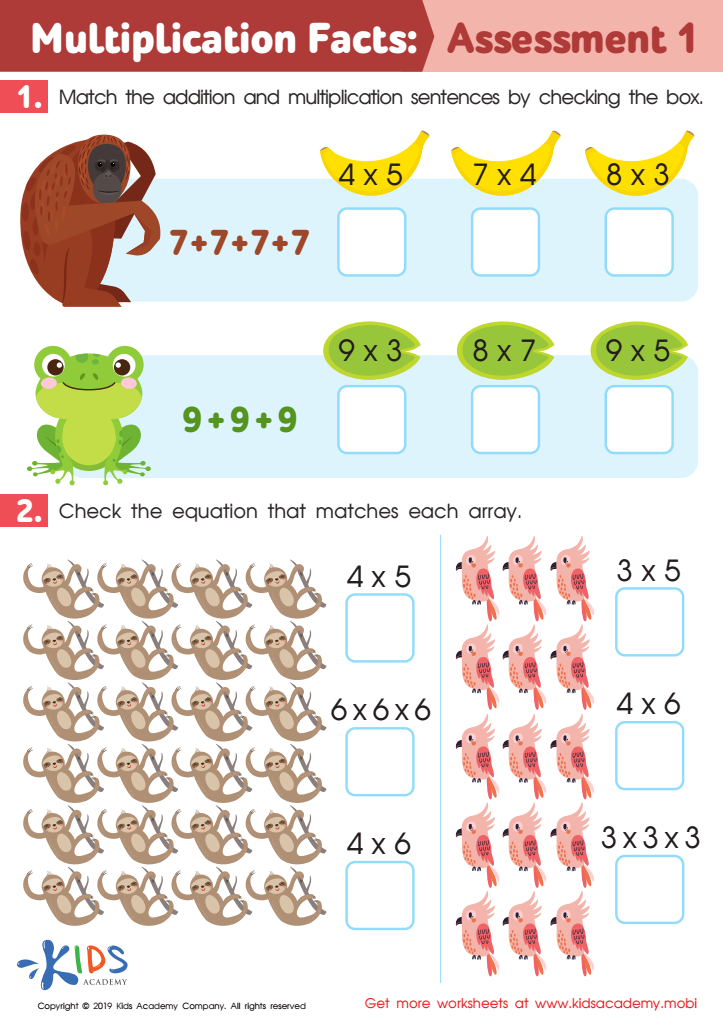
Multiplication Facts: Assessment 1 Worksheet
 Assign to My Students
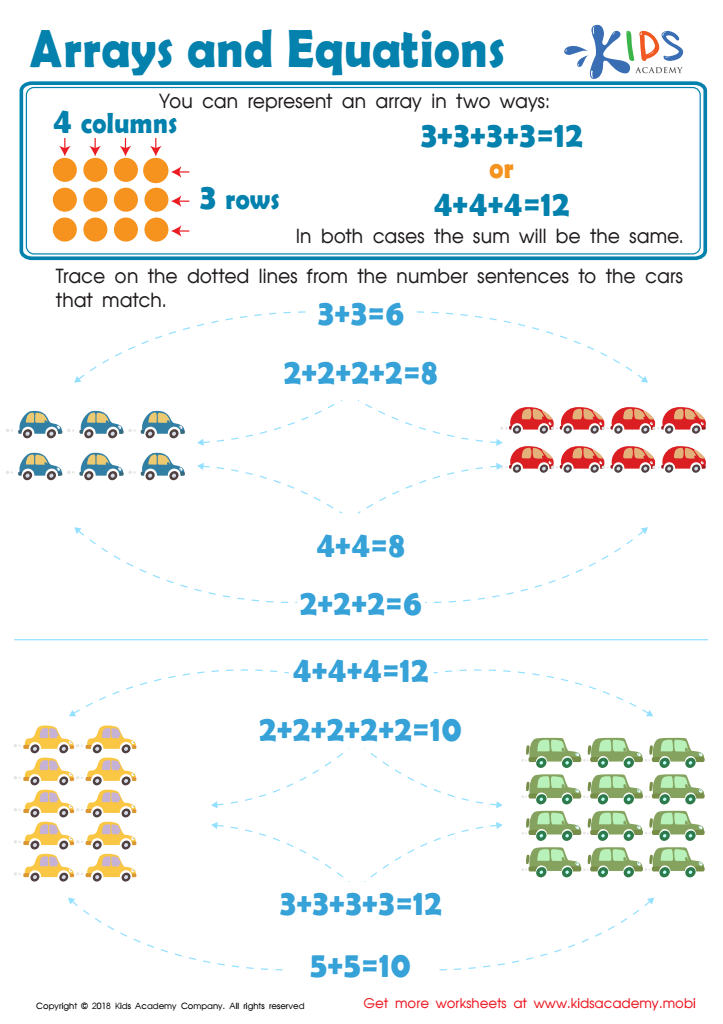
Arrays and Equations Worksheet
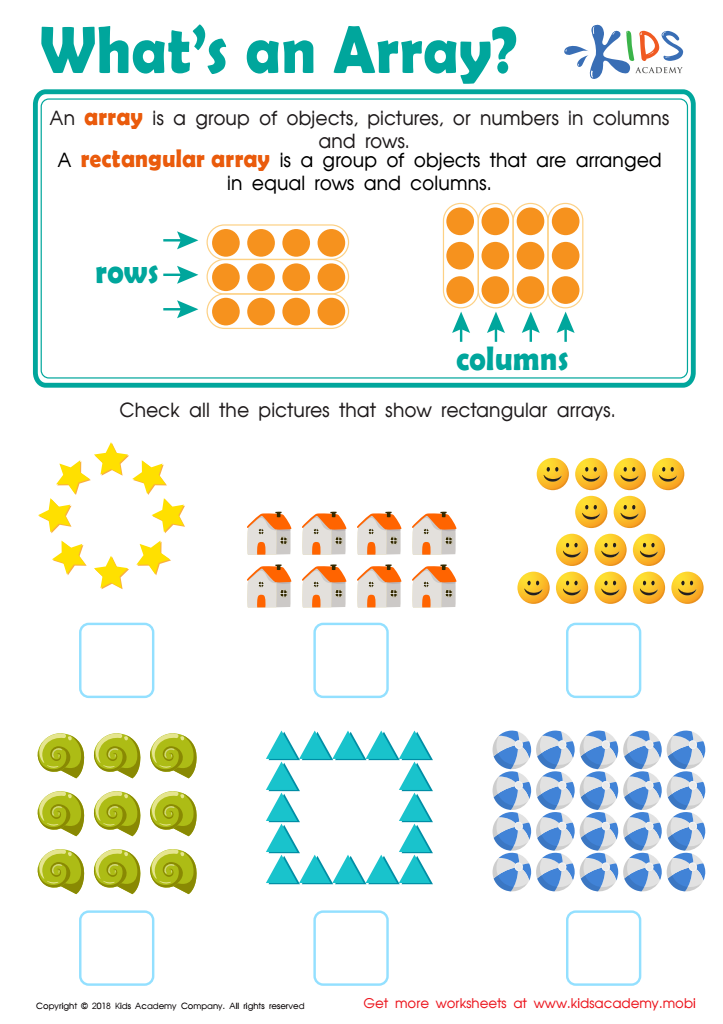
What's an Array? Worksheet
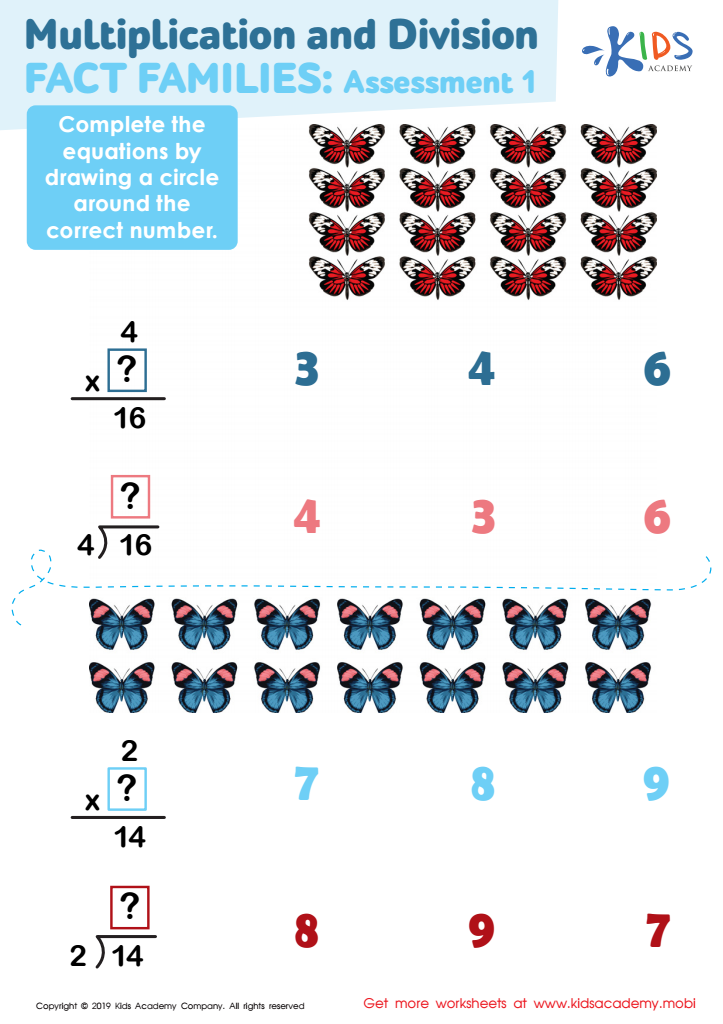
Multiplication and Division Fact Families Assessment 1 Worksheet








Parents and teachers should prioritize multiplication practice using arrays for children aged 5-9 due to its multifaceted benefits in learning foundational math skills. Arrays, which visually represent numbers in a grid format, help young learners understand the concept of multiplication as repeated addition. This visual approach simplifies complex ideas, making them more accessible and engaging for young minds.
By using arrays, children can easily grasp the relationship between factors and products, strengthening their overall numerical fluency. Additionally, arrays support the development of critical thinking and problem-solving skills. As children become familiar with organizing numbers, they also learn to recognize patterns, which is crucial for advanced mathematical concepts later on.
Furthermore, incorporating arrays into multiplication practice caters to various learning styles. Visual learners benefit from seeing the structure, while kinesthetic learners can physically create arrays with blocks or drawings, making the learning process interactive and enjoyable.
Ultimately, using arrays not only enhances multiplication skills but also fosters confidence in mathematics. As children build a solid foundation in multiplication, they develop a positive attitude toward math, setting the stage for future academic success. Engaging early learners with effective tools like arrays instills lifelong mathematical skills and a love for learning.








