Understanding patterns Basic Times Tables up to 12 Worksheets for Ages 5-9
3 filtered results
-
From - To
Unlock your child’s numerical potential with our "Understanding Patterns: Basic Times Tables up to 12" worksheets, designed for ages 5-9. Our thoughtfully crafted materials make learning multiplication fun and engaging. The exercises focus on identifying and understanding patterns within the times tables up to 12, instilling strong foundational skills in young learners. Perfect for classroom use or home practice, these worksheets offer a variety of activities to help children recognize relationships between numbers, paving the way for more advanced mathematical concepts. Empower your child with the confidence to tackle multiplication with ease through interactive learning and clear patterns.
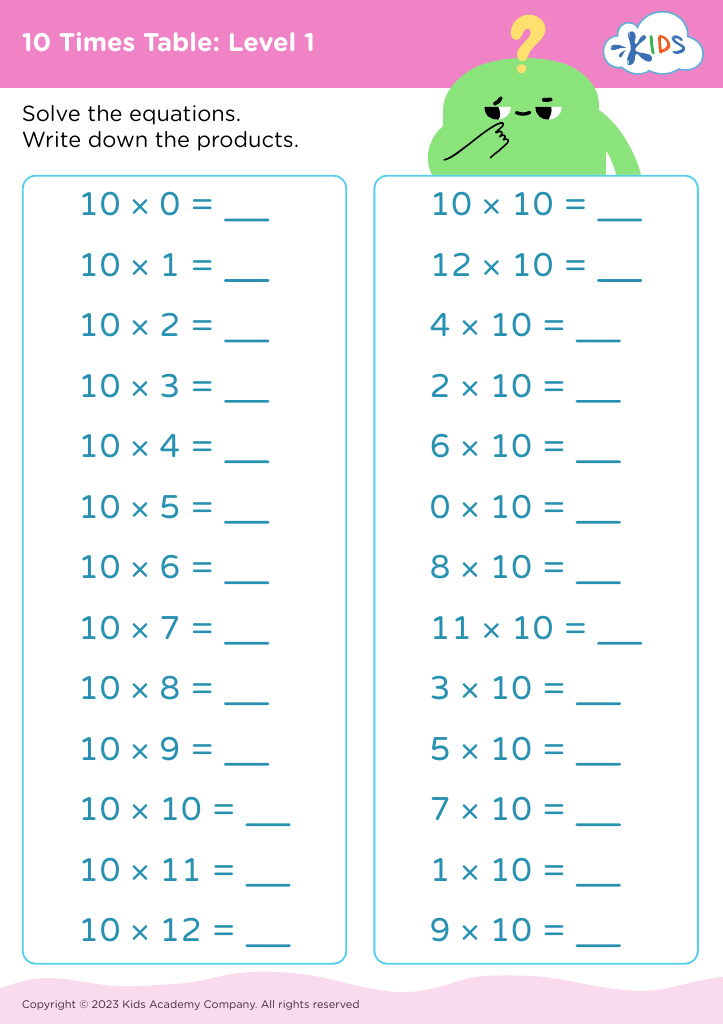
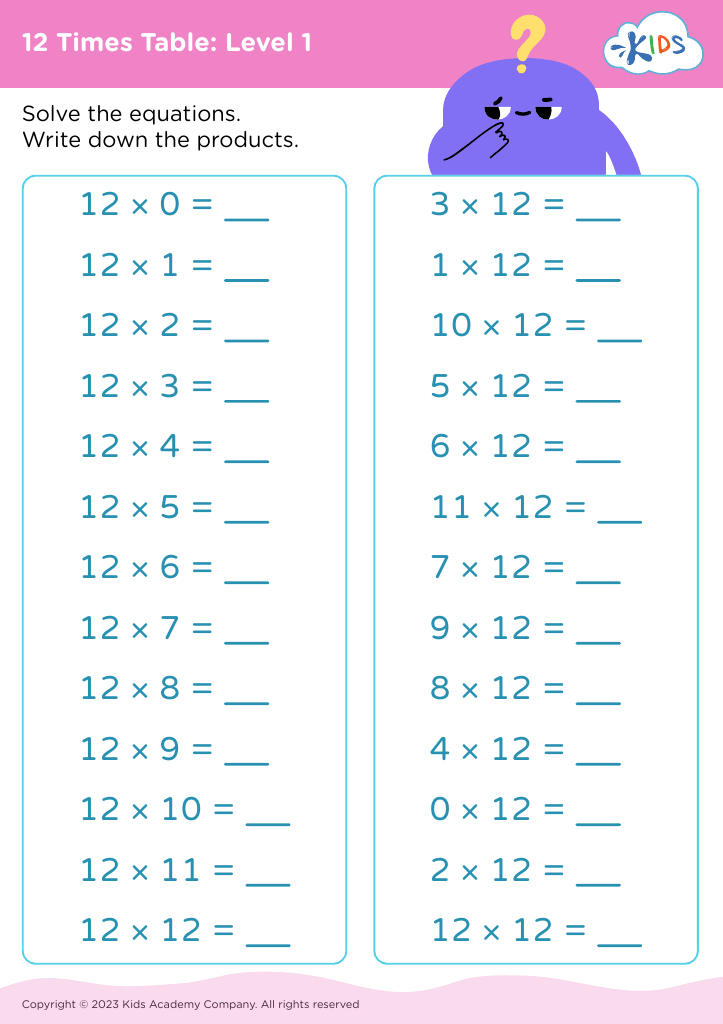
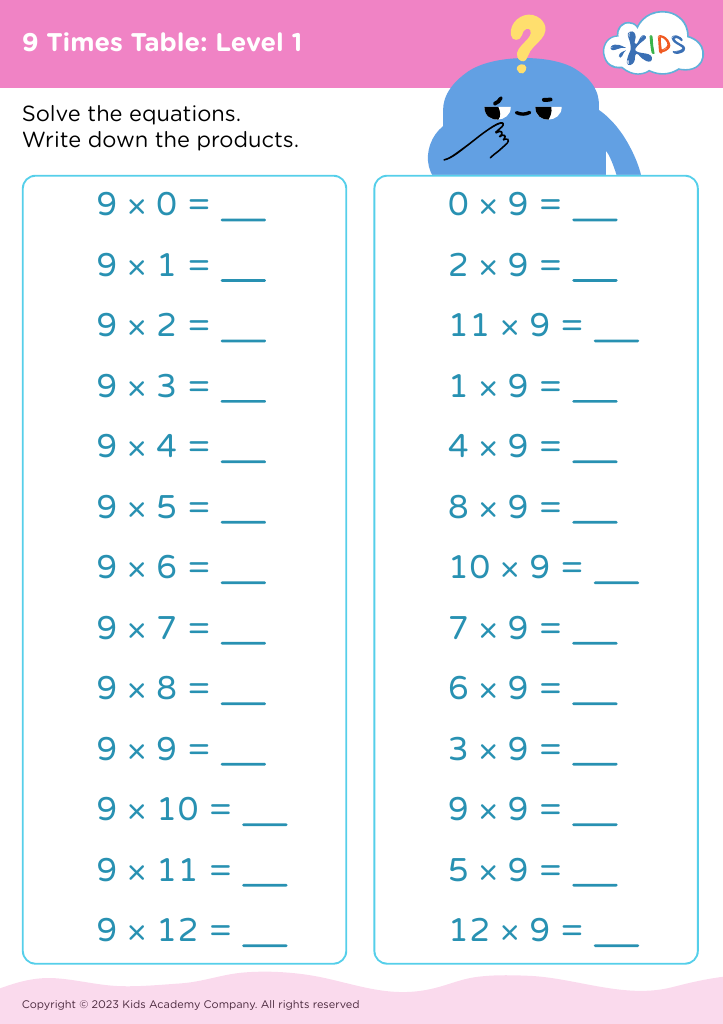


Understanding basic times tables up to 12 is crucial for ages 5-9 as it enhances several key skills essential for future mathematical comprehension and everyday activities. Firstly, mastering these times tables builds a foundation for more complex math problems. For young learners, consolidating multiplication facts frees up cognitive resources, allowing them to tackle higher-order math concepts, such as division, fractions, and algebra, with greater ease.
Secondly, it promotes pattern recognition. Noticing consistent patterns in multiplication helps children develop critical thinking and problem-solving skills. It fosters their ability to see relationships between numbers, boosting their overall mathematical fluency.
Moreover, familiarity with times tables improves mental arithmetic, which is valuable for practical tasks such as understanding prices, managing time, and measuring items. This fluency also plays a critical role in standardized testing and academic performance in subsequent school years.
Lastly, developing competence in times tables bolsters confidence. A child who quickly recalls multiplication facts feels more competent and motivated in math, creating a positive feedback loop that encourages further learning and curiosity.
Therefore, parents and teachers should prioritize the understanding of basic times tables, as it underpins various key educational and real-life skills, establishing a strong groundwork for a child's growth in mathematics and beyond.








