Basic geometry Geometry Worksheets for Ages 5-9
3 filtered results
-
From - To
Explore our engaging Basic Geometry Worksheets designed for children aged 5 to 9! These interactive materials introduce foundational concepts such as shapes, sizes, and spatial awareness through fun activities. Our worksheets cater to different learning styles, ensuring that each child can grasp essential geometry skills while enjoying the process. From identifying basic 2D shapes to understanding patterns and spatial relationships, our resources encourage hands-on learning and creativity. Perfect for home or classroom use, these worksheets not only reinforce mathematical concepts but also build critical thinking skills. Start your child's geometry journey today with our colorful and captivating activities!
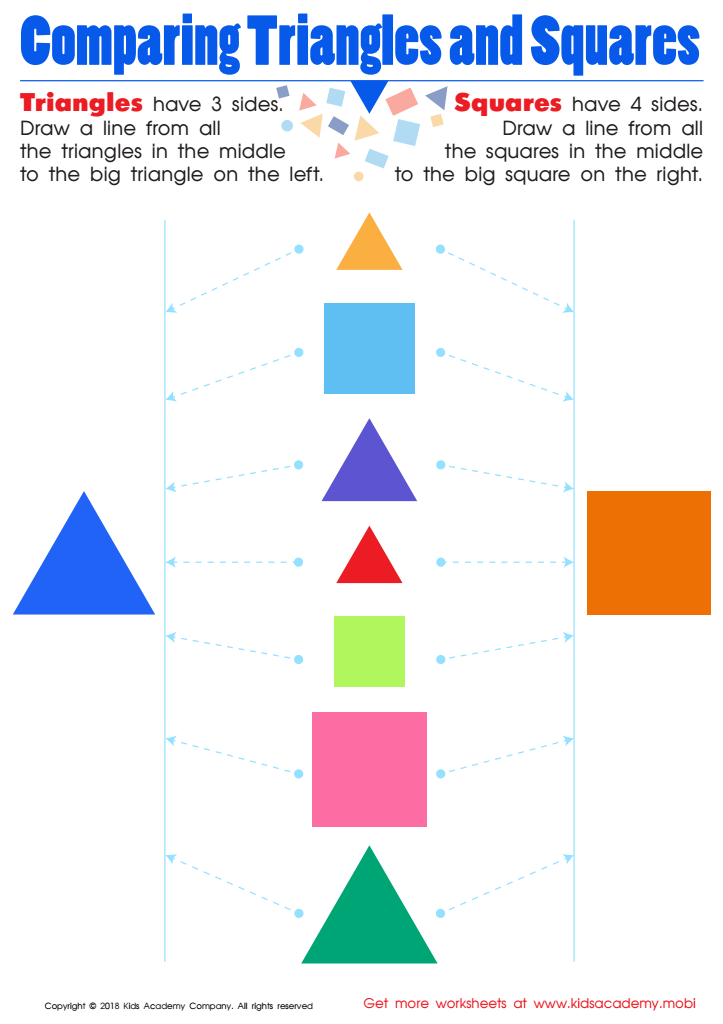
Comparing Triangles Squares Worksheet
 Assign to My Students











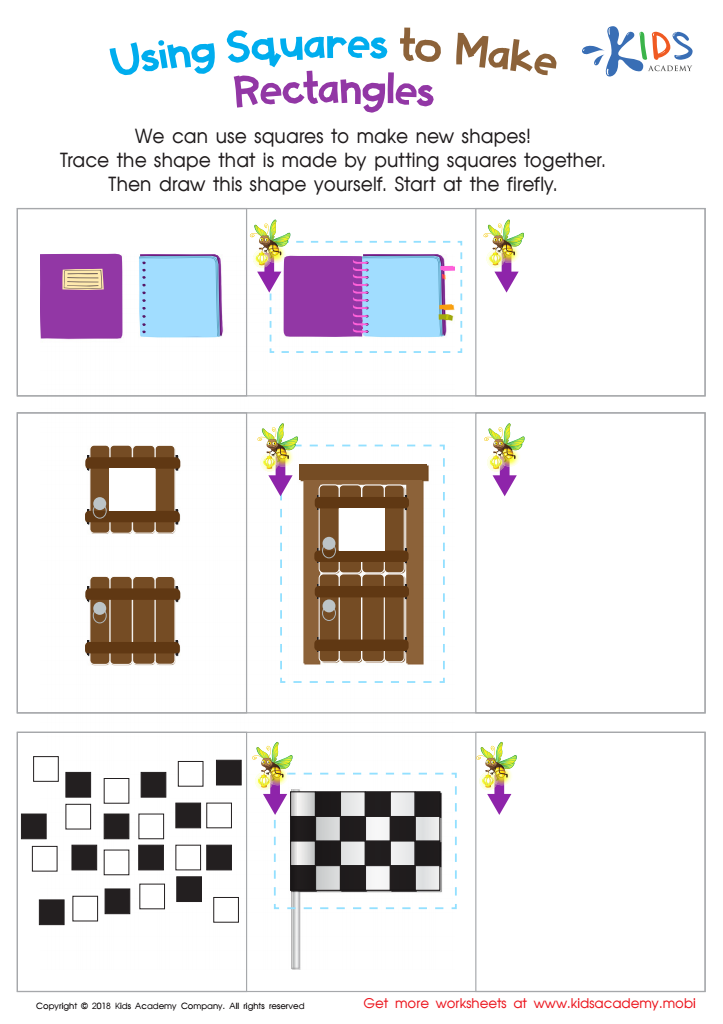
Using Squares to Make Rectangles Worksheet
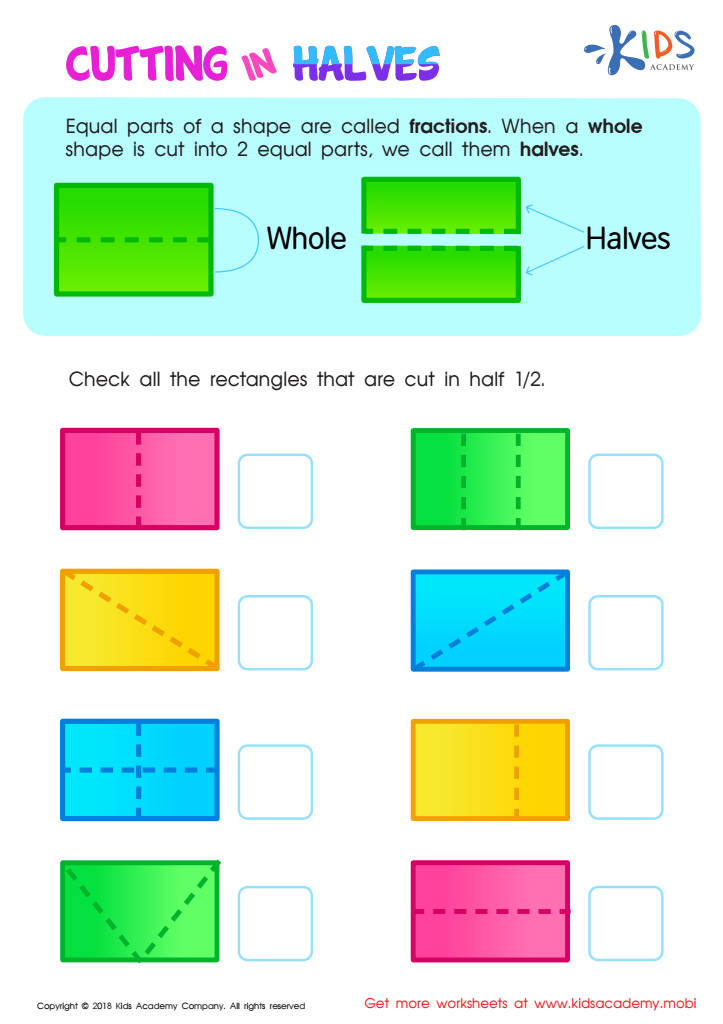
Cutting in Halves Worksheet








Parents and teachers should prioritize basic geometry for children aged 5-9 because it lays a vital foundation for overall cognitive development and critical thinking skills. During these crucial early years, children are naturally curious and explore their environment, making geometry an ideal avenue for learning through play and exploration.
Introducing basic geometric concepts—such as shapes, spatial relationships, and patterns—helps young learners develop their observational skills. Recognizing shapes in everyday objects fosters their ability to classify and organize information, essential skills for more complex mathematical and scientific reasoning later in life.
Moreover, basic geometry supports language development as children learn to describe shapes and spatial relationships, enhancing their vocabulary and communication skills. Engaging with geometry also promotes fine motor skills through activities like drawing, building, and crafting, providing a multi-sensory approach to learning.
Understanding geometry encourages logical thinking and problem-solving abilities as children begin to recognize and solve spatial problems. These foundational skills are not only crucial for future mathematical concepts but also for real-life applications, from navigation to architecture. In essence, a strong grasp of basic geometry cultivates a well-rounded skill set, preparing young learners for success in various academic and everyday contexts.








