Data analysis Graphs Worksheets for Ages 5-9
3 filtered results
-
From - To
Unlock the exciting world of data with our interactive Data Analysis Graphs Worksheets, specially crafted for ages 5-9. Explore vibrant, easy-to-understand charts and graphs to help young learners grasp essential math skills. Through engaging exercises, children can practice reading and interpreting different types of graphs, enhancing both their math and analytical prowess. Ideal for at-home learning or classroom activities, our printable worksheets are designed to develop critical thinking by encouraging kids to analyze data intuitively and with confidence. Perfect for budding mathematicians, these resources make data analysis fun, insightful, and educational! Dive into learning today!
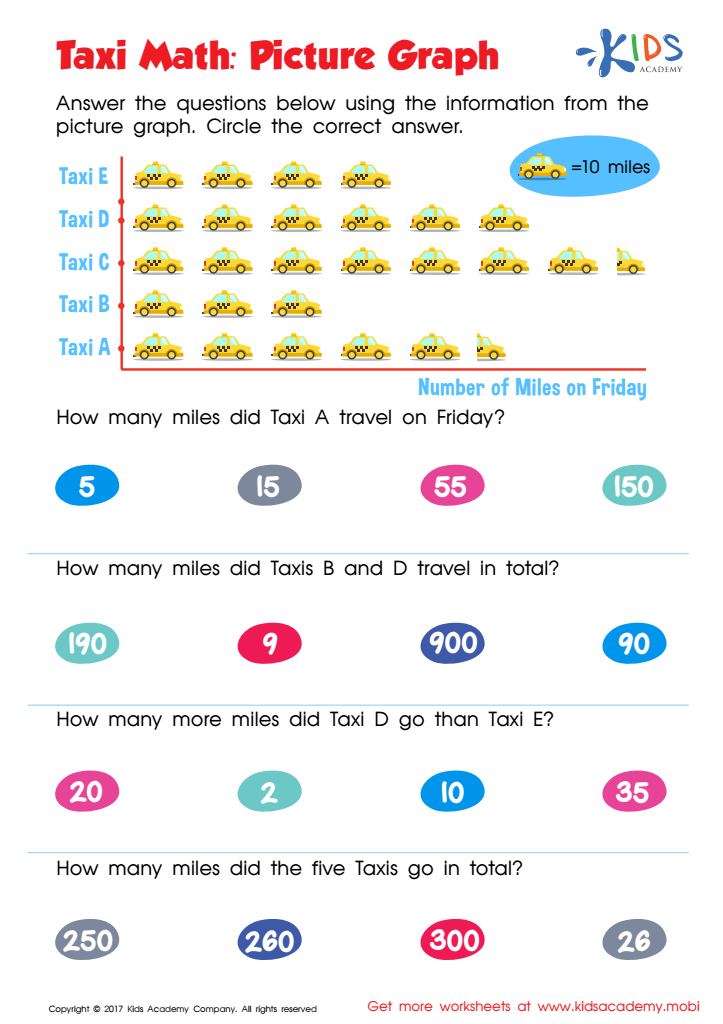
Taxi Math Worksheet
 Assign to My Students
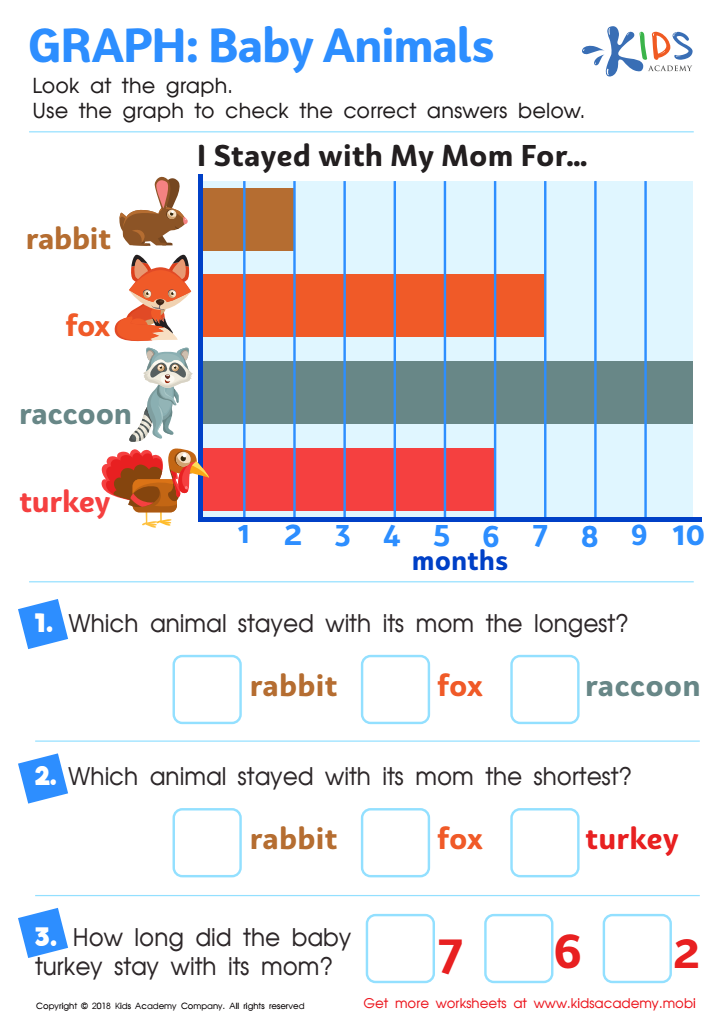
Graph: Baby Animals Worksheet
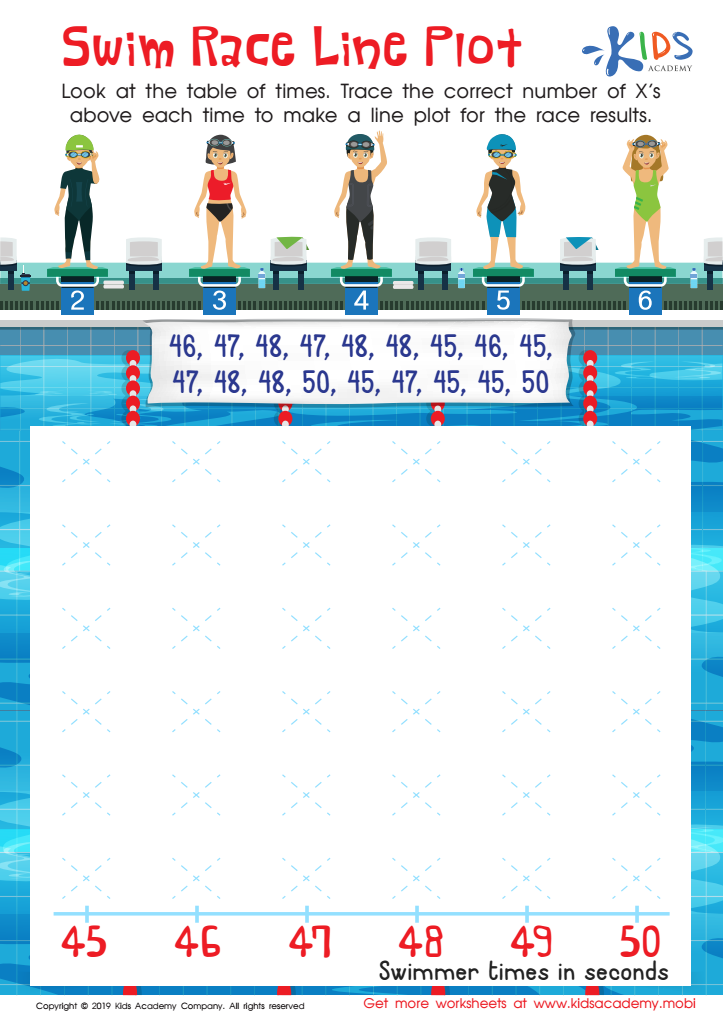
Swim Race Line Plot Worksheet








Data analysis and graphs for children ages 5-9 are crucial tools that parents and teachers should care about because they build foundational skills essential for future learning. At these early ages, engaging with graphs and simple data sets helps children develop critical thinking and observational skills. By interpreting visual data, kids learn how to spot patterns, make predictions, and understand relationships between different pieces of information.
Incorporating graphs into early education aligns well with natural curiosity about the world. For instance, children can chart classroom activities, weather patterns, or even their favorite snacks. This not only makes learning interactive and enjoyable but also introduces practical applications for math and science concepts.
Additionally, familiarizing young children with data analysis boosts their numerical literacy. Concepts like counting, comparing quantities, and making sense of charts lay the groundwork for more complex mathematical reasoning later on. As children interpret graphical information, they also enhance their communication skills by discussing their findings, thereby learning to convey information clearly and effectively.
Moreover, the ability to understand and analyze data is becoming increasingly important in the modern, data-driven world. By allowing children to interact with data early on, parents and teachers set them on a path toward proficiency in a skill set that will be indispensable in their future academic and professional careers.








