Money recognition Numbers Worksheets for Ages 5-9
3 filtered results
-
From - To
Looking to help your child master money recognition and numbers? Our printable Money Recognition Numbers Worksheets for ages 5-9 are designed to make learning fun and effective! These engaging activities assist young learners in identifying different coins and bills while strengthening their foundational math skills. Through interactive exercises, kids will boost their confidence in counting, adding, and using money in real-life situations. Suitable for classroom or home use, these worksheets cater to various learning styles, ensuring every child progresses at their own pace. Foster financial literacy early with our expertly crafted resources designed by educational professionals.
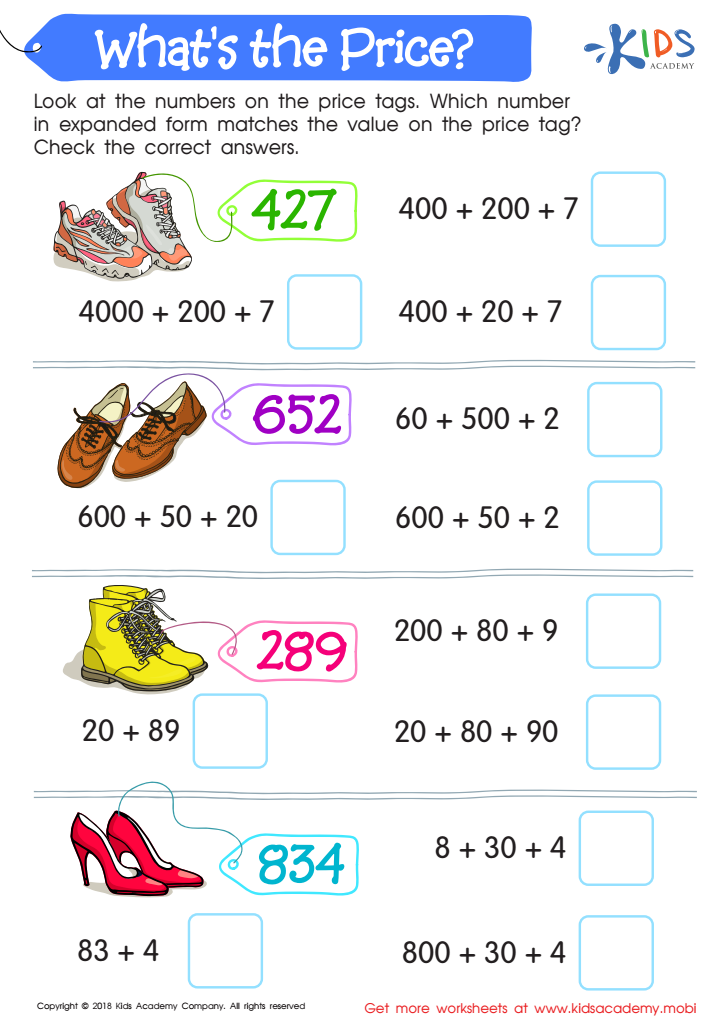
What's the Price? Worksheet
 Assign to My Students
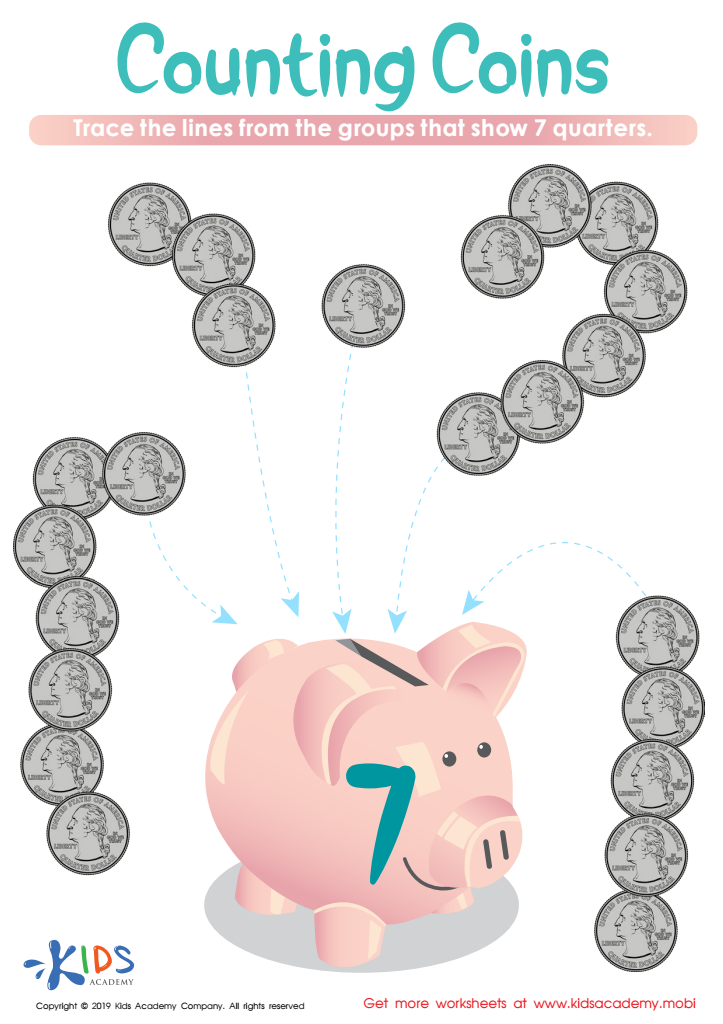
Counting Coins Worksheet
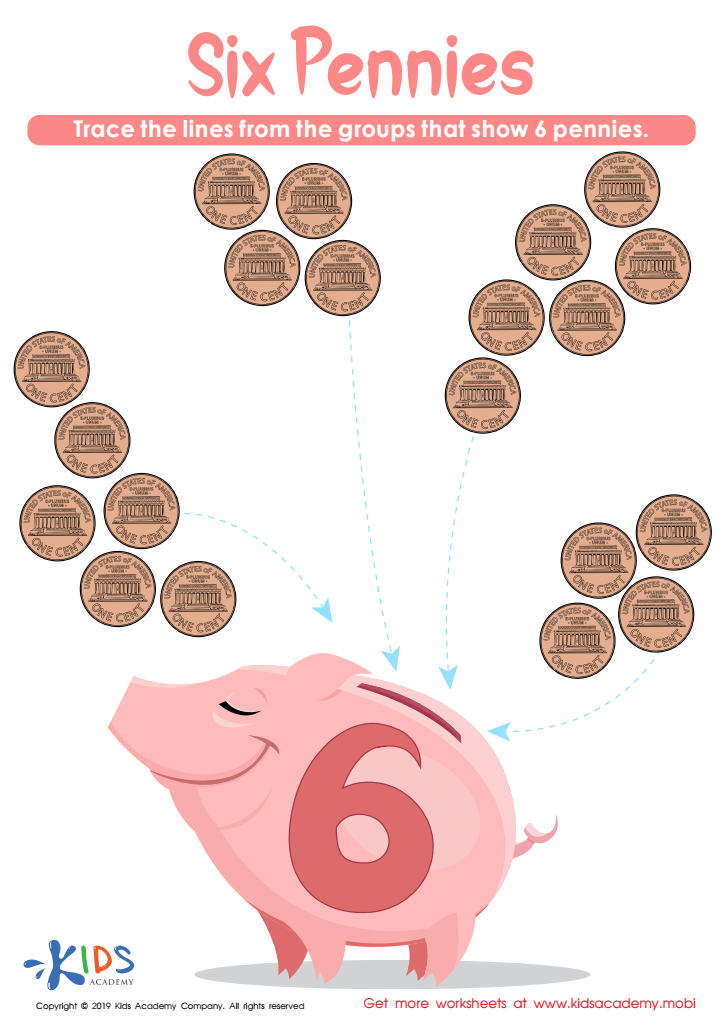
Six Pennies Worksheet








Understanding money recognition and numbers is crucial for children aged 5-9 because it lays the foundation for essential life skills that they will use throughout their lives. For parents and teachers, fostering these skills helps children develop mathematical competence and financial literacy from an early age.
First, recognizing coins, bills, and understanding their values enhance basic math skills. Children practice counting, addition, and subtraction, which are fundamental to more complex math concepts later on. These activities also improve fine motor skills when children handle and sort different coins and bills.
Second, learning about money encourages practical decision-making and problem-solving. When children recognize money and understand its value, they begin to grasp the concepts of saving, spending, and budgeting. These lessons promote responsible money management habits and help prevent financial difficulties in the future.
Additionally, engaging young children in money recognition activities can boost their confidence. They gain a sense of responsibility as they learn to manage small amounts of money for personal use, such as handling allowances or buying small treats. This empowerment fosters independence and self-reliance.
In sum, parents and teachers play a pivotal role in introducing children to money and numbers. Investing in these early educational experiences equips children with essential skills for academic success and everyday life.








