Recognizing Patterns Numbers Worksheets for Ages 5-9
3 filtered results
-
From - To
Unlock your child's potential with our "Recognizing Patterns Numbers Worksheets for Ages 5-9". These engaging and educational resources are thoughtfully designed to enhance number recognition and mathematical skills. Featuring a variety of fun exercises and colorful illustrations, our worksheets encourage critical thinking, boost counting skills, and foster a love for numbers. Perfect for kindergarten to third grade, our activities adapt with your child's growth, aligning with their changing learning needs. Let your child discover the joy of patterns and sequences while building a solid foundation in math. Explore today and make learning a fun adventure!
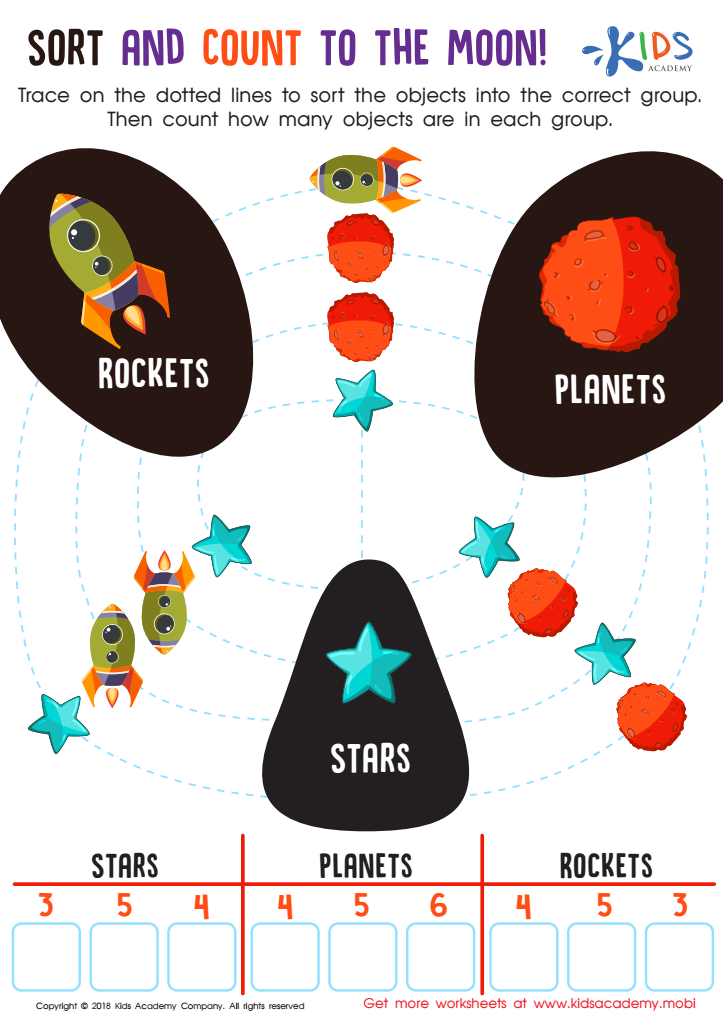
Sort and Count to the Moon Worksheet
 Assign to My Students
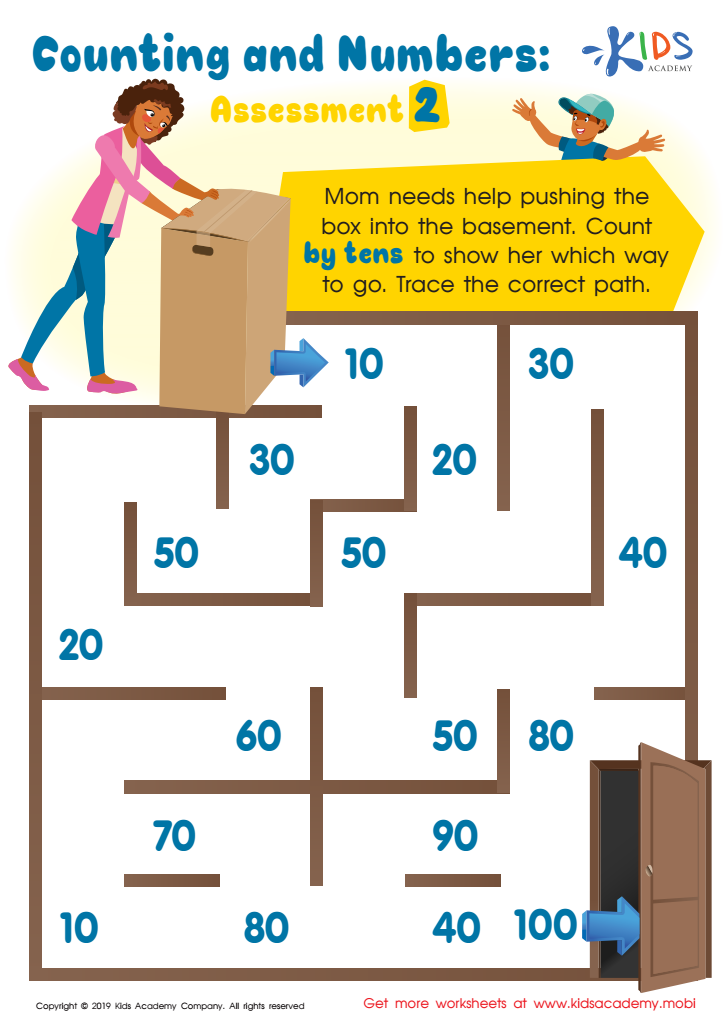
Counting and Numbers: Assessment 2 Worksheet
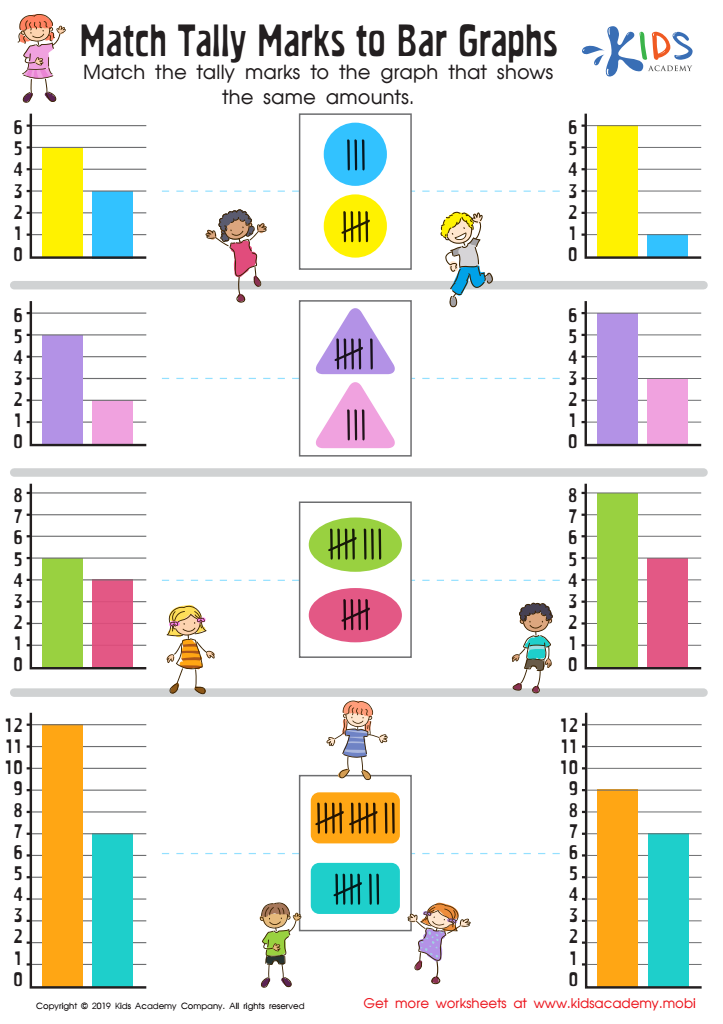
Match Tally Marks to Bar Graphs Worksheet






%20(1).jpg)

Recognizing number patterns is critical for children aged 5-9 because it lays the foundation for advanced mathematical thinking and problem-solving skills. At this developmental stage, children are naturally curious and have an impressive capacity for learning. When parents and teachers highlight number patterns, they tap into this curiosity and enhance cognitive development.
Understanding number patterns helps children make sense of their world. For example, recognizing simple sequences like even and odd numbers or counting by twos, fives, or tens helps children develop a sense of order and predictability. This understanding is crucial for tasks ranging from basic arithmetic to more complex mathematical operations.
Moreover, pattern recognition boosts critical thinking and logical reasoning. When children identify patterns, they learn to anticipate what comes next, make predictions, and solve problems systematically. This skill is not confined to mathematics alone but extends to other subjects, fostering overall academic success.
Additionally, engaging with number patterns can also promote a positive attitude toward math by making learning fun and interactive. When children see the beauty and order in numbers, they are more likely to develop a lifelong appreciation for the subject, which can lead to a sustained interest and better performance in mathematics over time.
In essence, recognizing number patterns is a vital building block in the developmental continuum, laying the groundwork for future learning and daily life skills.








