Basic geometry Math Worksheets for Ages 5-9
3 filtered results
-
From - To
Welcome to our collection of Basic Geometry Math Worksheets designed for children aged 5-9! Our engaging and interactive worksheets introduce young learners to fundamental geometric concepts, including shapes, sizes, and spatial reasoning. With vibrant illustrations and fun activities, kids will love exploring circles, squares, triangles, and more. These worksheets help strengthen critical thinking skills while promoting an understanding of geometry in a playful way. Perfect for classroom use or home practice, our resources are crafted to aid early math development in a supportive and enjoyable environment. Dive into geometry with us and watch your child's confidence and skills grow!
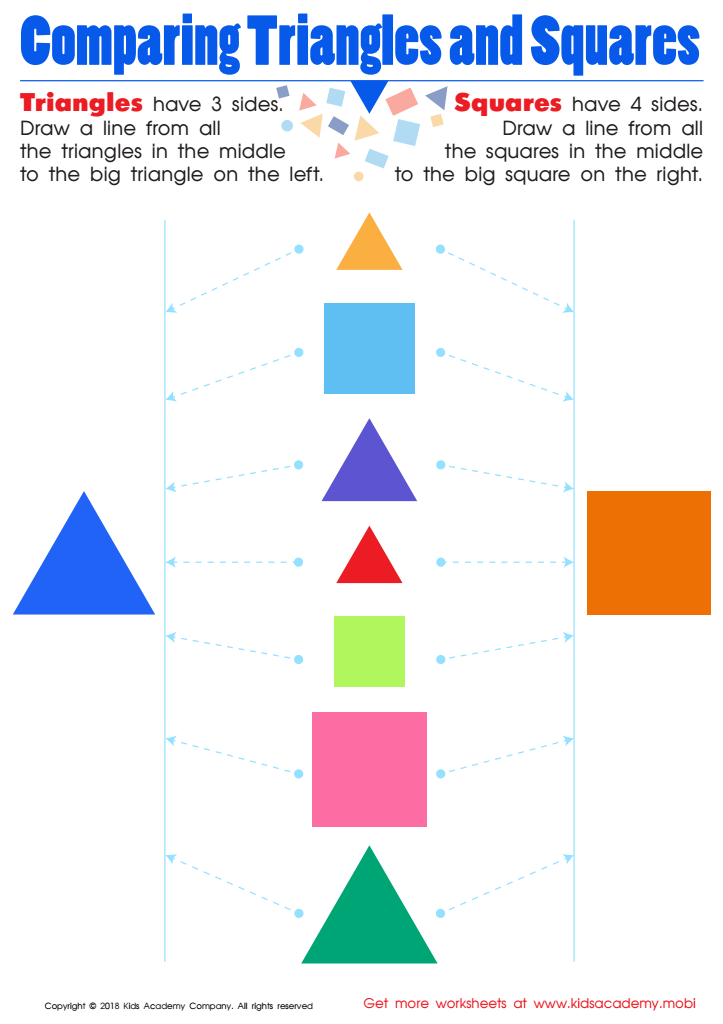
Comparing Triangles Squares Worksheet
 Assign to My Students
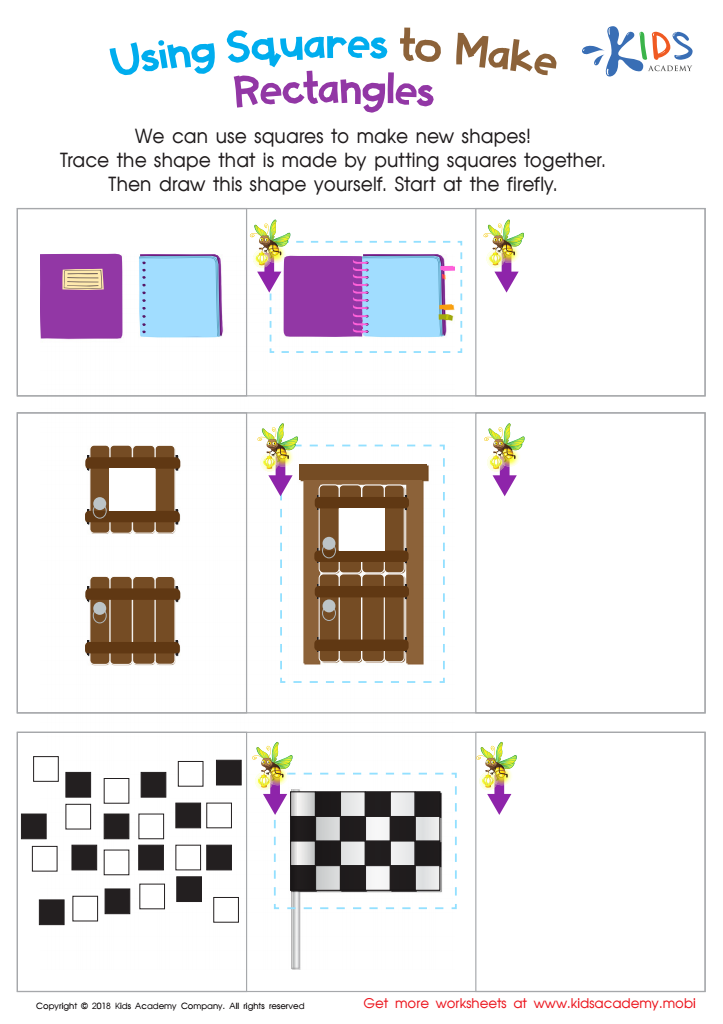
Using Squares to Make Rectangles Worksheet
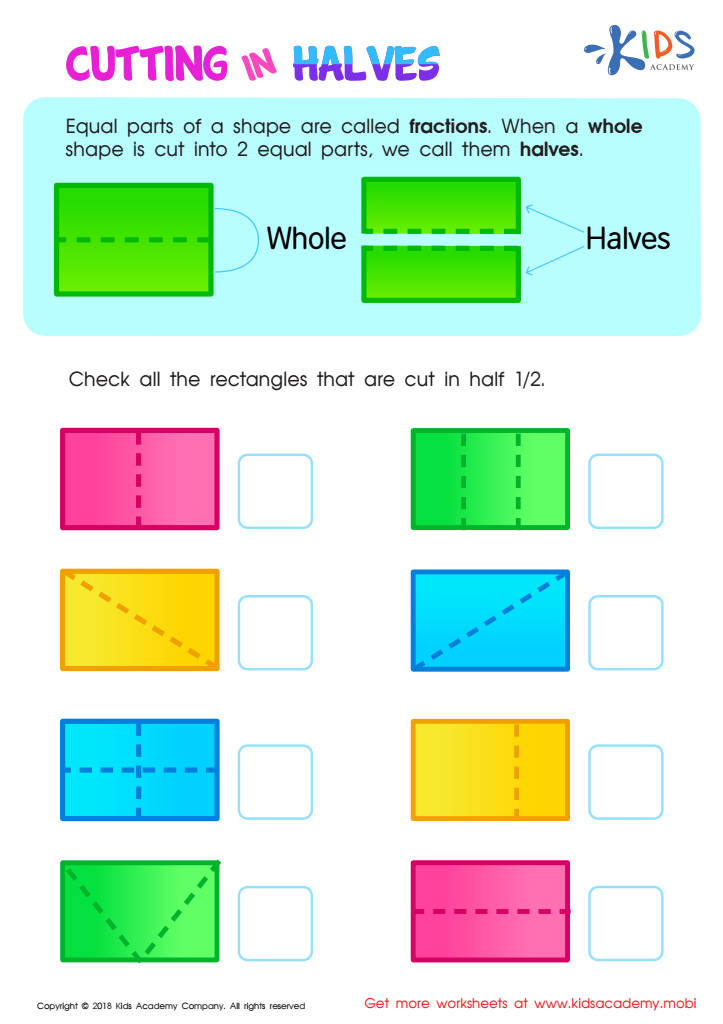
Cutting in Halves Worksheet








Basic geometry is essential for children aged 5-9 as it lays the foundation for their mathematical understanding and critical thinking skills. At this age, children's cognitive abilities are rapidly developing, making it a prime time to introduce geometric concepts such as shapes, sizes, areas, and spatial relationships. Learning geometry enhances their ability to categorize and organize information, which is crucial not only for math but across subjects.
Geometry also improves fine motor skills through hands-on activities like drawing shapes, building models, or using geometric tools. These activities promote creativity and help children visualize mathematical concepts, making them more relatable and easier to grasp. Furthermore, basic geometry supports problem-solving abilities and logical reasoning, skills vital for future academic success.
In everyday life, geometric knowledge aids children in understanding patterns and structures in the world around them—such as recognizing shapes in architecture or nature—fostering awareness and observation skills. By prioritizing geometry in early education, parents and teachers set the stage for stronger mathematics proficiency, enrich children's spatial reasoning, and prepare them for more complex concepts in the future. Ultimately, this foundational knowledge contributes significantly to their overall cognitive development and academic achievement.








