Building vocabulary Math Worksheets for Ages 5-9
3 filtered results
-
From - To
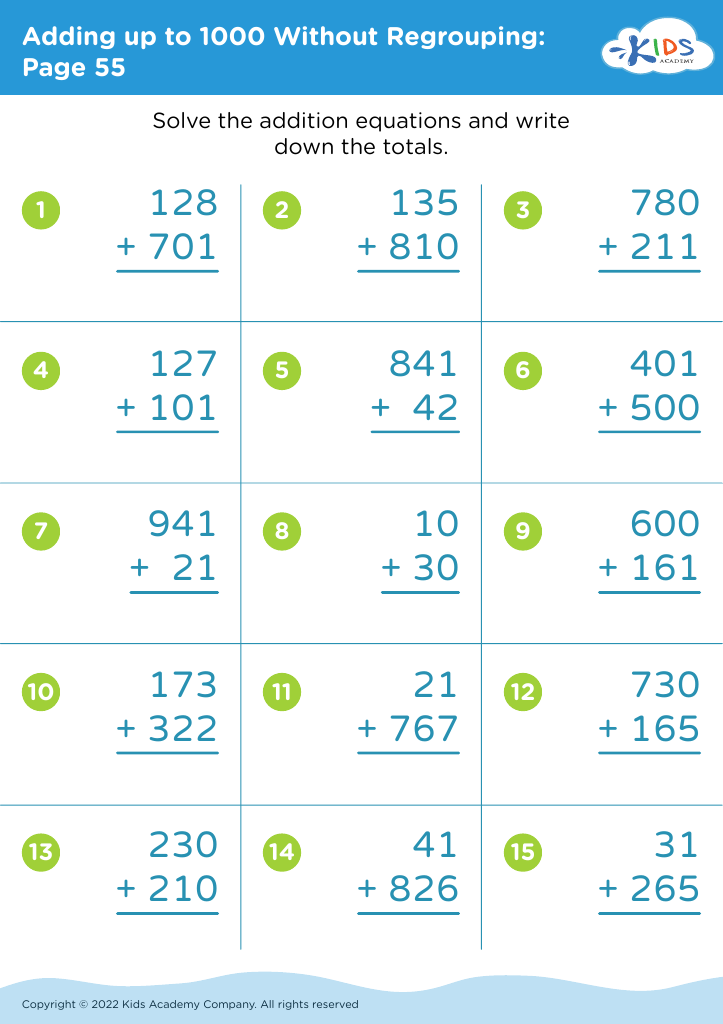
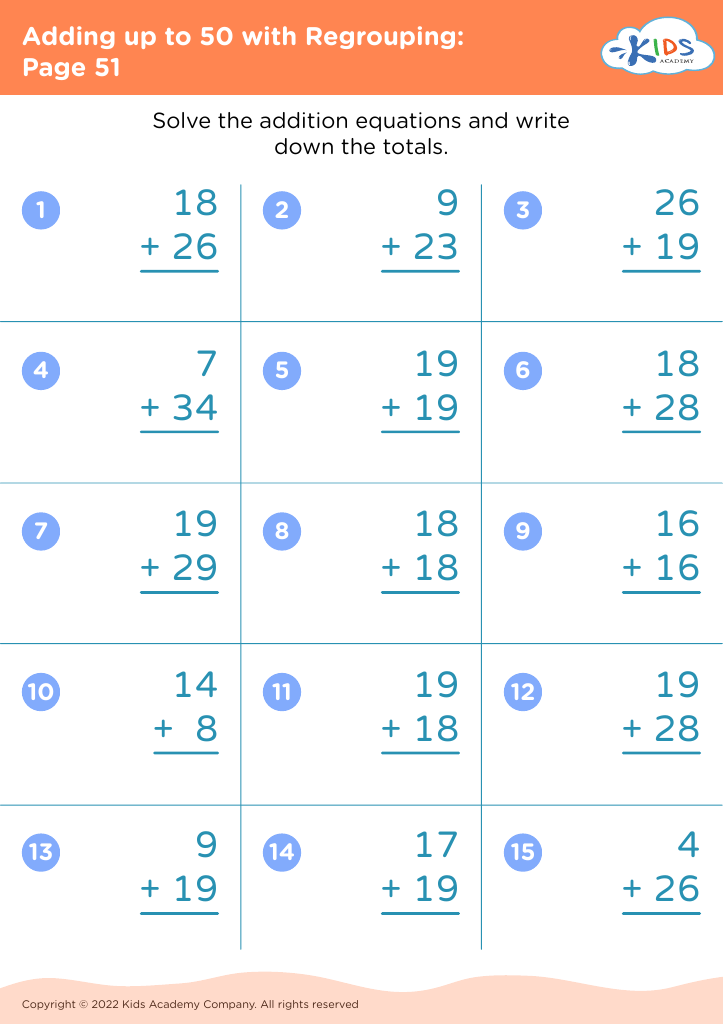
Enhance your child's math skills with our engaging Building Vocabulary Math Worksheets for ages 5-9! Designed to support young learners, these worksheets combine mathematics concepts with vocabulary development, making learning both enjoyable and effective. Each activity focuses on key math terminology, helping students understand and communicate their ideas clearly. With vibrant illustrations and thoughtful prompts, kids will practice essential skills while expanding their knowledge of mathematical language. Ideal for use at home or in the classroom, our printable worksheets are perfect for reinforcing lessons and promoting independent learning. Start building a strong foundation in math vocabulary today and watch your child thrive!
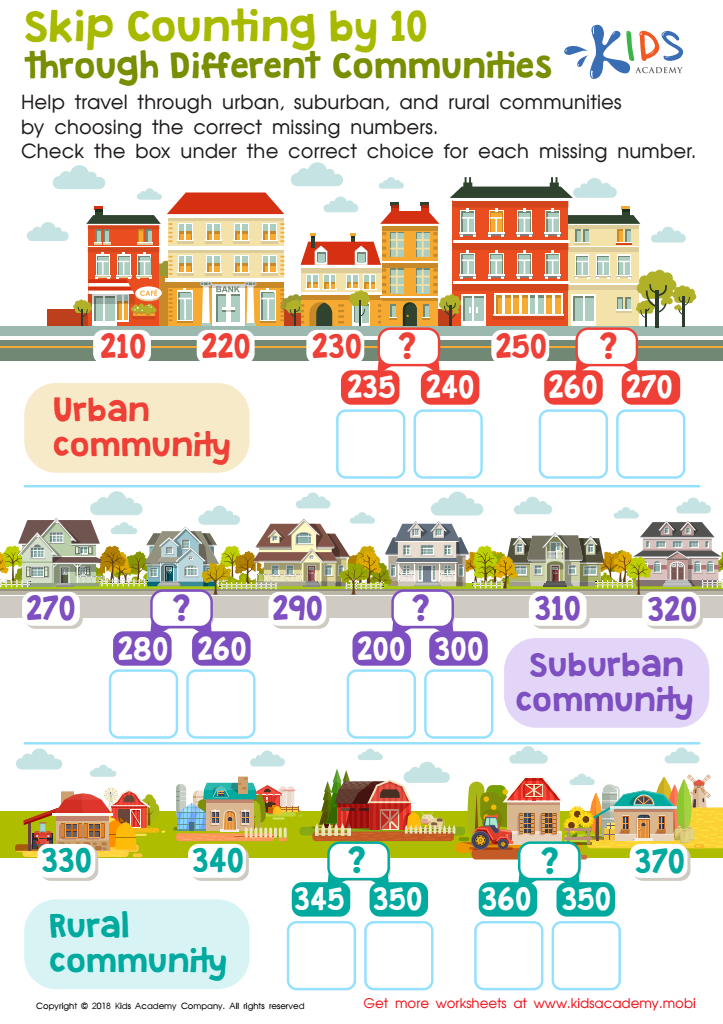
Skip Counting by 10 through Different Communities Worksheet
 Assign to My Students








Building vocabulary in math for children aged 5-9 is crucial for several reasons. Firstly, a strong mathematical vocabulary enhances comprehension. When children understand terms like "sum," "difference," and "greater than," they can better follow instructions, solve problems, and communicate their thinking. This foundational vocabulary significantly impacts their ability to grasp new concepts.
Secondly, math vocabulary is linked to overall literacy. Just as reading and writing skills are essential for academic success, so too is the ability to articulate mathematical ideas. Integrating vocabulary development within math lessons fosters critical thinking and encourages students to express their understanding.
Moreover, early exposure to math vocabulary cultivates positive attitudes towards mathematics. When students feel confident speaking and understanding math concepts, they are more likely to engage with the subject and develop enthusiasm for future mathematical learning.
Lastly, parents and teachers play a role in modeling language use in math contexts, providing a rich linguistic environment that supports development. Encouraging discussions around mathematical ideas at home and in the classroom helps reinforce the vocabulary skills essential for success in primary education and beyond. Fostering this early vocabulary is, therefore, a vital step in nurturing competent, confident learners equipped for future challenges.








