Comparing Fractions Math Worksheets for Ages 5-9 - Page 3
100 filtered results
-
From - To
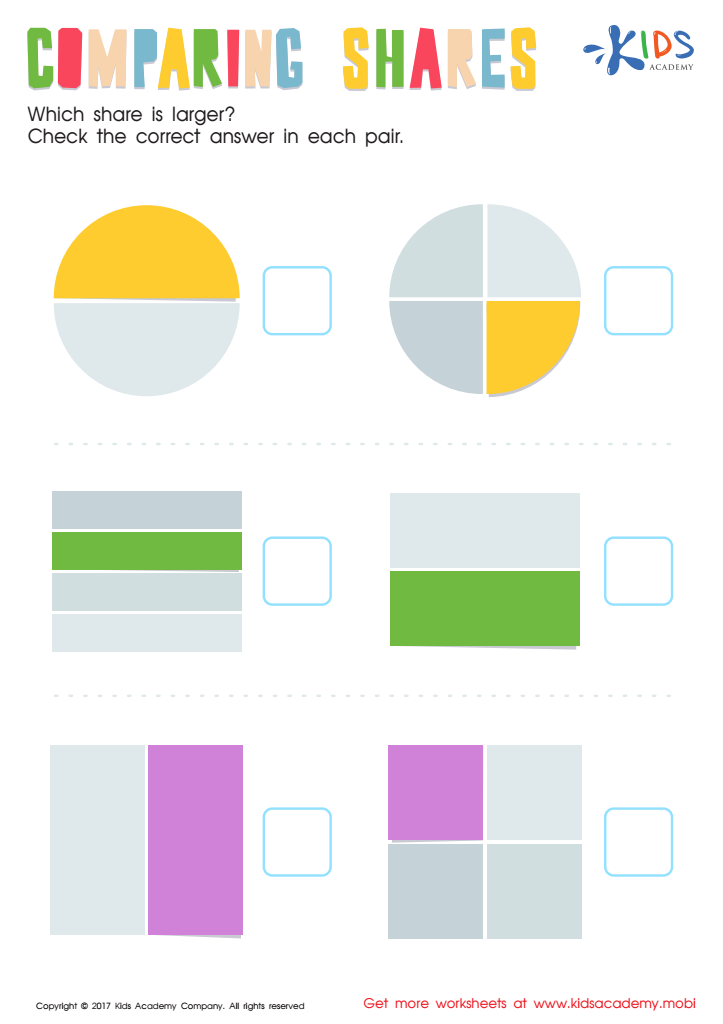
Comparing Shares Worksheet
 Assign to My Students
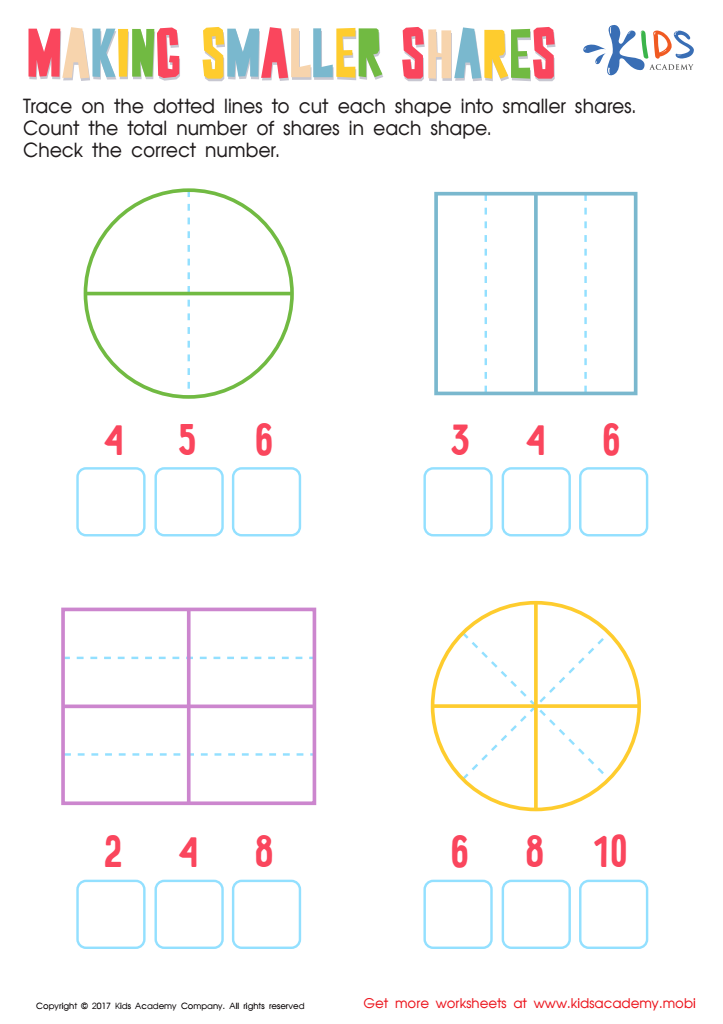
Making Smaller Shares Worksheet
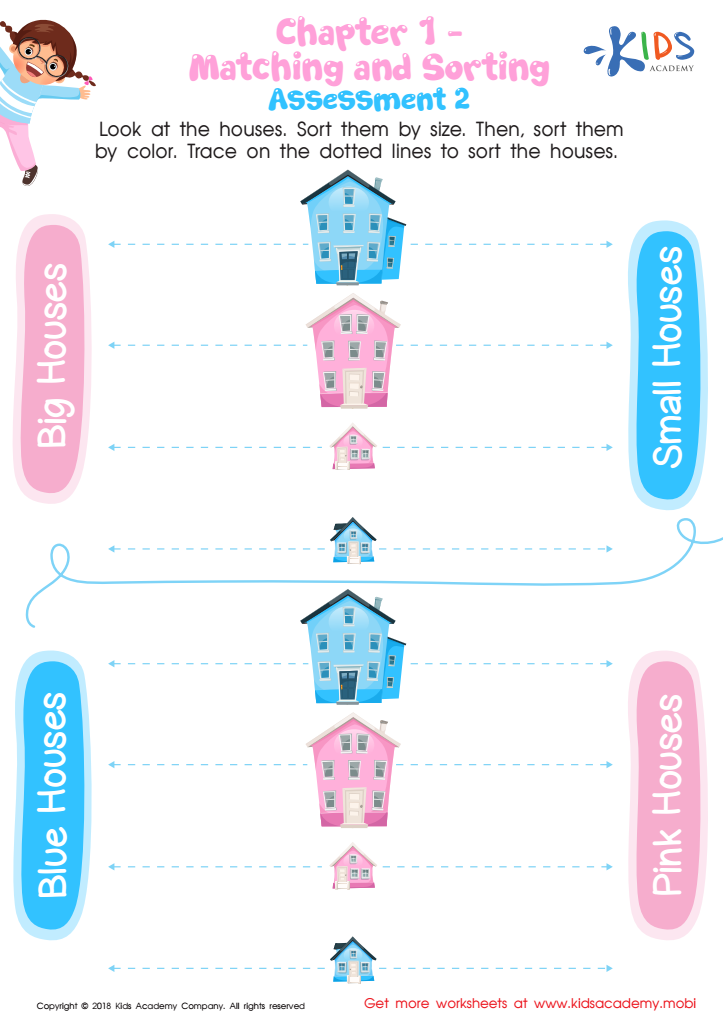
Matching and Sorting for Preschool: Assessment 2 Worksheet
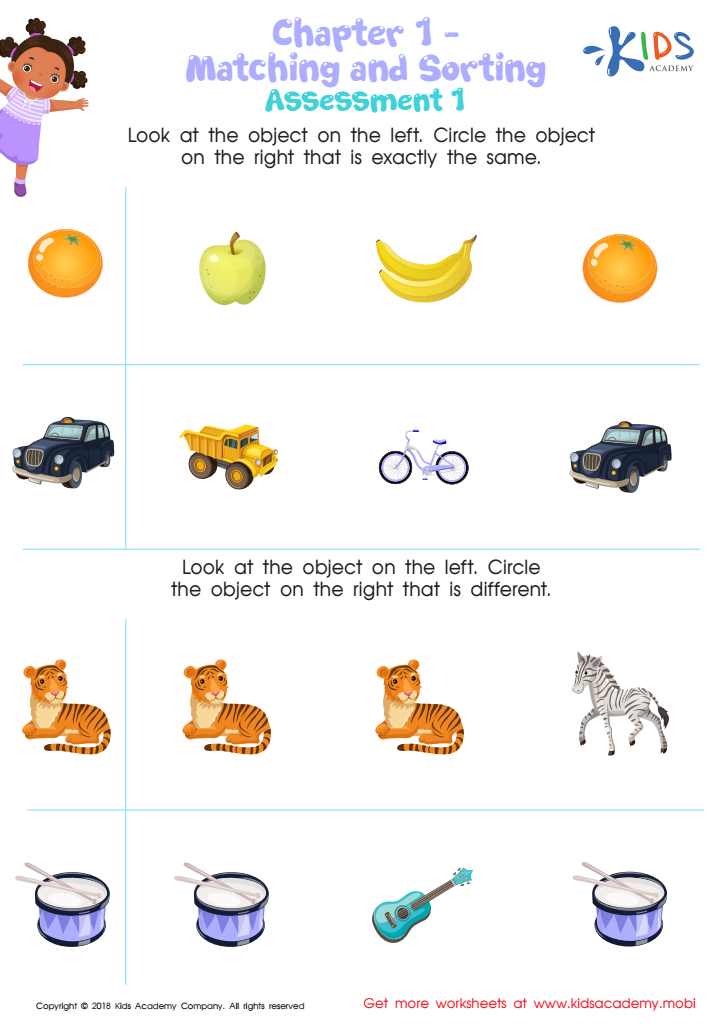
Matching and Sorting for Preschool: Assessment 1 Worksheet



.jpg)




Understanding how to compare fractions is a crucial mathematical skill for children between the ages of 5 and 9. This foundational concept helps in building a child's number sense, critical thinking, and problem-solving abilities. Early mastery of fractions and their comparisons paves the way for more advanced math topics such as ratios, proportions, and algebra, which are essential for academic success in later years.
Introducing fractions at an early age allows children to grasp the idea that numbers can represent parts of a whole and that these parts can vary in size. This helps develop their understanding of relative size and quantity. Knowing how to compare fractions, whether they have like, unlike, or different numerators and denominators, facilitates a deeper comprehension of how numbers interplay and offers a better grasp of equivalence and order.
Additionally, fractions are ubiquitous in everyday life—from measuring ingredients in a recipe to understanding portions and divides—so practical knowledge benefits everyday decision-making. By nurturing this skill, parents and teachers are arming children with confidence and competence in dealing with real-world mathematical concepts. Therefore, caring about and dedicating time to teaching and understanding fractions is not just about excelling in math but also about fostering competent, confident individuals who are prepared for the complexities of the world.








