Develop analytical thinking Math Worksheets for Ages 5-9
3 filtered results
-
From - To
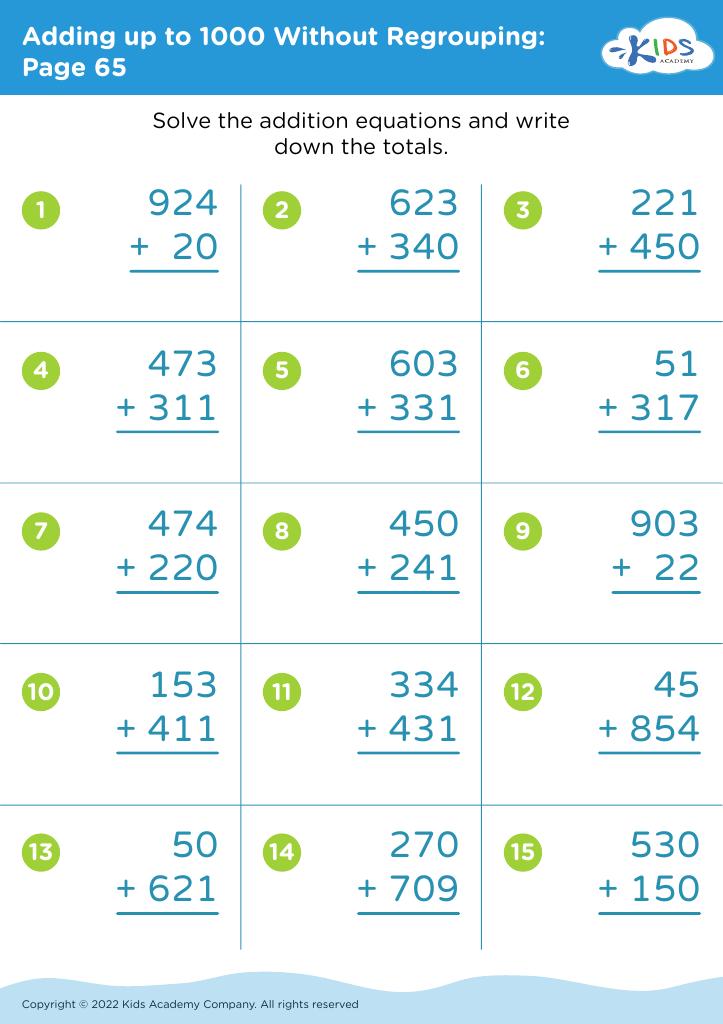
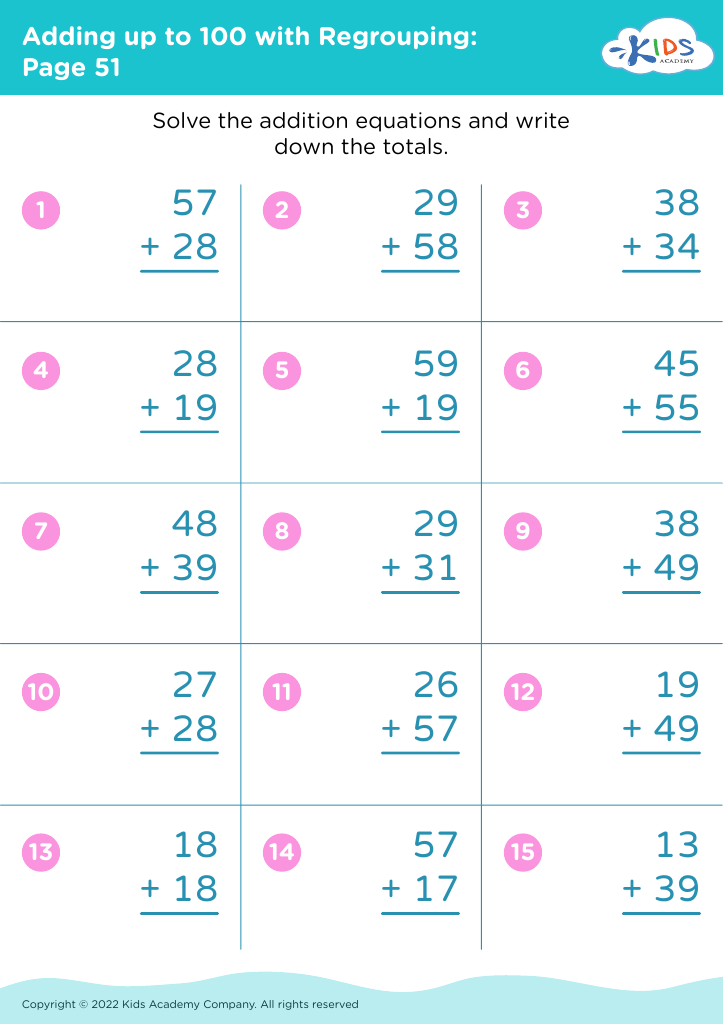
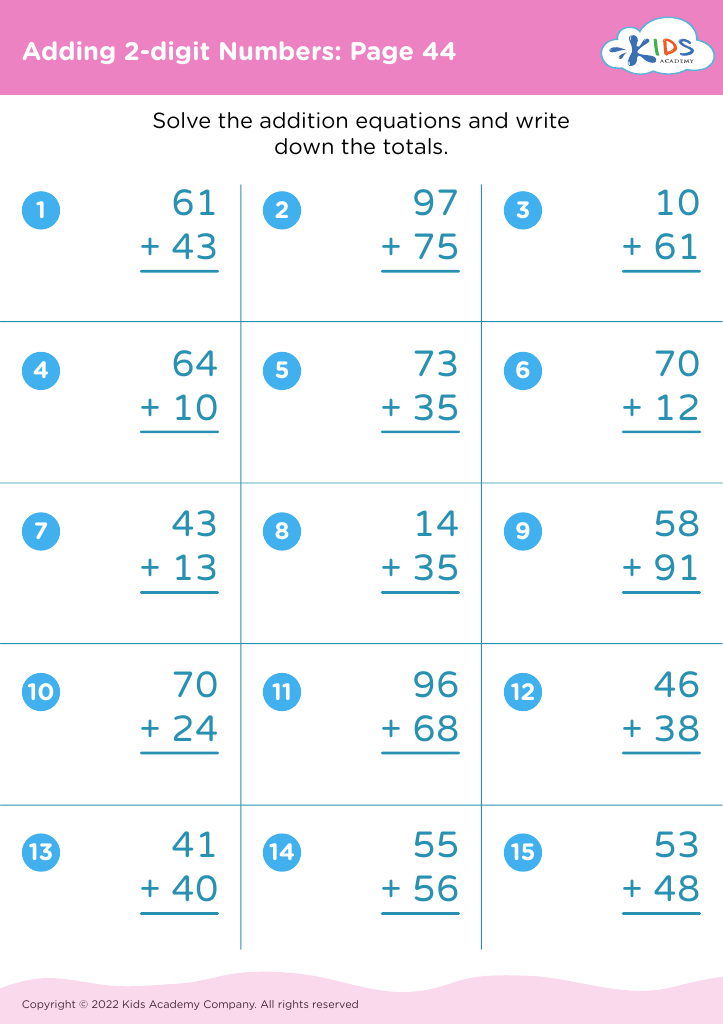
Enhance your child's analytical thinking with our expertly designed math worksheets for ages 5-9. Tailored to develop critical problem-solving skills, these engaging worksheets cover various topics such as patterns, sequencing, and logical reasoning. With fun activities and colorful illustrations, children can cultivate their mathematical minds while enjoying the learning process. Each worksheet is structured to gradually increase in complexity, ensuring a smooth and progressive advancement. Ideal for both classroom and home use, these resources nurture a lifelong love for math and build a strong foundation for future academic success. Discover the joy of analytical thinking with our enriching math worksheets today!







.jpg)
Developing analytical thinking skills in mathematics for children ages 5-9 is crucial for several reasons. First, it lays the foundation for future learning and problem-solving. At this young age, children are highly receptive and capable of absorbing information; nurturing their ability to think critically and analytically will set the stage for complex mathematical concepts they will encounter later.
Analytical thinking promotes logical reasoning, helping children understand not just how to perform mathematical operations, but why these operations work. This understanding aids in retaining knowledge and applying it in new contexts. It fosters independence in learning, allowing students to approach problems methodically and come up with solutions on their own.
Moreover, these skills are transferable and benefit children beyond the realm of math. They encourage perseverance, attention to detail, and the ability to make connections between different ideas. When children are taught to analyze problems and think considerably about solutions, they are better equipped to handle challenges in any subject or real-life situation.
Lastly, fostering an interest in analytical thinking at an early age helps build a positive relationship with math. When children feel confident in their ability to understand and solve problems, they are more likely to enjoy and pursue mathematical activities, which can lead to academic success and a lifelong appreciation for the subject.








