Enhancing creativity Math Worksheets for Ages 5-9
8 filtered results
-
From - To
Welcome to our "Enhancing Creativity Math Worksheets" designed for ages 5-9! Our engaging and fun-filled worksheets foster not only foundational math skills but also ignite your child's creativity and imagination. Each worksheet features interactive activities that blend mathematical concepts with creative expression, allowing kids to explore numbers in exciting new ways. Perfect for at-home learning or classroom use, these resources encourage critical thinking and problem-solving while keeping young minds engaged. Your child will unleash their creativity as they solve puzzles, connect dots, and uncover patterns—all while mastering essential math skills. Start their journey of discovery today!
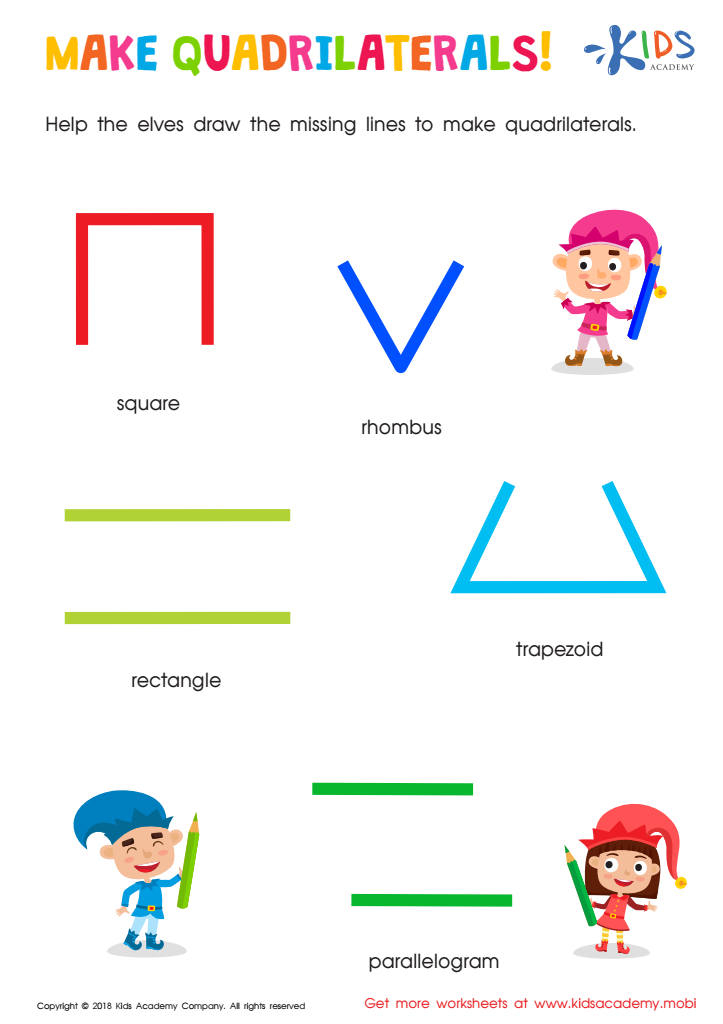
Make Quadrilaterals Worksheet
 Assign to My Students
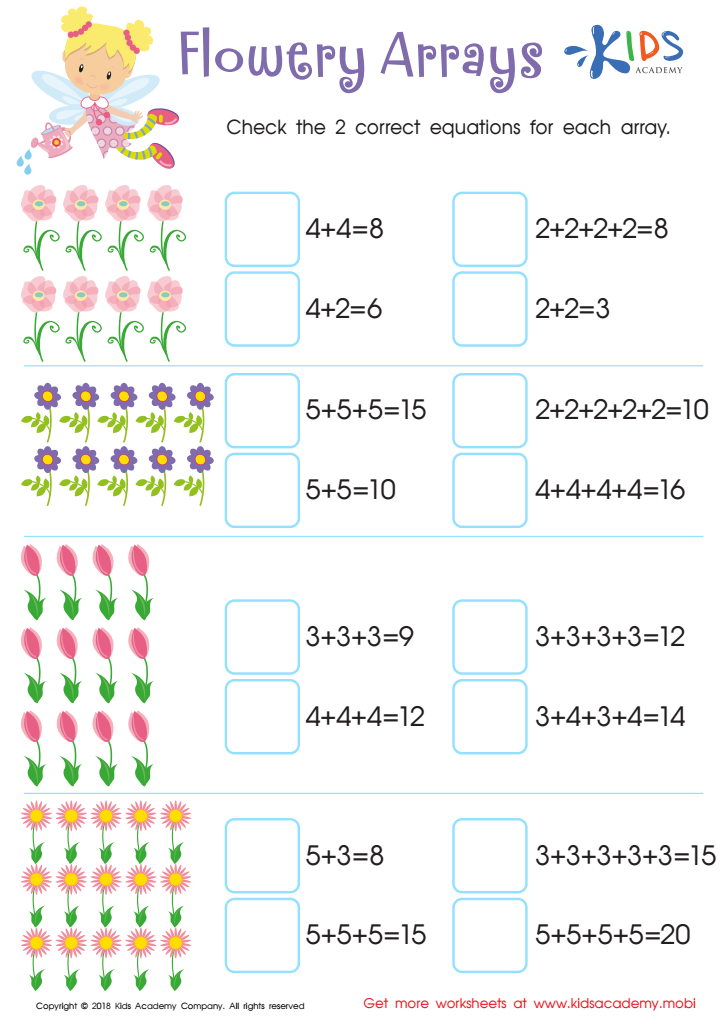
Flowery Arrays Worksheet
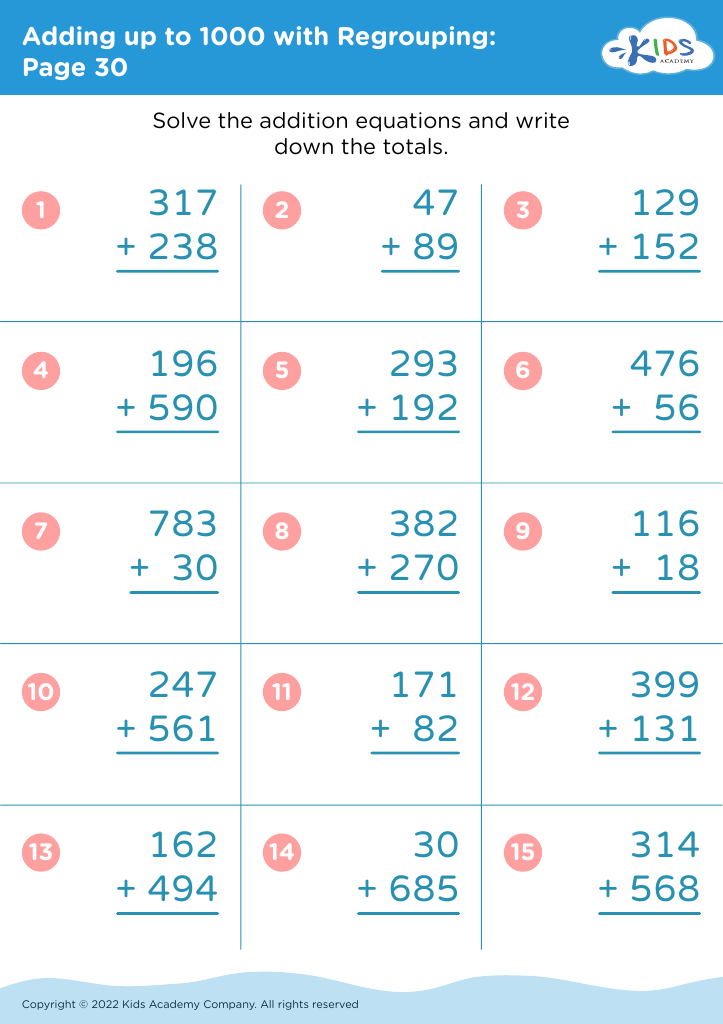

Ladybug Line Up Worksheet
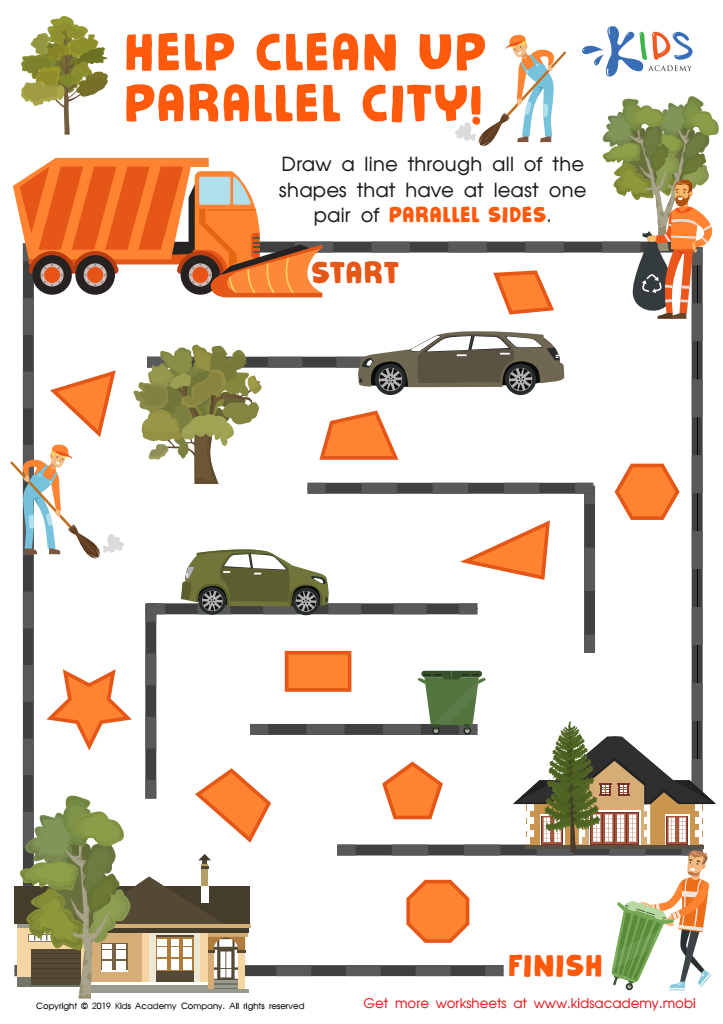
Help Clean Up Parallel City Worksheet








Enhancing creativity in math for children aged 5-9 is essential for several reasons. First, fostering creativity in mathematics encourages problem-solving skills. Young learners develop the ability to think innovatively, which is crucial as they encounter various mathematical concepts. When children engage in creative math activities, they learn to approach problems from different angles, enriching their understanding and retention of mathematical concepts.
Second, math is often perceived as rigid and formulaic, leading to anxiety or disinterest. By incorporating creative approaches into math learning, educators and parents can transform it into a fun and engaging subject. This positive reinforcement increases motivation and enjoyment, making children more enthusiastic about exploring math further.
Moreover, creativity nurtures critical thinking and collaboration. Activities such as group projects or playful math games promote teamwork while helping students articulate their thought processes, improving communication skills.
Finally, fostering a creative mindset in mathematics lays the groundwork for future academic success and lifelong learning, as it encourages a growth mindset where children are open to challenges and learn from failures. By prioritizing creativity in math, parents and teachers empower their children to see math as a dynamic and exciting part of their developmental journey.








