
Improve vocabulary Math Worksheets for Ages 5-9
3 filtered results
Difficulty Level
Grade
Age
-
From - To
Subject
Activity
Standards
Boost your child's mathematical vocabulary with our specially designed Math Worksheets for ages 5-9 from Kids Academy. Our engaging and educational printables cover essential math topics while introducing key terms and concepts, helping young learners build vocabulary and understanding. Each worksheet is crafted by experts to create a fun learning experience, fostering confidence in math fluency. Perfect for use at home or in the classroom, our worksheets support your child's academic growth through interactive and meaningful practice. Empower your child to succeed in math with our comprehensive vocabulary-rich resources.
Favorites
With answer key
Interactive
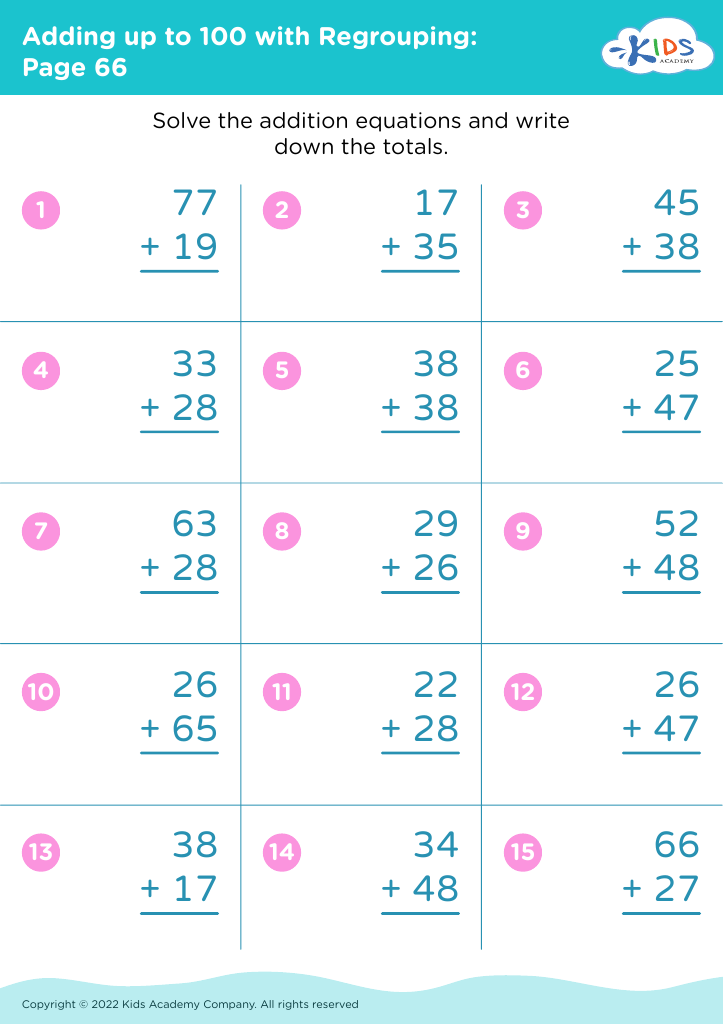
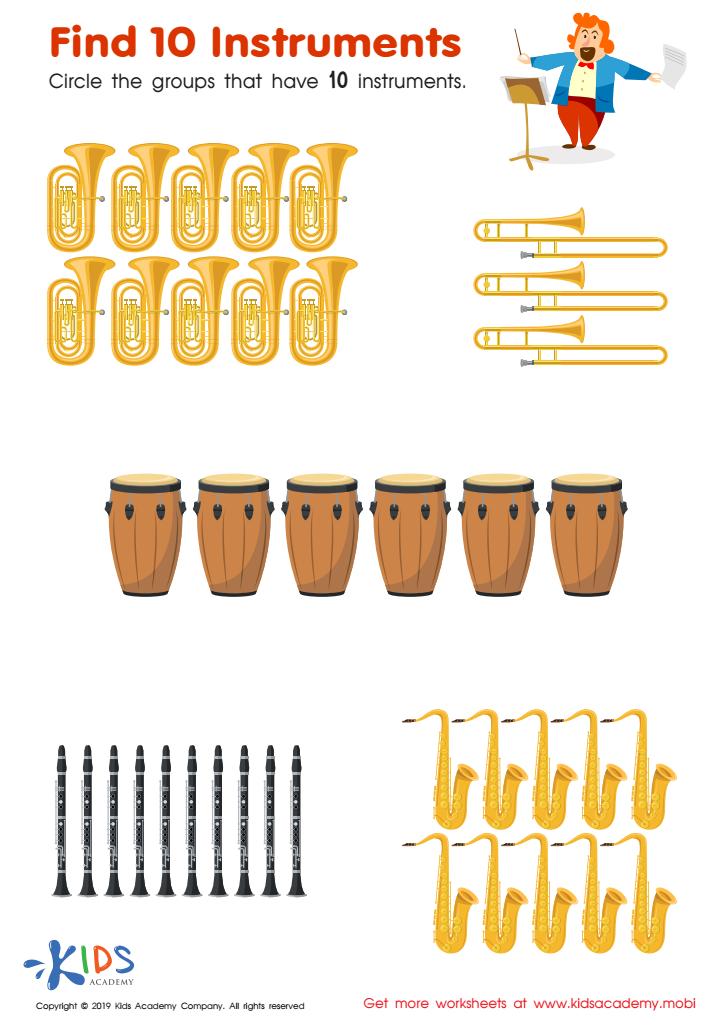
Find 10 Instruments Worksheet
Teach your kids to count with educational DVDs, video games and this worksheet. Show them the picture and help them count the instruments, then circle the groups of 10. It's a great way to practice counting numbers, one of the first things they'll learn.
 Assign to My Students
Find 10 Instruments Worksheet
Worksheet
Join Kids Academy for Free
Who is primarily going to use this learning content?







Improving vocabulary in math for ages 5-9 is critical because it establishes a strong foundation for future learning and success. During these formative years, children are highly receptive and can absorb new concepts quickly. Introducing them to math vocabulary helps demystify the subject and fosters a positive attitude towards math early on. Words like "greater than," "less than," "add," "subtract," and "equal" become tools that children use to navigate and solve problems.
Additionally, strong math vocabulary aids in comprehension. When children understand the terminology, they're better equipped to follow instructions and grasp the concepts being taught. This reduces frustration and bolsters their confidence, making them more willing to engage with math problems.
Moreover, math vocabulary is intertwined with other subjects; it enhances overall literacy and communication skills. For instance, terms like "measure," "estimate," and "pattern" are applicable in science and daily activities, fostering interdisciplinary learning.
By prioritizing math vocabulary at an early age, parents and teachers set children up for academic success and practical life skills. It's an investment in their cognitive development that yields long-term benefits, including critical thinking, problem-solving abilities, and analytical skills that are essential in all walks of life.








