Improves number recognition Math Worksheets for Ages 5-9
3 filtered results
-
From - To
Our "Improves Number Recognition Math Worksheets for Ages 5-9" are designed to make learning numbers fun and effective for young learners. These engaging, age-appropriate worksheets help children recognize, understand, and confidently use numbers. Perfect for both classroom and home use, these activities offer a wide variety of exercises, from tracing and matching to more complex counting and sequencing tasks. With vibrant illustrations and interactive problems, kids stay motivated while strengthening their foundational math skills. Equip your child with the tools they need for math success! Visit our site today to get started on this essential learning journey.
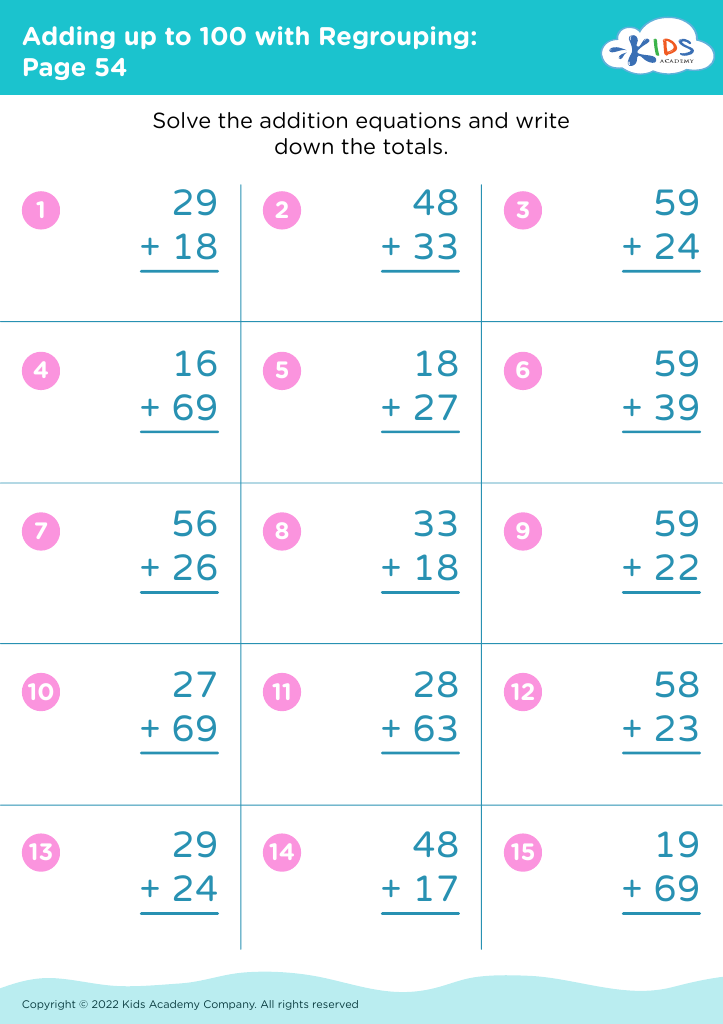
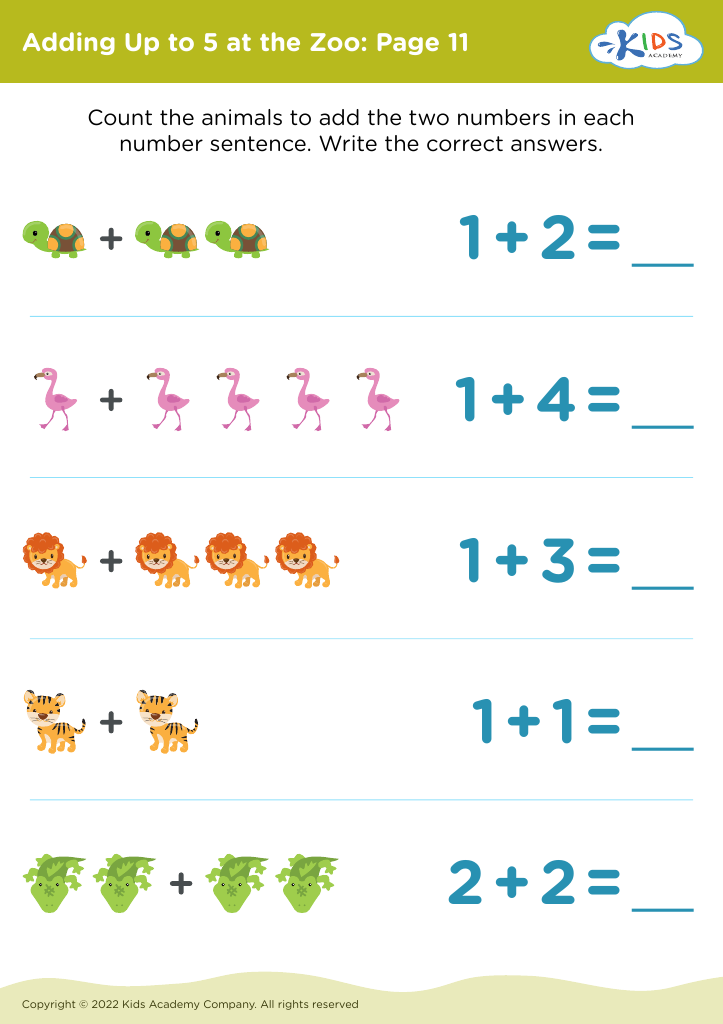
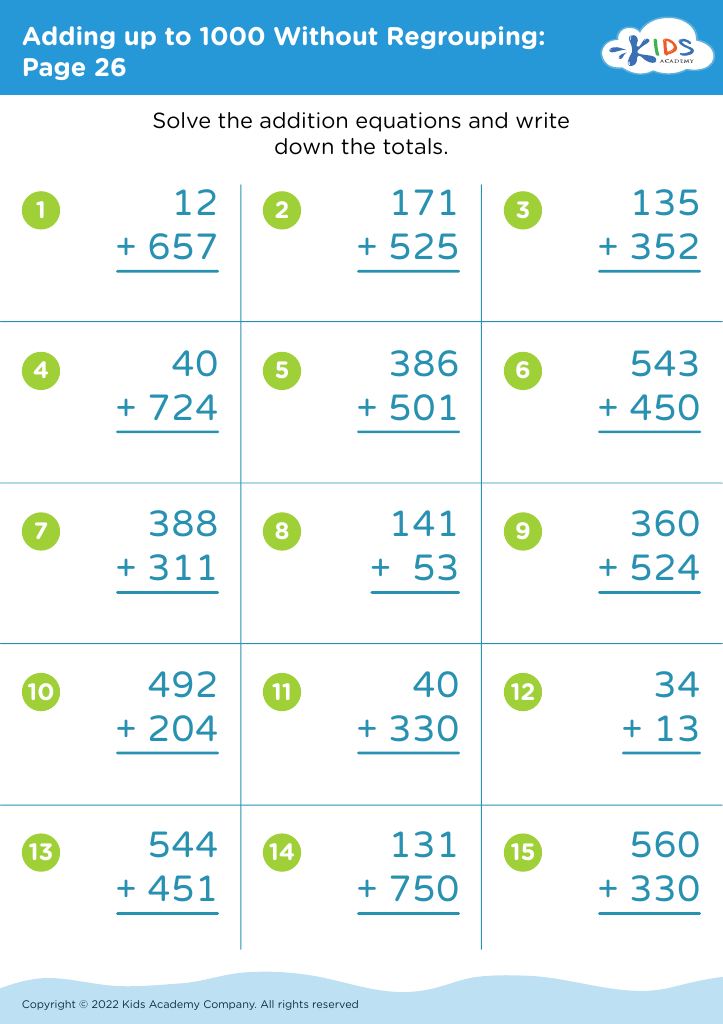








Parents and teachers should care about improving number recognition in children ages 5-9 because it forms the foundational building block for future mathematical learning and everyday life skills. At this crucial developmental stage, young learners are highly receptive to new information, and their ability to recognize and understand numbers sets the stage for more complex mathematical concepts, such as addition, subtraction, and beyond.
Developing strong number recognition skills helps children gain confidence in their ability to tackle math-related tasks, leading to a more positive attitude towards the subject as they grow. Additionally, it supports their development of critical thinking and problem-solving skills. For instance, when children can easily identify and comprehend numbers, they can follow and make sense of instructions in both academic settings and daily routines, like counting toys or telling the time.
Furthermore, early proficiency in number recognition plays a significant role in academic achievement. Studies have consistently shown that children who start school with a strong grasp of basic math concepts, including number recognition, tend to perform better academically in later years. By supporting children in developing these essential skills early on, parents and teachers are paving the way for their long-term educational successes and enhancing their ability to navigate a world where numerical understanding is crucial.








