
Learning subtraction Math Worksheets for Ages 5-9
3 filtered results
Difficulty Level
Grade
Age
-
From - To
Subject
Activity
Standards
Discover the joy of mastering subtraction with our engaging, expertly designed math worksheets for ages 5-9. These educational resources feature colorful visuals and fun themes that transform learning subtraction into an enjoyable experience. Tailored to varying skill levels, our worksheets help young minds grasp the basics and build a strong mathematical foundation. Whether practicing single-digit subtraction, mastering word problems, or advancing to double-digit challenges, each activity reinforces important math skills while boosting confidence. Perfect for classroom use or at-home practice, our subtraction worksheets are an excellent tool for teachers and parents alike who aim to foster a love for math in their children.
Favorites
With answer key
Interactive
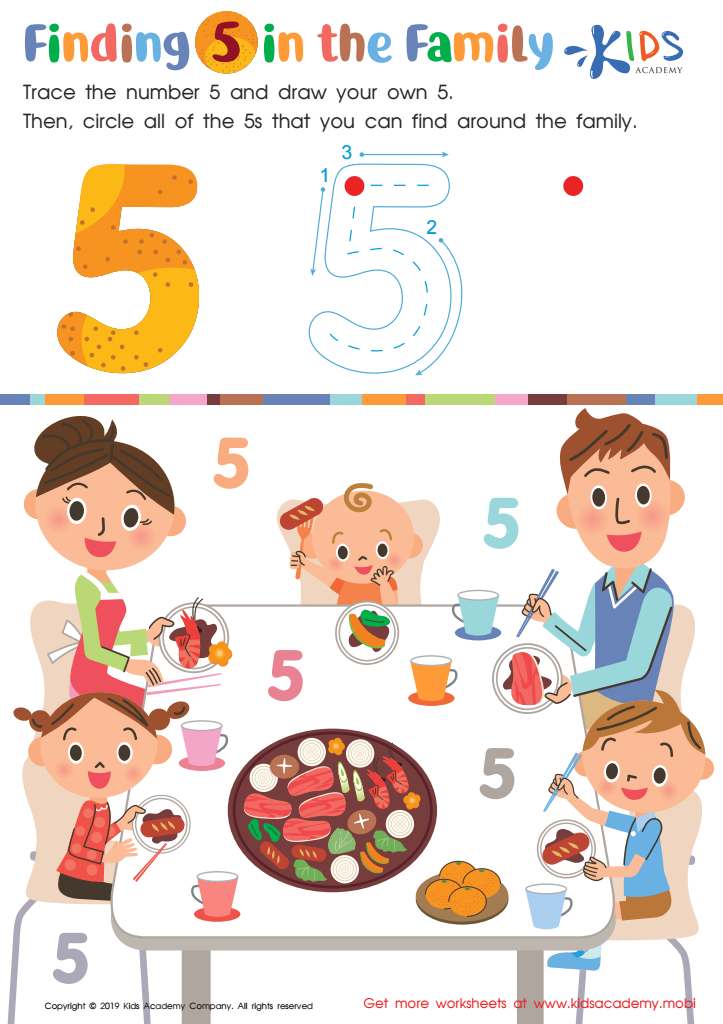
Finding 5 in the Family Worksheet
This worksheet helps kids identify and write the number 5. Ask what the family is doing and who the family members are. Help them trace and draw the 5, then have them circle all 5s in the picture.
 Assign to My Students
Finding 5 in the Family Worksheet
Worksheet
Join Kids Academy for Free
Who is primarily going to use this learning content?








Parents and teachers should care deeply about teaching subtraction to children aged 5-9 because it serves as a foundational skill that is crucial for their overall mathematical development and daily life problem-solving abilities. Subtraction is one of the basic arithmetic operations, and mastering it at an early age builds the groundwork for more complex mathematical concepts like multiplication, division, and algebra.
Early proficiency in subtraction helps children develop logical thinking and critical problem-solving skills. When children understand how to subtract, they can better grasp concepts such as difference, comparison, and even financial literacy—such as understanding how much change they should receive after making a purchase.
Furthermore, subtraction fosters mental agility. Solving subtraction problems can improve memory and concentration and is often used in games and everyday scenarios, assisting children in becoming more independent and confident in their abilities.
By caring about and promoting a strong understanding of subtraction, parents and teachers equip children with essential tools that they'll rely on throughout their education and life. This early intervention and diligence encourage a positive attitude toward math, laying the groundwork for academic success and practical life competence.








