Number comparison skills Math Worksheets for Ages 5-9
3 filtered results
-
From - To
Boost your child's math confidence with our engaging Number Comparison Skills Math Worksheets designed for ages 5-9. These printable resources help young learners develop essential skills such as identifying greater than, less than, and equal to concepts. Using fun, colorful activities, your child will practice comparing numbers, enhancing their critical thinking and problem-solving abilities. Each worksheet is tailored to meet early math standards, ensuring they remain both educational and enjoyable. Perfect for at-home or classroom use, our worksheets foster foundational math skills while making learning a delightful experience. Explore our collection and watch your child excel in numeracy!
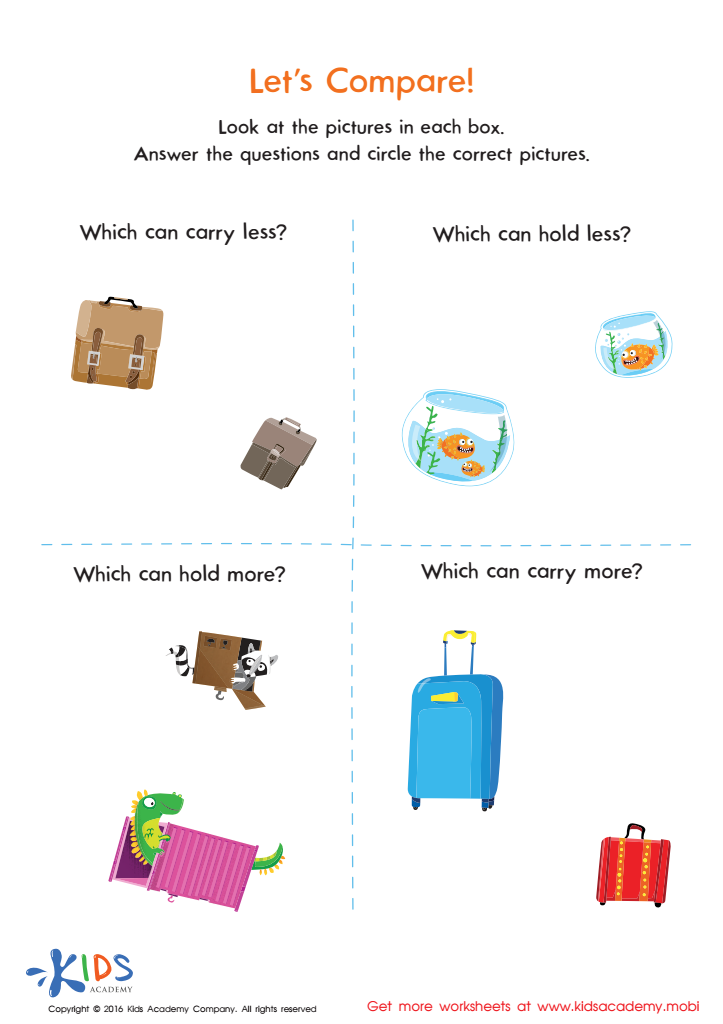
Let's Compare Worksheet: Big or Small
 Assign to My Students
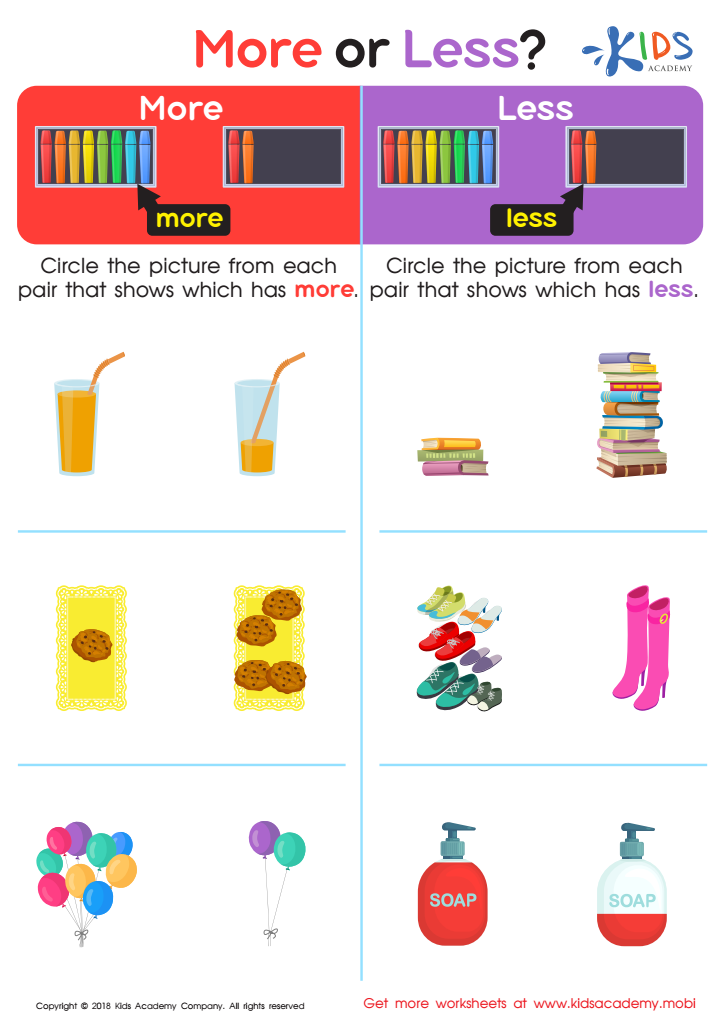
More or Less? Worksheet
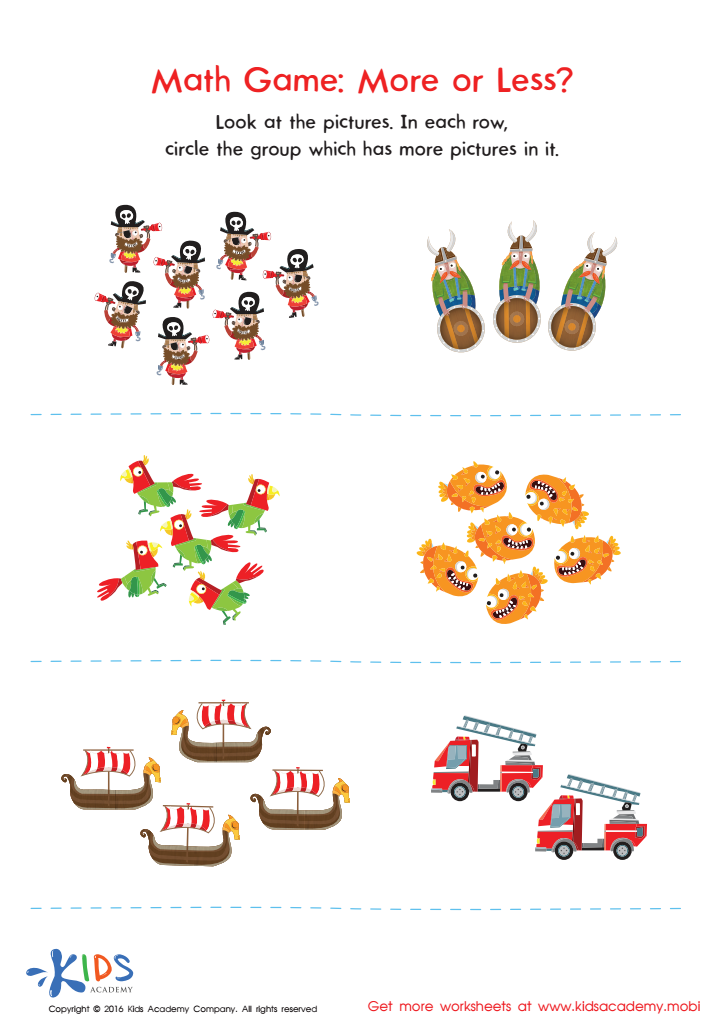
More or Less Worksheet







Number comparison skills are foundational to early math education, particularly for children ages 5-9. These skills help children understand the relationships between numbers, enabling them to identify which number is larger or smaller. This basic concept serves as a precursor to more complex mathematical operations and problem-solving.
By establishing strong number comparison skills, parents and teachers foster important cognitive abilities, such as critical thinking and reasoning. Children learn to organize numbers, recognize patterns, and develop an understanding of quantity, which is essential for their overall mathematical literacy. For instance, when children compare numbers, they also engage in discussions that build their language skills, allowing for better expression and understanding of mathematical concepts.
Furthermore, strong number comparison skills are crucial for lifelong math success. They lay the groundwork for success in more advanced topics such as addition, subtraction, and even later algebraic concepts. Parents and teachers who emphasize this skill can enhance children's confidence in math, reducing anxiety and promoting a more positive attitude towards learning in general. Supporting number comparison skills ensures children are better prepared for both academic challenges and practical everyday math applications, ultimately equipping them for a more numerically literate future.








