Number Recognition Math Worksheets for Ages 5-9 - Page 34
798 filtered results
-
From - To
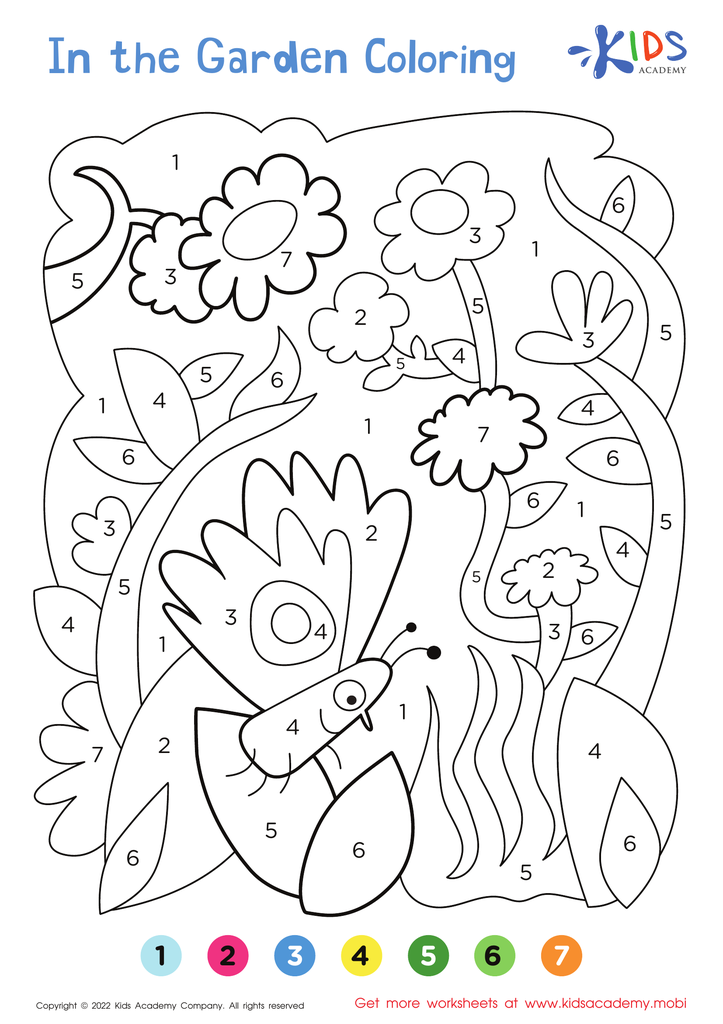
In the Garden – Coloring by Numbers



.jpg)

.jpg)

Number recognition is a foundational skill in early mathematics that plays a critical role in a child’s overall academic development. Between the ages of 5-9, children are introduced to essential mathematical concepts, making the ability to recognize numbers vital. Parents and teachers should care about number recognition because it helps build confidence in a child's ability to tackle more complex math topics later on, such as addition, subtraction, and even early algebra.
Understanding number symbols and their corresponding quantities lays the groundwork for problem-solving skills. Children who can easily recognize numbers are more likely to engage with math-related activities, leading to positive attitudes towards learning. Moreover, early number recognition has been linked to future academic success; children with strong math skills grow up to excel in higher-level mathematics.
Additionally, number recognition activities can be enjoyable, incorporating games and interactive tasks that facilitate learning in a fun way. For parents and teachers, promoting number recognition is an opportunity to create a nurturing learning environment that encourages curiosity and exploration in mathematics, setting a solid path for lifelong skills and encouraging critical thinking. Taking strides in this area helps ensure that children not only succeed in school but also develop a love for math that extends beyond the classroom.








