Number sequence learning Math Worksheets for Ages 5-9
3 filtered results
-
From - To
Welcome to our “Number Sequence Learning Math Worksheets” designed specifically for children aged 5-9! Our engaging worksheets provide a fun and interactive way for young learners to grasp essential math skills. Each activity focuses on identifying, completing, and creating number sequences, ensuring a solid foundation in numeracy. Bright colors, appealing visuals, and age-appropriate challenges capture children’s interest, making math enjoyable. Parents and educators can easily integrate these resources into home education or classroom settings. Help your child build confidence in their math abilities with our thoughtfully crafted worksheets that encourage critical thinking and problem-solving skills. Start their learning adventure today!
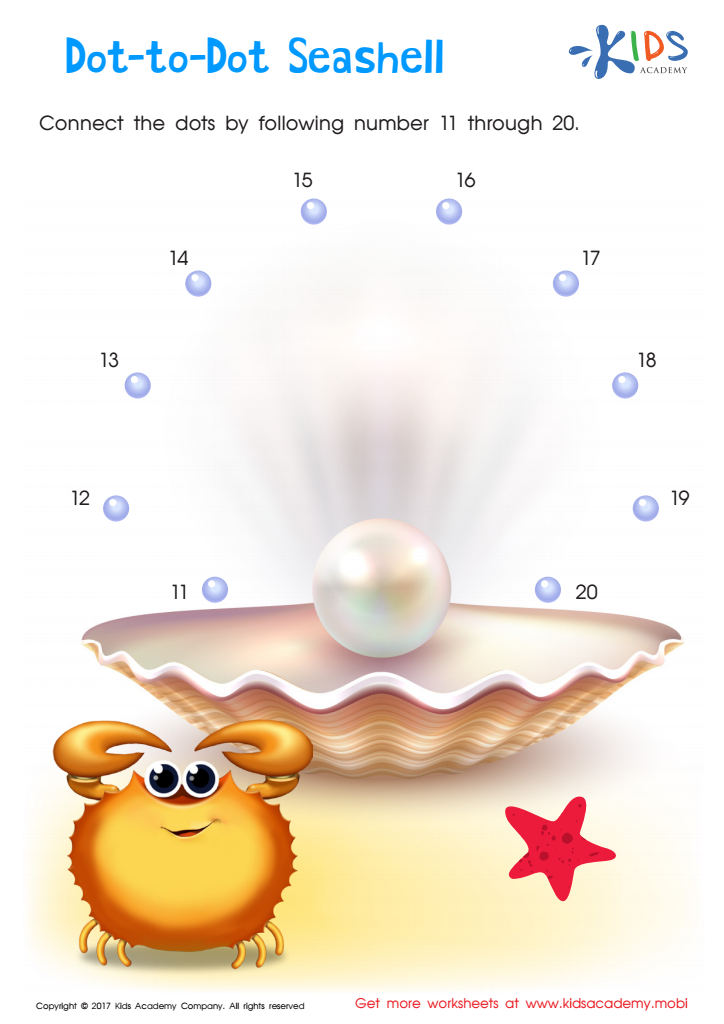
Ordering 11–20: Dot–to–dot Seashell Printable
 Assign to My Students
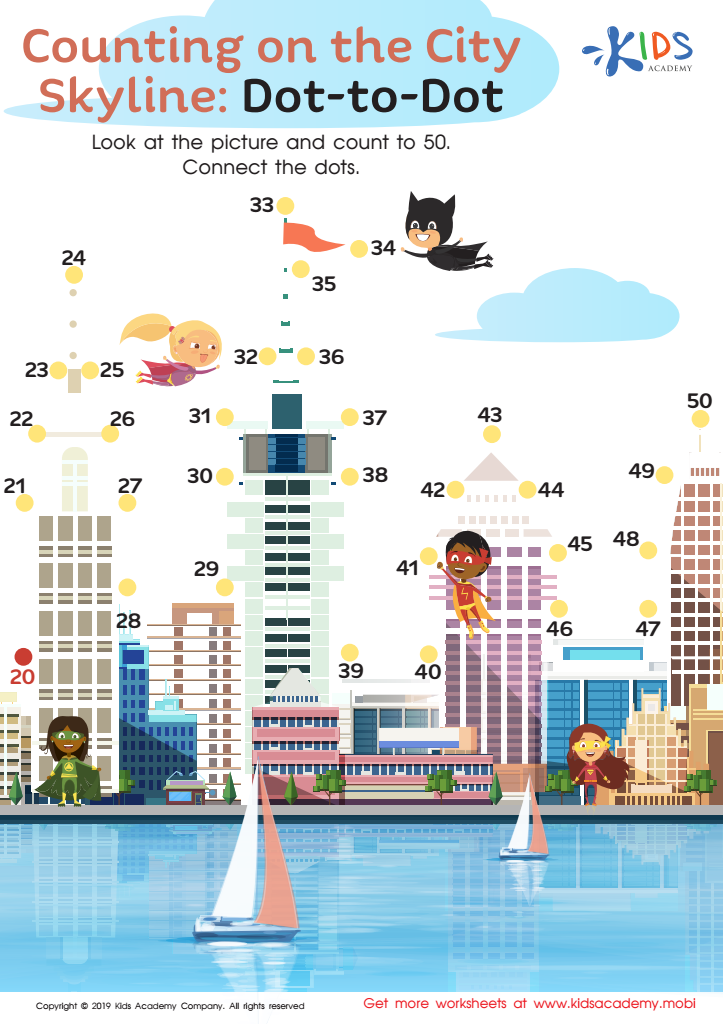
Counting on the City Skyline: Dot-to-Dot Worksheet







Number sequence learning is a crucial aspect of early math education for children aged 5-9, and both parents and teachers should prioritize it for several reasons. First, understanding number sequences lays the foundational skills necessary for more complex math concepts. Recognizing patterns and the relationships among numbers enhances a child's ability to perform addition, subtraction, and, eventually, multiplication and division.
Moreover, early familiarity with number sequences promotes critical thinking and problem-solving skills. As children learn to identify patterns and predict future numbers in a sequence, they develop logical reasoning—an essential skill for academic success across subjects.
Additionally, mastering number sequences builds confidence in young learners. As children progress in their number understanding, they experience the joy of math, reducing the likelihood of apprehension towards the subject in later years.
Furthermore, number sequence learning is not only vital for academic achievement but also applies to real-life situations, strengthening everyday skills like budgeting, measuring, and calendar reading.
Ultimately, fostering an environment that emphasizes number sequence learning can better prepare children for future academic challenges, equipping them with invaluable skills that extend beyond mathematics into everyday life scenarios. Engaging children in this essential learning process sets them up for a successful educational journey.








