Pattern identification Math Worksheets for Ages 5-9
8 filtered results
-
From - To
Unlock the world of learning with our engaging Pattern Identification Math Worksheets for Ages 5-9! Designed to enhance critical thinking and problem-solving skills, these worksheets provide a fun and interactive way for young learners to recognize and create patterns. With vibrant illustrations and age-appropriate activities, children will explore sequences, shapes, and colors, fostering their mathematical understanding in a playful environment. Perfect for home or classroom use, our worksheets help children build a solid foundation in pattern recognition, setting the stage for future success in math. Dive into a collection of enjoyable exercises that spark curiosity and encourage creative thinking today!
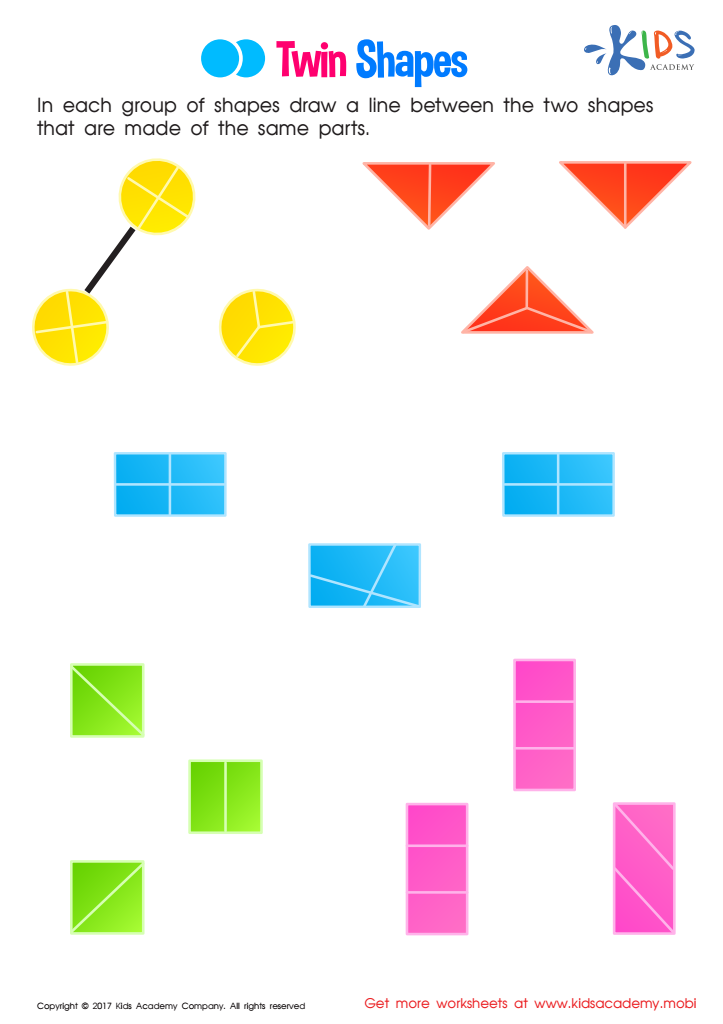
Twin Shapes Worksheet
 Assign to My Students
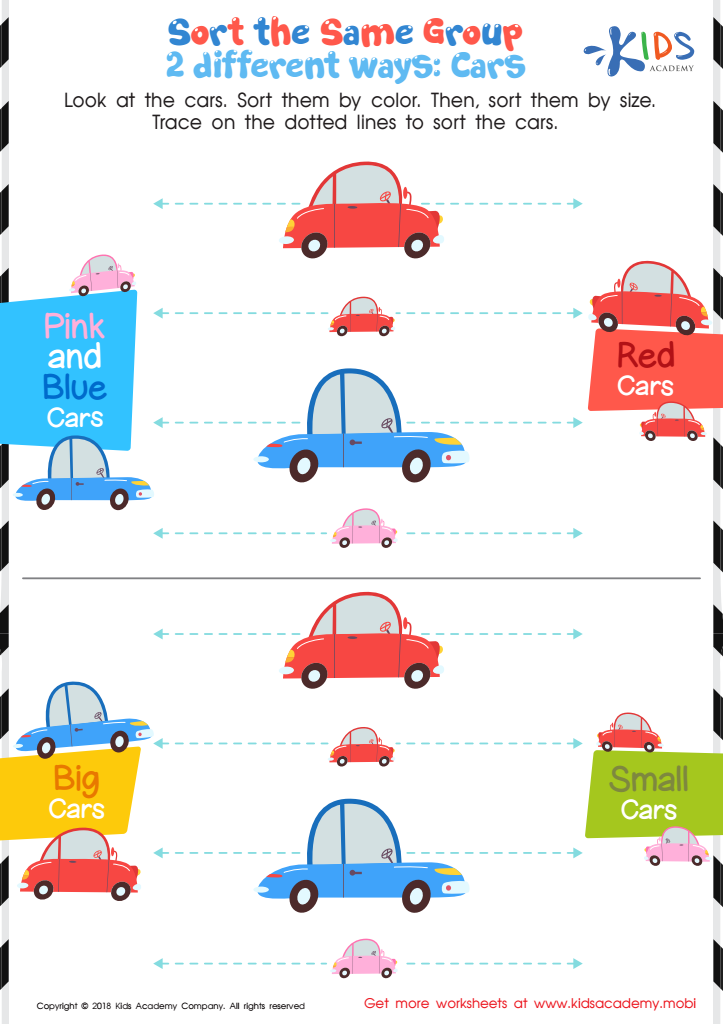
Sort the Same Group 2 Different Ways: Cars Worksheet
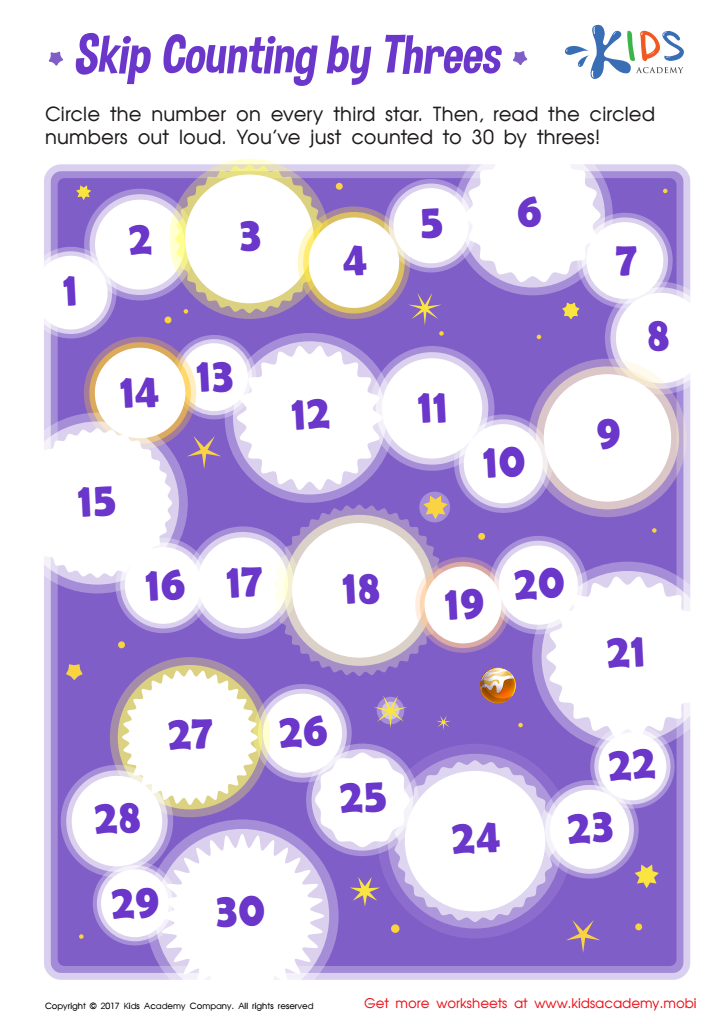
Skip Counting By Three Printable
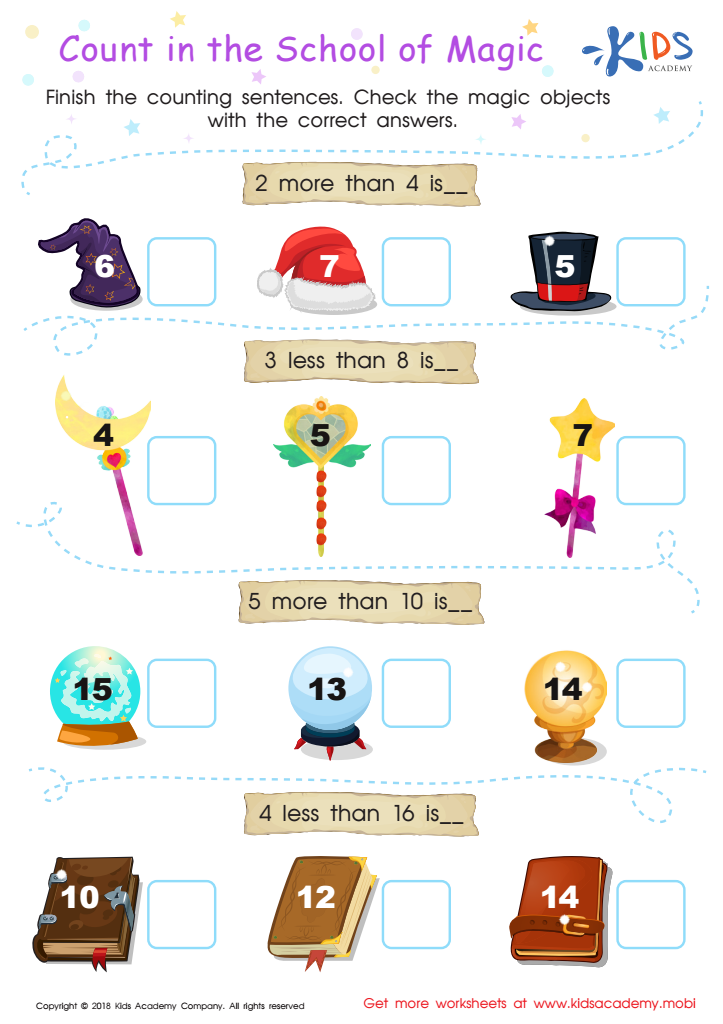
Count in the School of Magic Worksheet
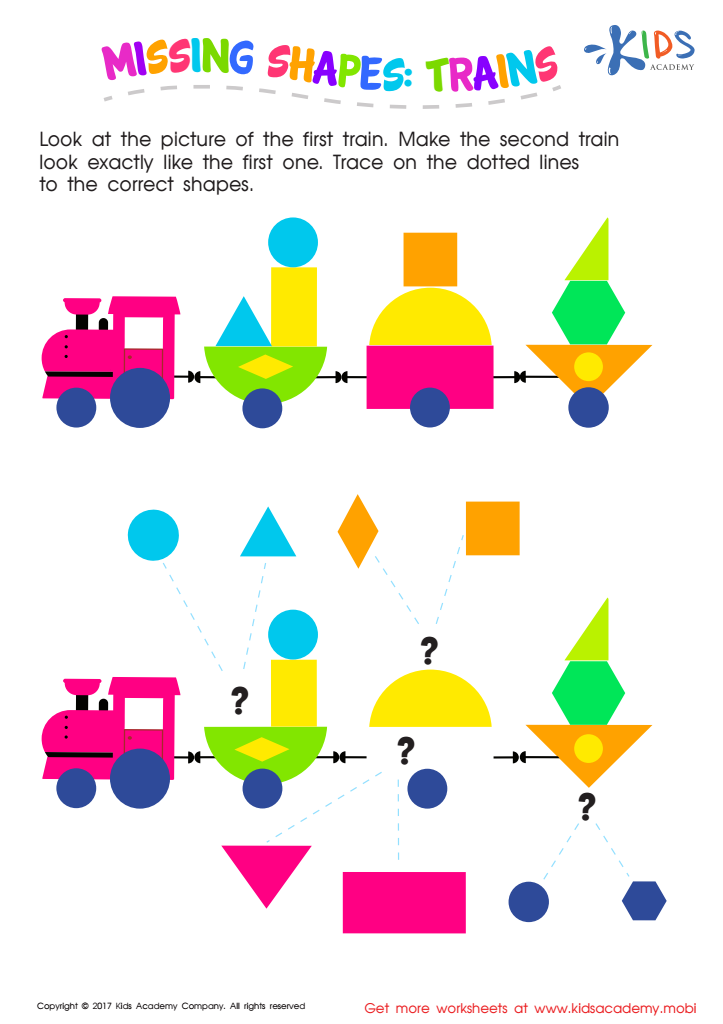
Missing Shapes: Trains Worksheet
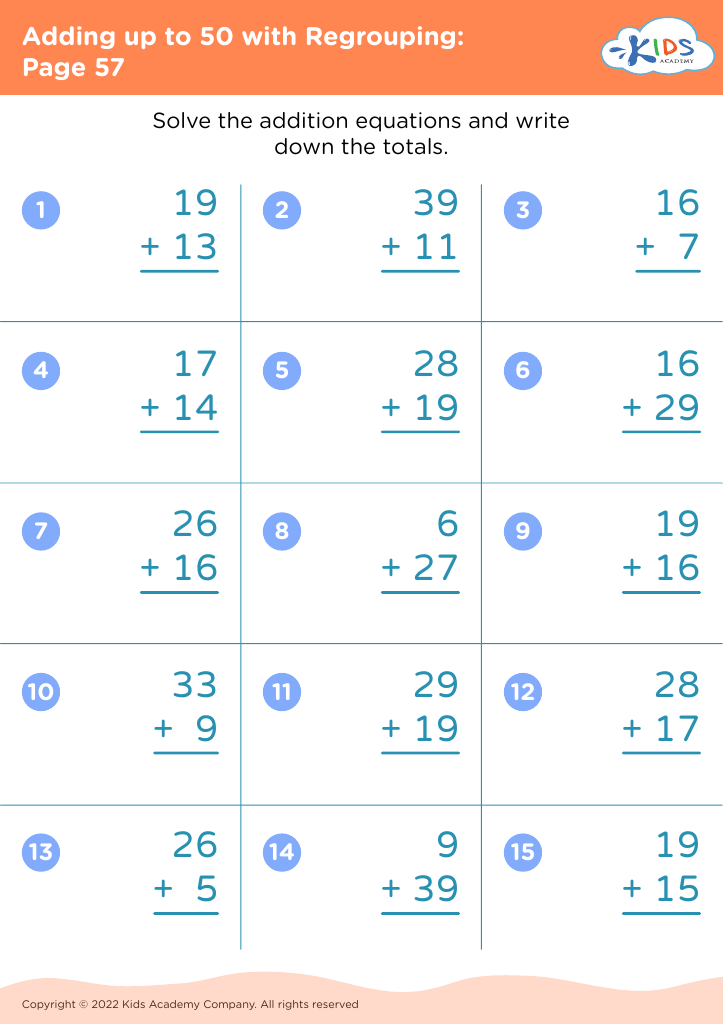
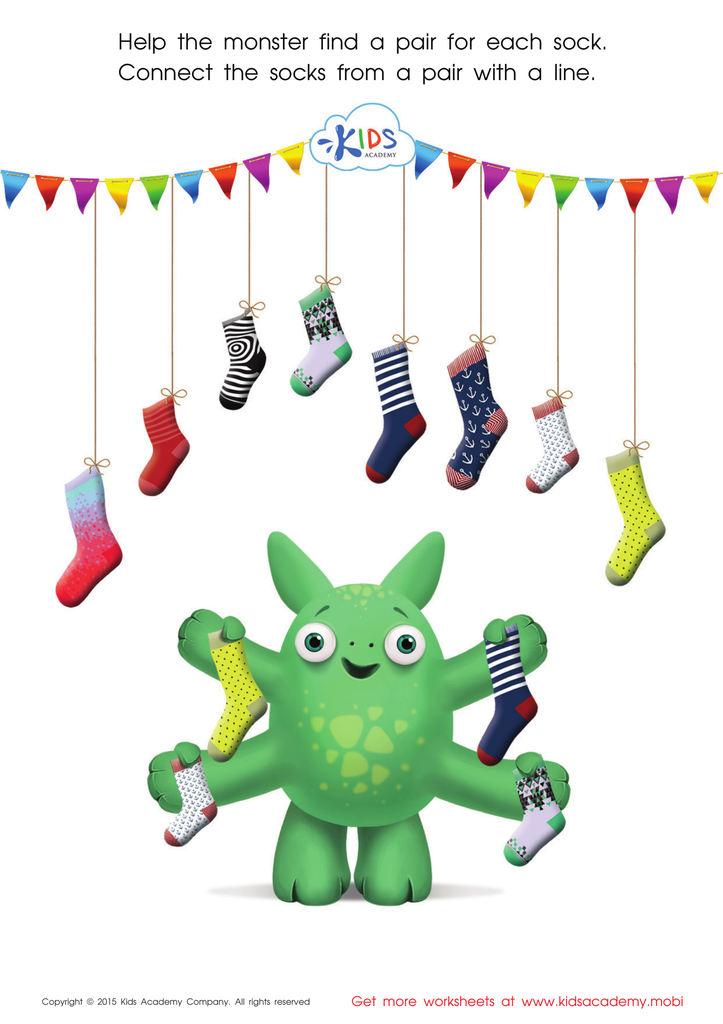
Math Matching Pairs Game: Monsterв's Socks Worksheet







Pattern identification is a foundational math skill that is crucial for children aged 5-9. Understanding patterns enhances a child's ability to recognize relationships and make predictions based on what they observe. This cognitive skill fosters critical thinking and encourages logical reasoning, which are vital components of mathematical literacy. Parents and teachers should care about developing this skill as it lays the groundwork for more complex concepts, including algebra and geometry, that children will encounter later.
Early exposure to patterns enables children to see connections in various subjects, reinforcing their ability to analyze information. For instance, when children recognize patterns in numbers, shapes, or even in nature, they build their confidence and engagement with math. Moreover, pattern recognition promotes problem-solving abilities, allowing children to approach challenges methodically.
Additionally, incorporating pattern identification into everyday activities can be a fun and interactive experience. Engaging children in games, songs, and visual art encourages a love for learning and enhances memory retention. Ultimately, fostering pattern identification supports overall cognitive development and prepares children for future academic success, making it essential for parents and teachers to prioritize this skill in early education.








