
Practice counting Math Worksheets for Ages 5-9
6 filtered results
Difficulty Level
Grade
Age
-
From - To
Subject
Activity
Standards
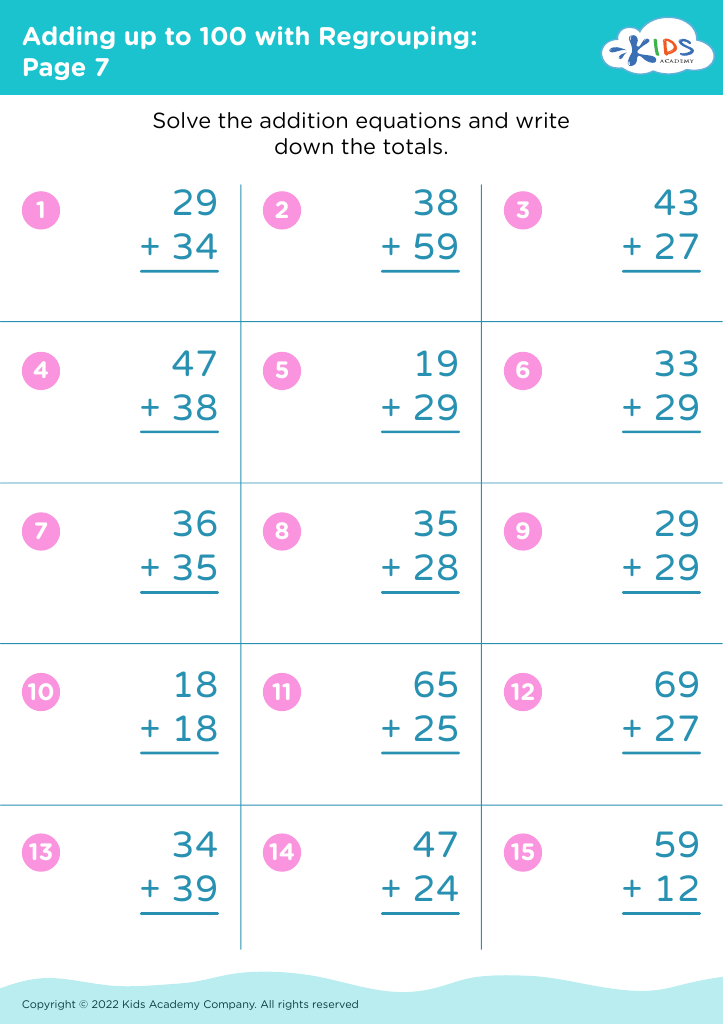
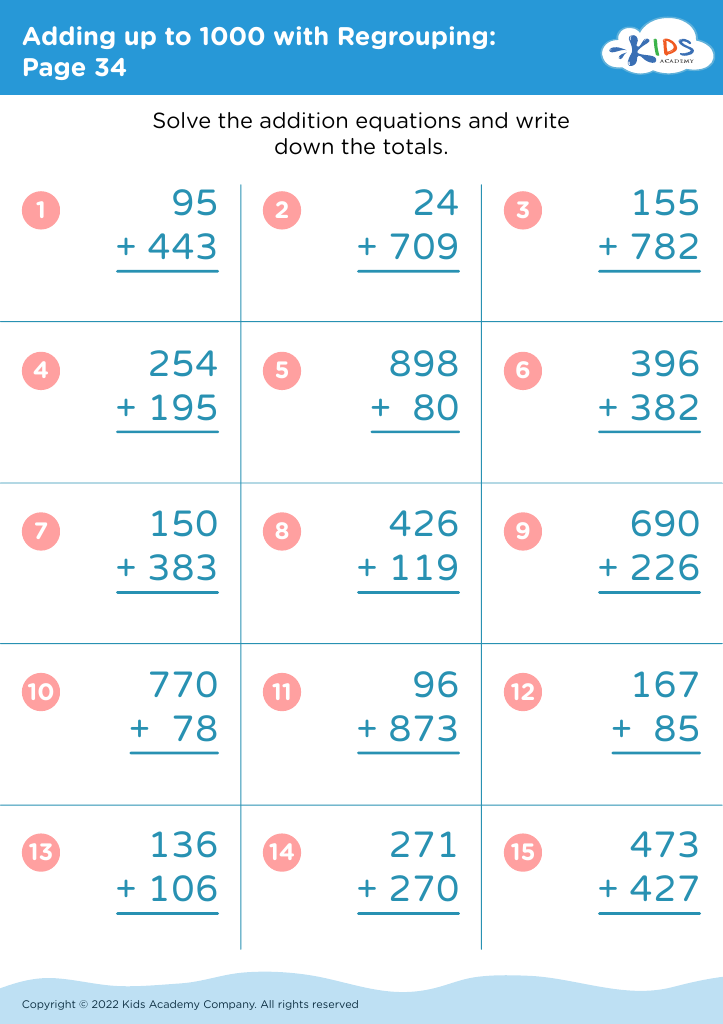
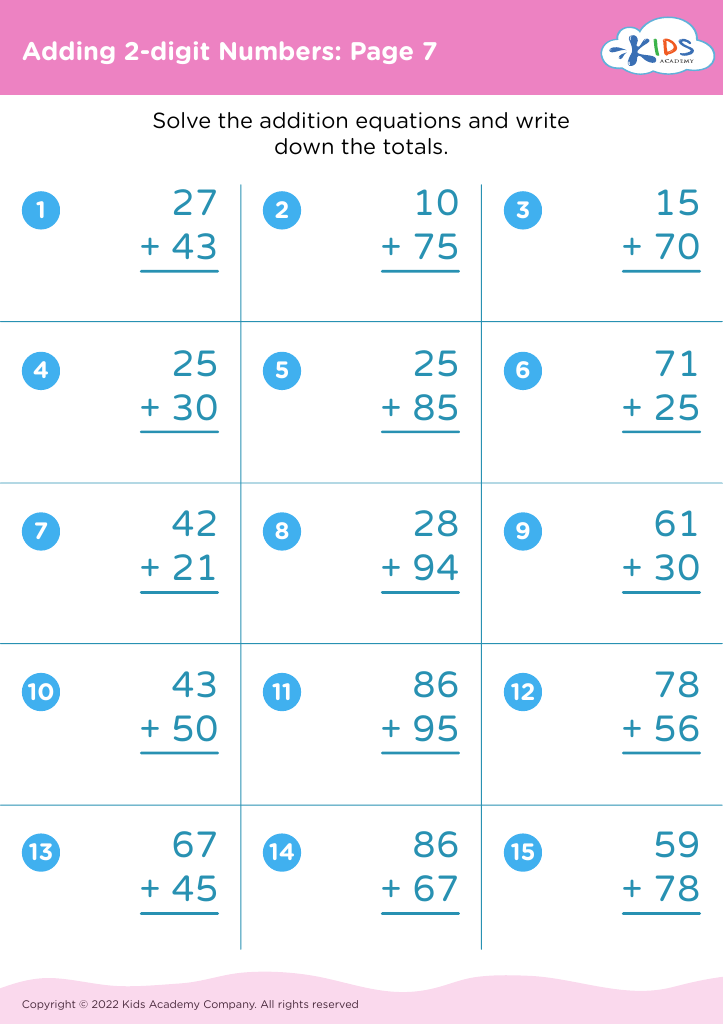
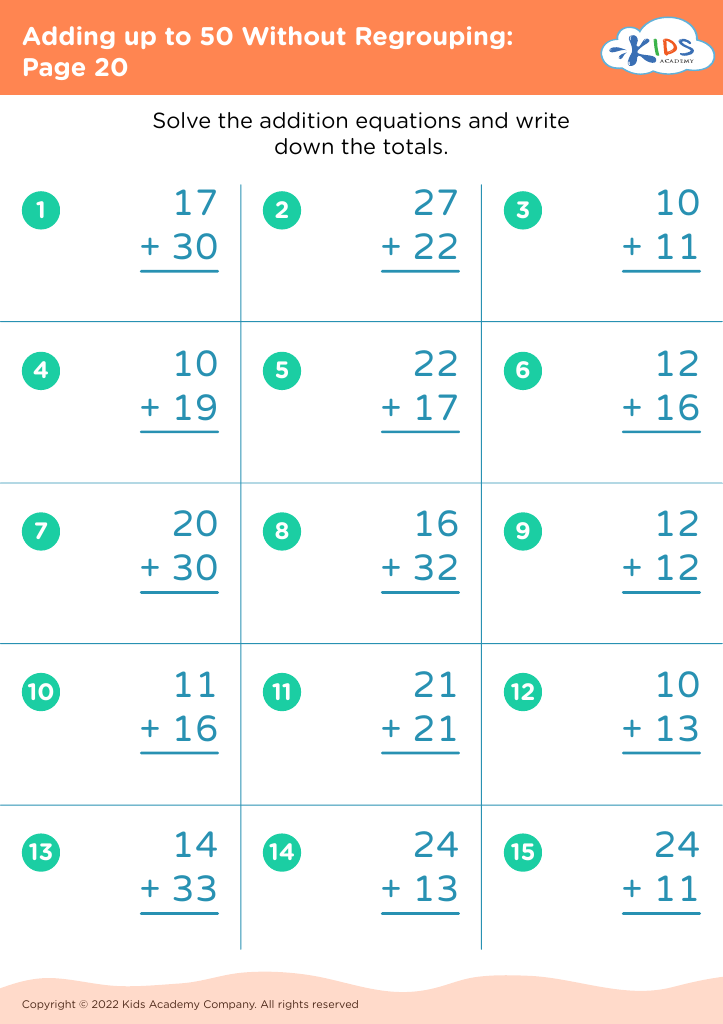
Welcome to our Practice Counting Math Worksheets for Ages 5-9! Designed specifically for young learners, these engaging worksheets help children develop essential counting skills through fun, hands-on activities. Our collection includes vibrant illustrations, interactive exercises, and varied problems to cater to different learning levels. Kids will enjoy counting objects, filling in missing numbers, and solving simple puzzles, all while enhancing their numeracy skills. These worksheets are perfect for parents and teachers seeking to build confidence in math. Encourage your child's love for numbers while making learning an enjoyable experience! Explore our resources today and watch them flourish in their counting abilities.
Favorites
With answer key
Interactive
Join Kids Academy for Free
Who is primarily going to use this learning content?





%20(1).jpg)

Counting is a fundamental skill that lays the groundwork for a child's understanding of mathematics and the world around them. For children aged 5-9, practice counting is crucial for several reasons. Firstly, it enhances cognitive development; mastering counting helps to improve number sense, critical thinking, and problem-solving abilities. Counting is not just about numbers; it teaches children to recognize patterns and make connections.
Moreover, counting practice fosters confidence in mathematics. Children who feel competent in basic counting are more likely to approach more complex mathematical concepts with enthusiasm and resilience. This positive attitude towards math can influence their academic performance in the long term.
Additionally, counting is often integrated into everyday activities, from sorting toys to counting steps or snacks. Encouraging counting in practical situations enhances engagement and demonstrates the relevance of math in daily life.
Lastly, counting practice strengthens fine motor skills using tools like counters or number lines, promoting hand-eye coordination as they learn. Overall, when parents and teachers prioritize counting activities, they are not just teaching numbers; they are equipping children with essential life skills, setting the foundation for lifelong learning, and inspiring future successes in mathematics.








