Practicing Arithmetic Skills Math Worksheets for Ages 5-9
3 filtered results
-
From - To
Boost your child's math proficiency with our "Practicing Arithmetic Skills Math Worksheets" designed for ages 5-9! Perfect for early learners, these engaging and educational worksheets focus on fundamental arithmetic skills like addition, subtraction, and number recognition. Each worksheet is crafted to blend fun with learning, including colorful visuals and kid-friendly exercises that capture young minds. Build a strong mathematical foundation while making learning enjoyable. Whether for classroom use or extra practice at home, our worksheets offer the ideal resource to help your child excel and gain confidence in math. Dive into math the fun way today!
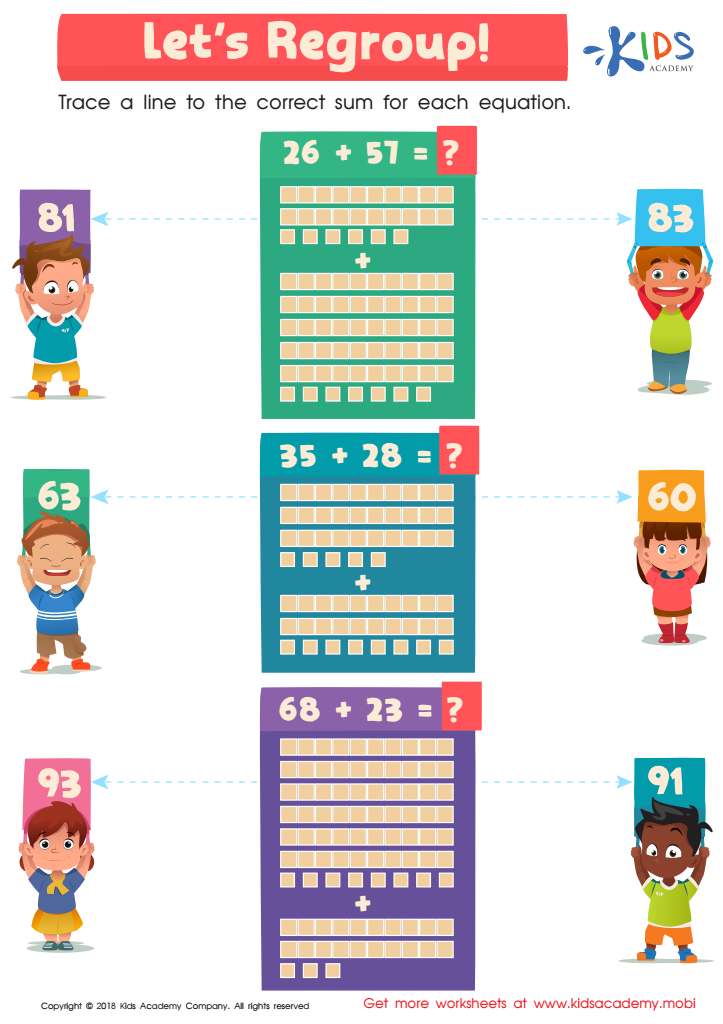
Let's Regroup Worksheet
 Assign to My Students
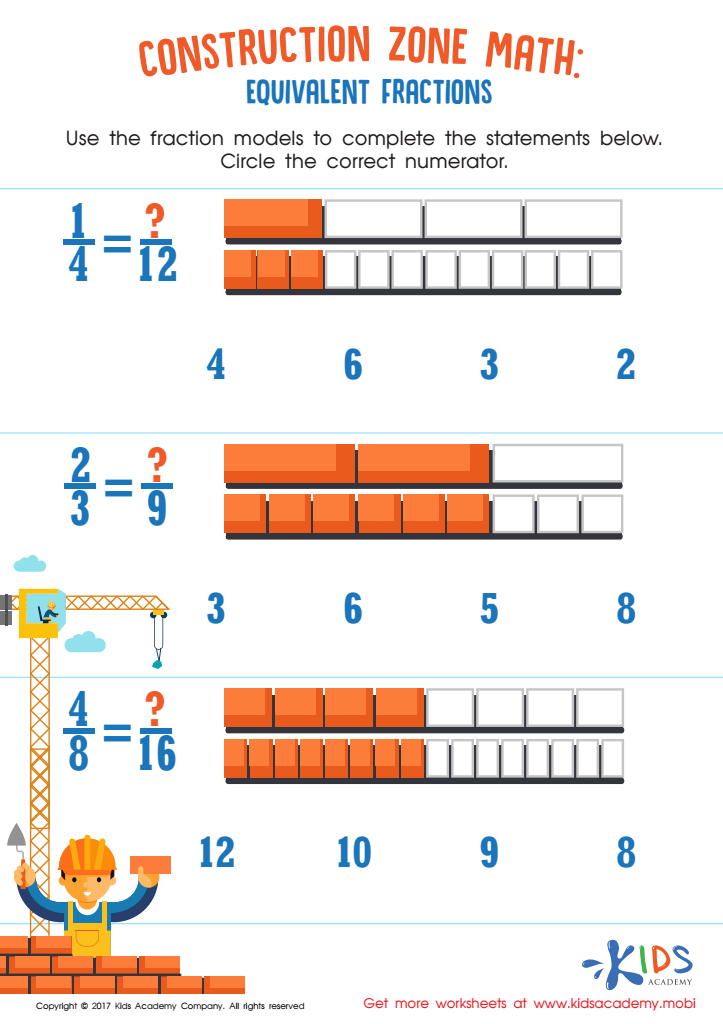
Equivalent Fractions Worksheet
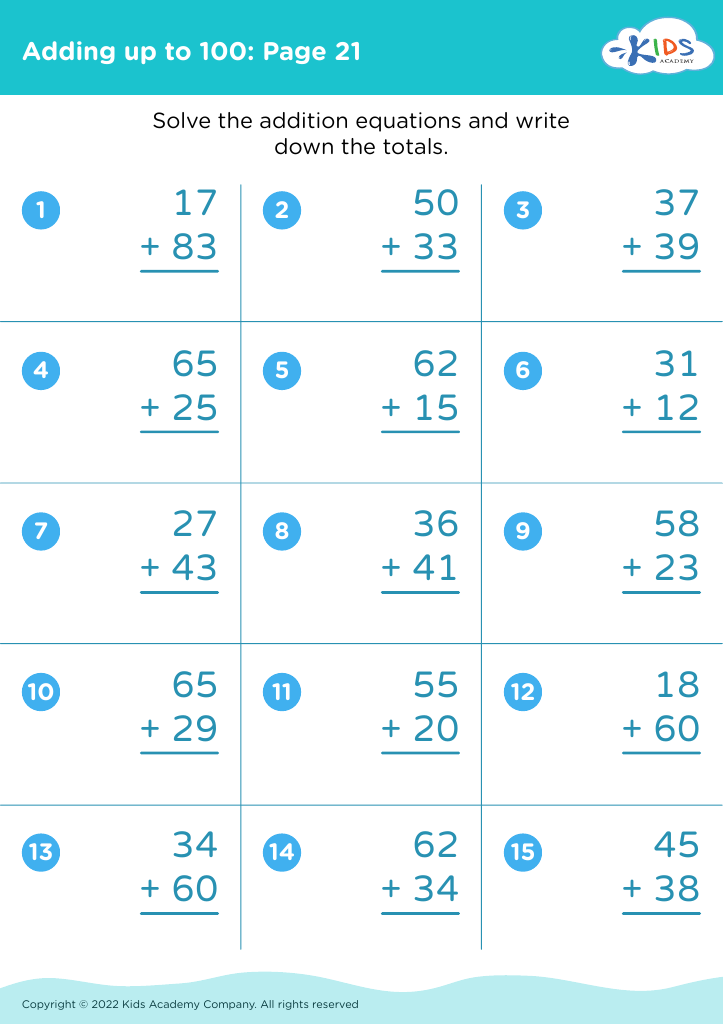








Parents and teachers should prioritize practicing arithmetic skills in children aged 5-9 as this foundational period is critical for cognitive and academic development. Early exposure to arithmetic lays the groundwork for more advanced mathematical concepts, fostering problem-solving and critical-thinking skills essential in countless everyday tasks and future academic endeavors.
Children at this age are highly receptive to learning patterns and structures. By practicing arithmetic, they develop a strong sense of number relationships, improve their ability to recognize quantities, and understand the basics of addition, subtraction, multiplication, and division. These skills are not only crucial for math but also enhance overall logical reasoning and pattern recognition abilities.
Furthermore, consistent practice in a supportive environment builds confidence. As children master basic arithmetic, they gain a sense of achievement that encourages a positive attitude toward learning and challenges. Early competency in math correlates with higher self-esteem and persistent academic success, making it easier for children to tackle more complex subjects later.
Involving parents in arithmetic practice can also create an opportunity for meaningful engagement and reinforces learning outside the classroom. Activities like counting objects or playing math games can make arithmetic fun and integrate seamlessly into daily routines. Thus, establishing a strong arithmetic foundation from ages 5-9 is essential for nurturing well-rounded, confident, and capable future learners.








