Sea creatures identification Math Worksheets for Ages 5-9
3 filtered results
-
From - To
Dive into a world of learning with our Sea Creatures Identification Math Worksheets designed for ages 5-9! These fun and engaging printables combine math skills and marine biology, helping children identify various sea creatures while practicing counting, addition, and subtraction. Perfect for young learners, each worksheet provides colorful images and interactive challenges that make math exciting. Captivate your child's curiosity about the ocean and boost their mathematical confidence simultaneously. Whether in the classroom or at home, these worksheets are a fantastic way to integrate experiential learning into everyday lessons. Start exploring and watch your young mathematician thrive!
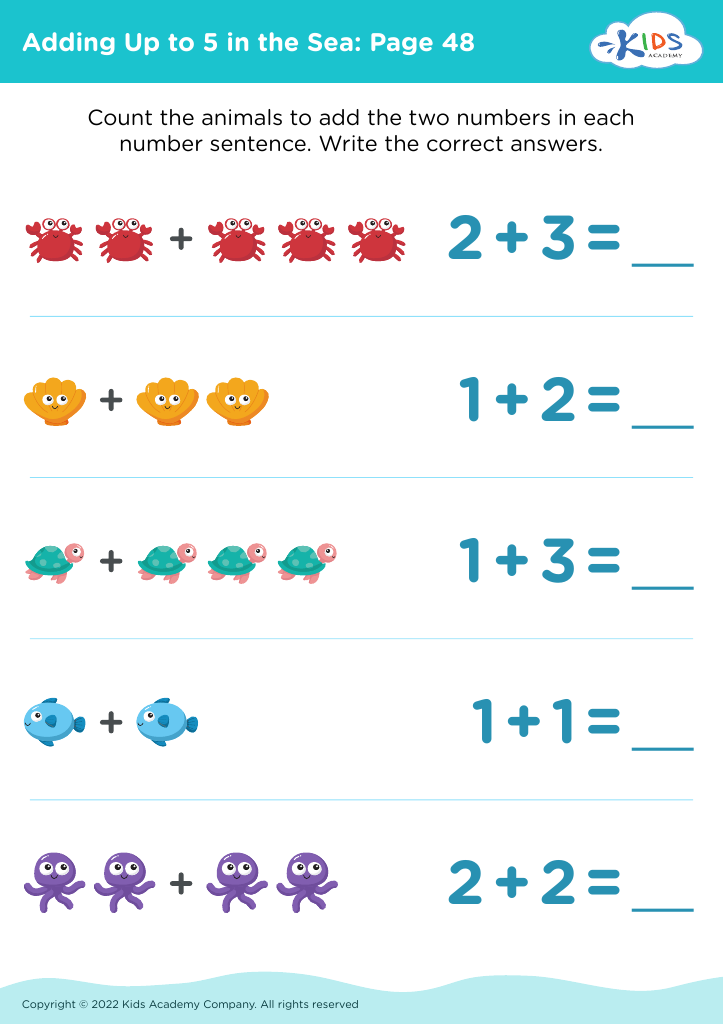
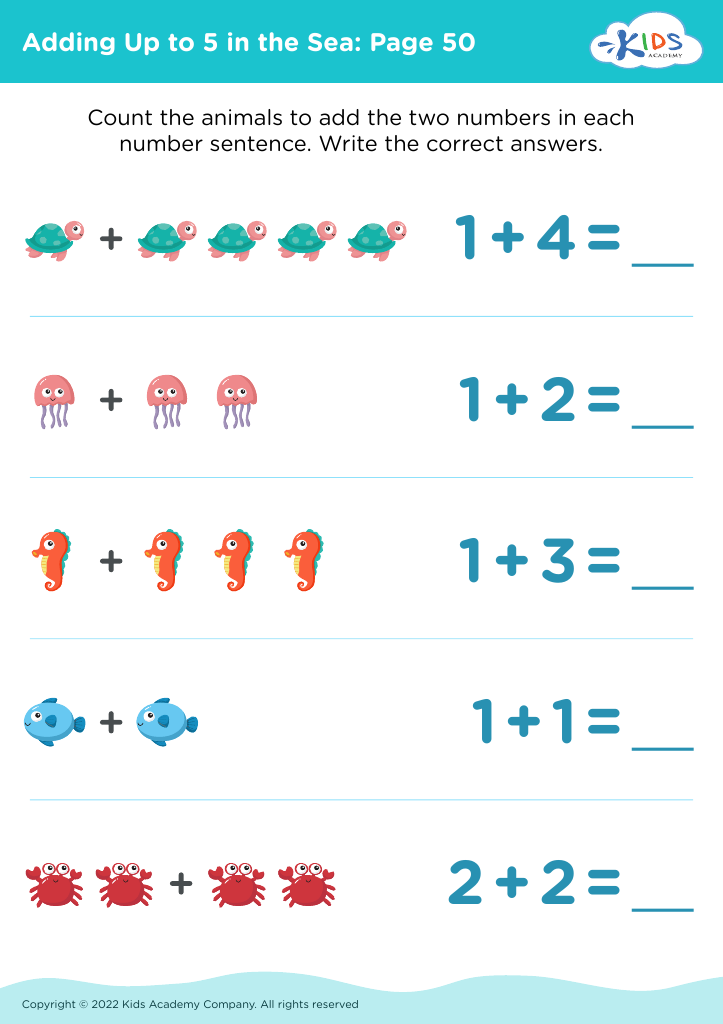
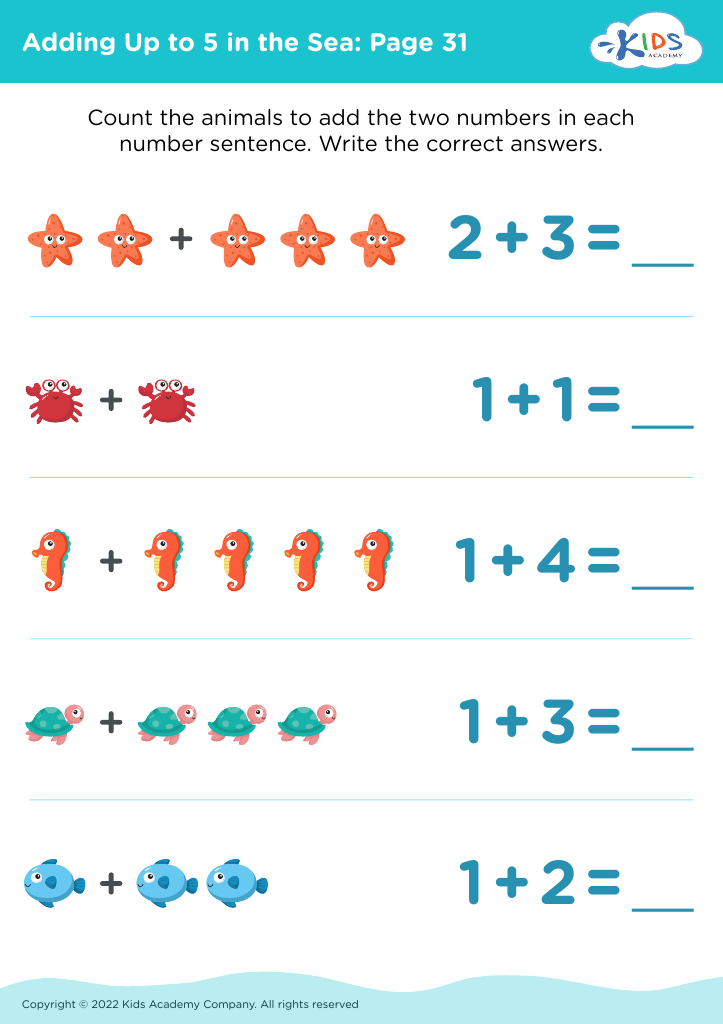








Sea creatures identification math for ages 5-9 offers a fusion of marine science and fundamental mathematics, fueling curiosity and academic growth. By integrating these captivating ocean themes, children become more engaged and enthusiastic about learning. Identifying sea creatures not only stimulates interest in the natural world but also promotes observation skills, critical thinking, and pattern recognition.
As children categorize and count different marine animals, they practice essential math skills such as sorting, graphing, and basic arithmetic. Activities like counting starfish, comparing the lengths of different fish, or adding up coral pieces provide concrete, relatable contexts for abstract mathematical concepts.
This interdisciplinary approach also instills early environmental awareness. Learning about sea creatures fosters empathy and a sense of stewardship for marine ecosystems, encouraging children to care about conservation issues from a young age.
Furthermore, this type of educational content aligns well with various learning styles. Visual learners thrive on the colorful imagery of sea life, while kinesthetic learners benefit from hands-on activities like grouping shells or creating fish patterns.
In summary, sea creatures identification math serves as a dynamic educational tool that not only enhances numeracy skills but also nurtures environmental consciousness and caters to diverse learning preferences. It's a holistic way to make foundational learning exciting and relevant.








