
Understand number relationships Math Worksheets for Ages 5-9
3 filtered results
Difficulty Level
Grade
Age
-
From - To
Subject
Activity
Standards
Unlock the world of mathematics with our "Understand Number Relationships" math worksheets, designed specifically for children aged 5-9. These engaging and interactive resources help young learners grasp essential math concepts, such as comparing numbers, recognizing patterns, and understanding concepts like greater than or less than. Each worksheet is crafted to promote critical thinking while making math fun and accessible. With vibrant illustrations and age-appropriate challenges, children will enjoy developing their math skills at their own pace. Whether at home or in the classroom, our worksheets are perfect for reinforcing foundational number relationships. Explore our collection today and enhance your child’s mathematical journey!
Favorites
With answer key
Interactive
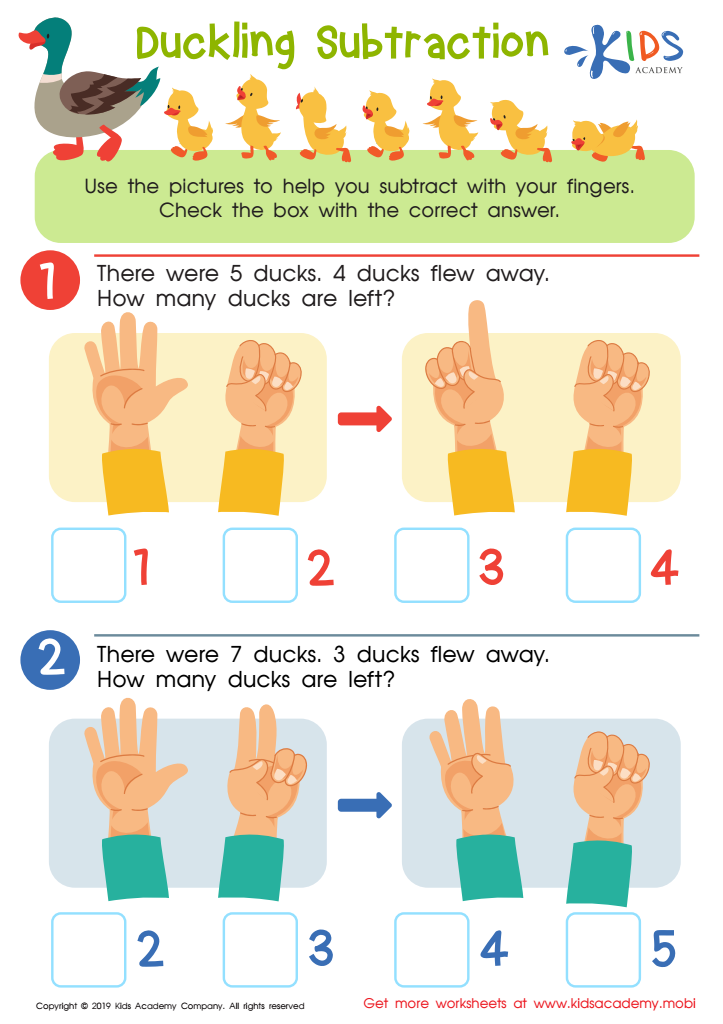
Duckling Subtraction Worksheet
Help your students learn equations and math with this fun worksheet. There are two questions to solve with the help of the pictures. Ask them to subtract with their fingers and check the box with the correct answer. This makes math easier and more enjoyable!
 Assign to My Students
Duckling Subtraction Worksheet
Worksheet
Join Kids Academy for Free
Who is primarily going to use this learning content?



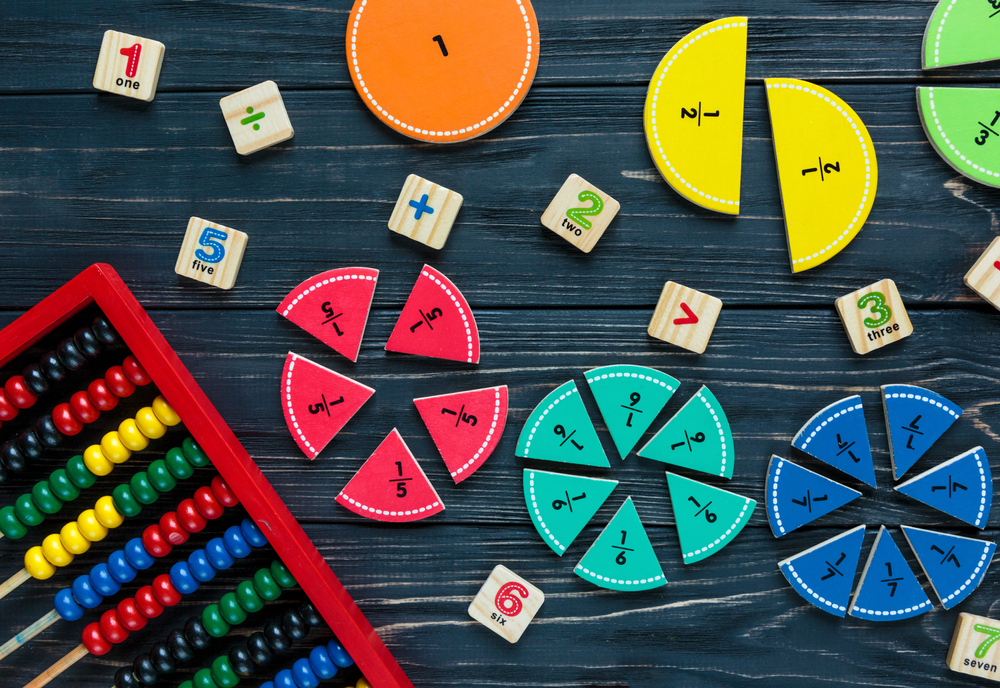



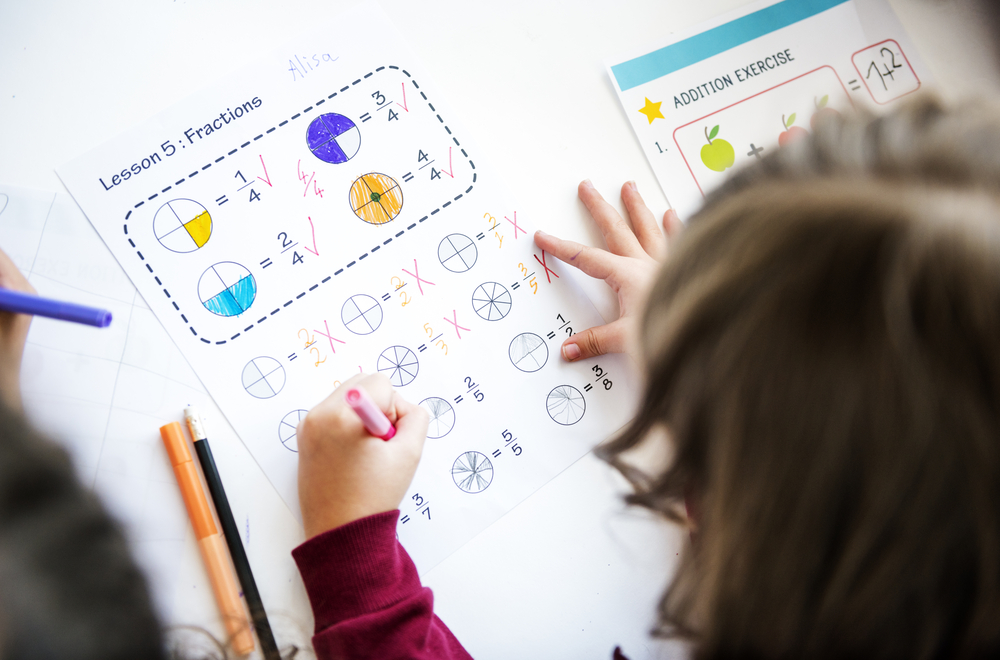
Understanding number relationships is fundamental for young learners aged 5-9, as it lays the groundwork for all future mathematical concepts. Parents and teachers should care about this critical skill because it promotes a child's ability to compare, connect, and manipulate numbers effectively. By grasping concepts such as greater than/less than, part-whole relationships, and number patterns, children develop a robust numerical foundation that enhances problem-solving and critical thinking abilities.
Additionally, strong number relationship skills boost self-confidence in math, encouraging a positive attitude that fosters lifelong learning. Children who appreciate the connections between numbers can tackle more advanced topics, such as addition, subtraction, multiplication, and division, with ease as they progress through school.
Moreover, understanding these relationships aids in real-life applications, helping children make sense of the world around them, whether they are measuring ingredients in cooking or budgeting for a small purchase. By nurturing this understanding early on, parents and teachers can help set children on a path to mathematical success, encouraging curiosity and analytical skills that extend beyond the classroom. In essence, supporting children in grasping number relationships is a sound investment in their overall academic and personal growth.








