Understanding clocks Math Worksheets for Ages 5-9
5 filtered results
-
From - To
Unlock the world of time-telling with our engaging "Understanding Clocks" math worksheets, tailored for children ages 5-9. These thoughtfully crafted printable activities make mastering both analog and digital clocks fun and interactive. Utilize colorful illustrations and relatable scenarios to help young learners grasp the concepts of hours, minutes, and seconds. Suitable for classroom or at-home use, these worksheets support key math learning objectives by building essential time-reading skills. Perfect for teachers and parents, our worksheets transform time-learning into an enjoyable experience, fostering confidence and competency in young minds. Start your child's time-telling journey today with Kids Academy!
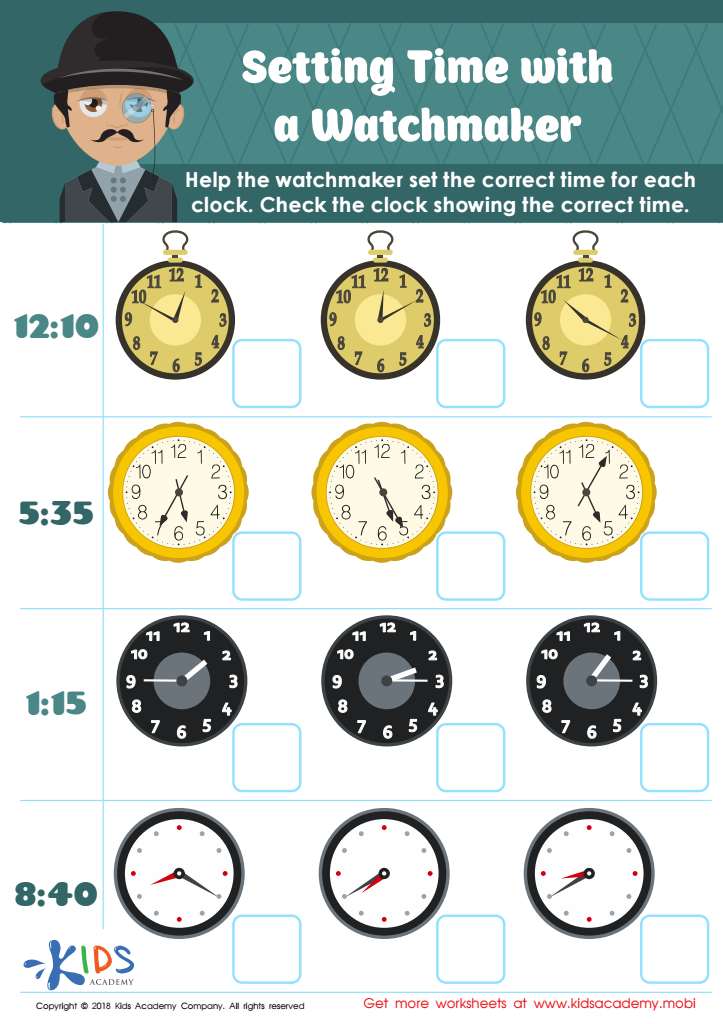
Setting Time with Watchmaker Worksheet
 Assign to My Students
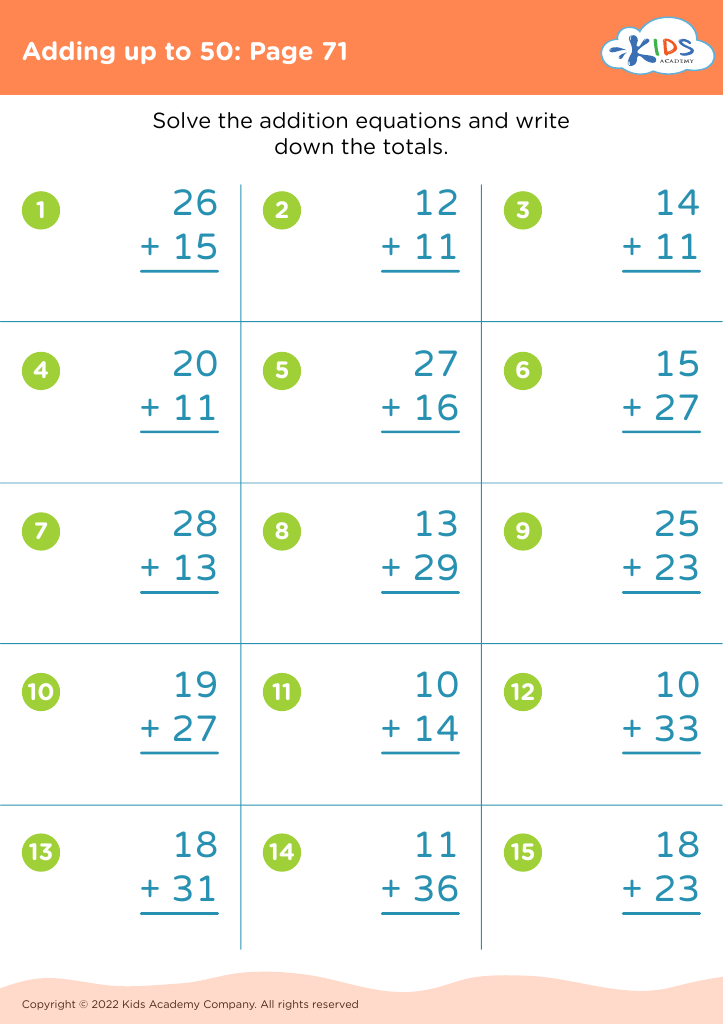
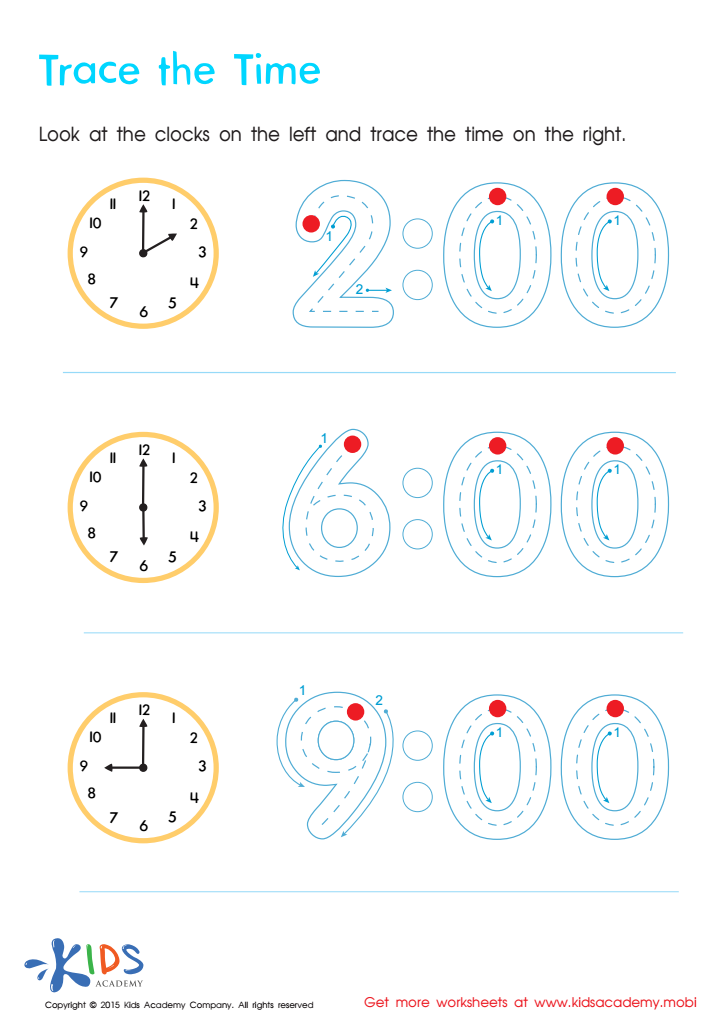
Telling The Time Worksheet: Part 2
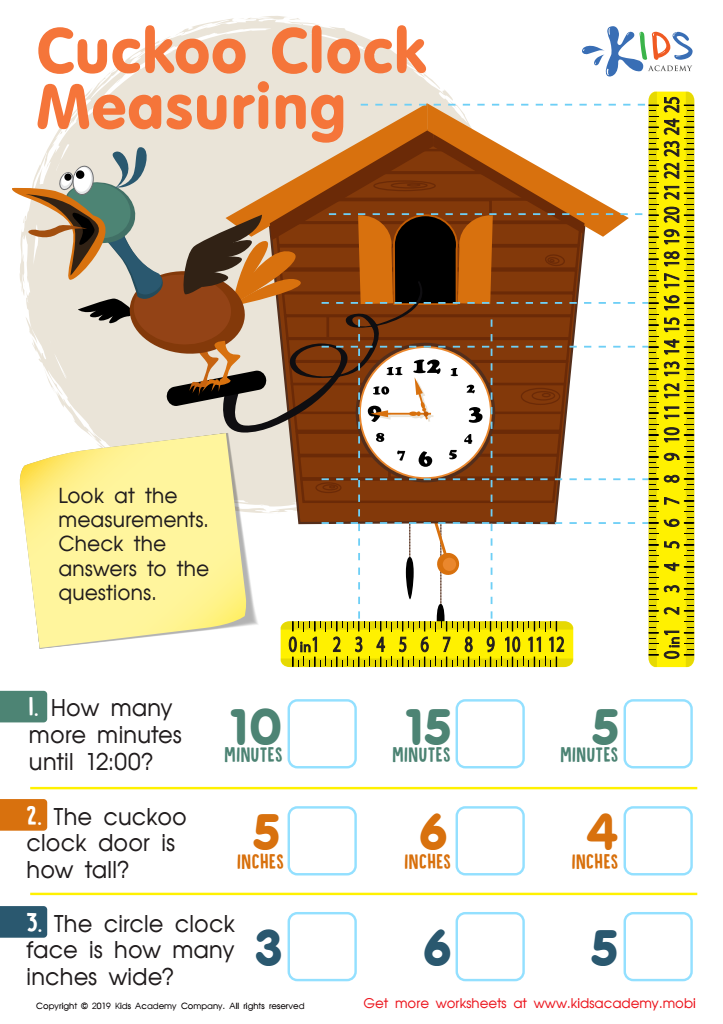
Cuckoo Clock Measuring Worksheet
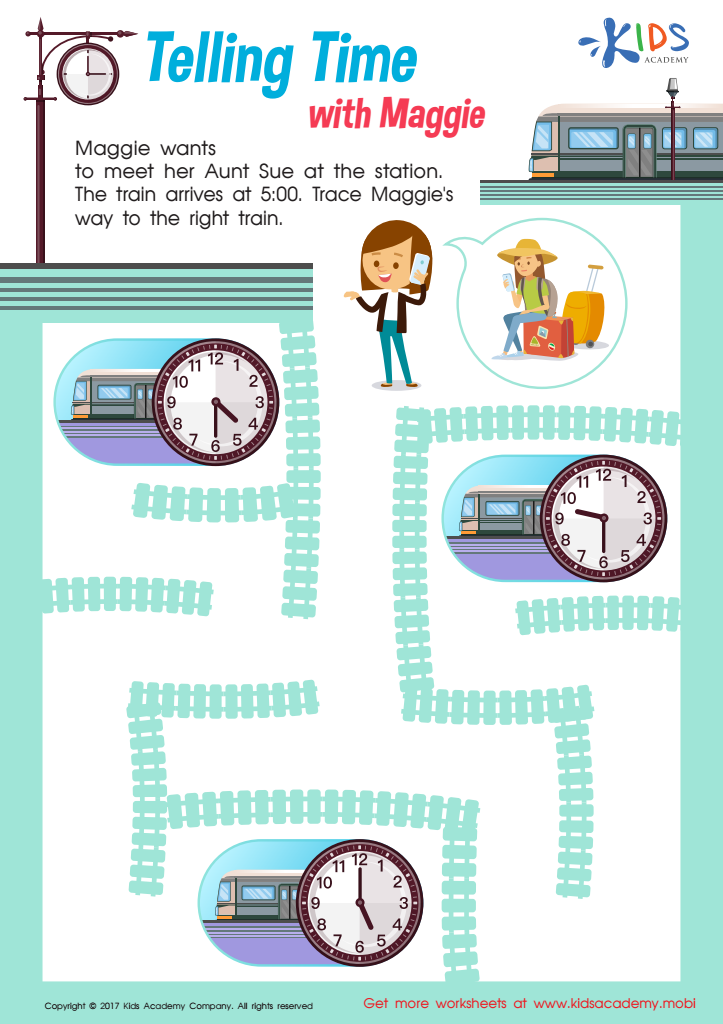
Telling Time With Maggie Time Worksheet







Understanding clocks and learning to tell time are essential skills for children aged 5-9, forming the cornerstone of daily life. Parents and teachers should prioritize these concepts as they empower children to develop a sense of time management, crucial for routine adherence, such as bedtime, meal times, and school schedules. Grasping these skills early on fosters responsibility and independence, providing a framework within which children can understand the sequence and timing of activities.
Moreover, telling time integrates mathematical skills like counting by fives, understanding fractions, and addition, enhancing numeracy. Mastery of these foundational math concepts is crucial for future learning, serving as prerequisites for more complex mathematical operations in higher grades.
From a developmental perspective, learning to read clocks supports cognitive growth, sharpening mental-processing abilities and memory retention. The practical application of telling time beyond academics, influencing punctuality, organization, and discipline, cannot be overstated. Consequently, these skills act as benchmarks in holistic educational development, preparing children for diverse life challenges.
Therefore, commitment to teaching clock-reading ensures well-rounded growth, blending academic prowess with real-world readiness, making it indispensable for both parents and teachers. By fostering an early understanding of time, children are better prepared to meet the demands of structured environments effectively.








