
Understanding grouping Math Worksheets for Ages 5-9
3 filtered results
Difficulty Level
Grade
Age
-
From - To
Subject
Activity
Standards
"Understanding Grouping Math Worksheets for Ages 5-9" provide young learners with the foundational skills necessary for math success. Designed by educators to make learning engaging, these worksheets help children practice essential concepts including grouping, sorting, and classifying. By visually organizing objects, kids develop critical thinking and problem-solving abilities. These activities reinforce early math skills in a fun, interactive way, fostering a love for learning. Perfect for classroom use or homeschooling, our printable resources adapt to various skill levels, ensuring each child can progress confidently. Start your child's math journey with our expertly crafted grouping worksheets today!
Favorites
With answer key
Interactive
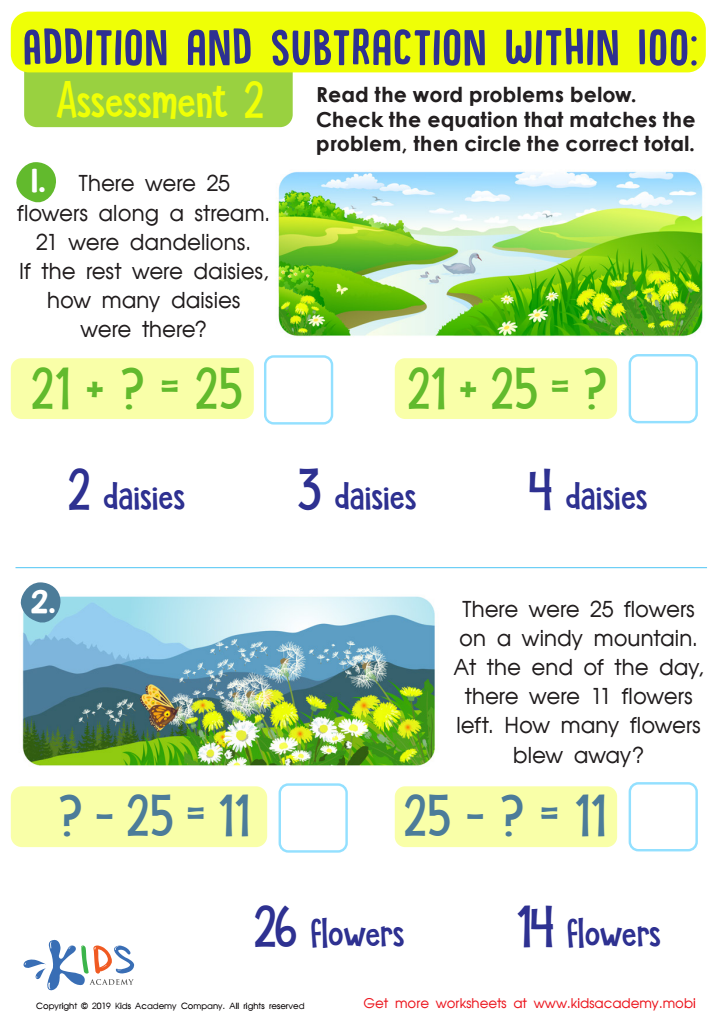
Assessment 2 Math Worksheet
Using fun exercises and pictures, you can get kids excited about math. With practice and reminders of what they've learnt, they'll be solving simple addition and subtraction equations with ease. Read the word problems in the picture to them, then help them check the equation and choose the correct answer.
 Assign to My Students
Assessment 2 Math Worksheet
Worksheet
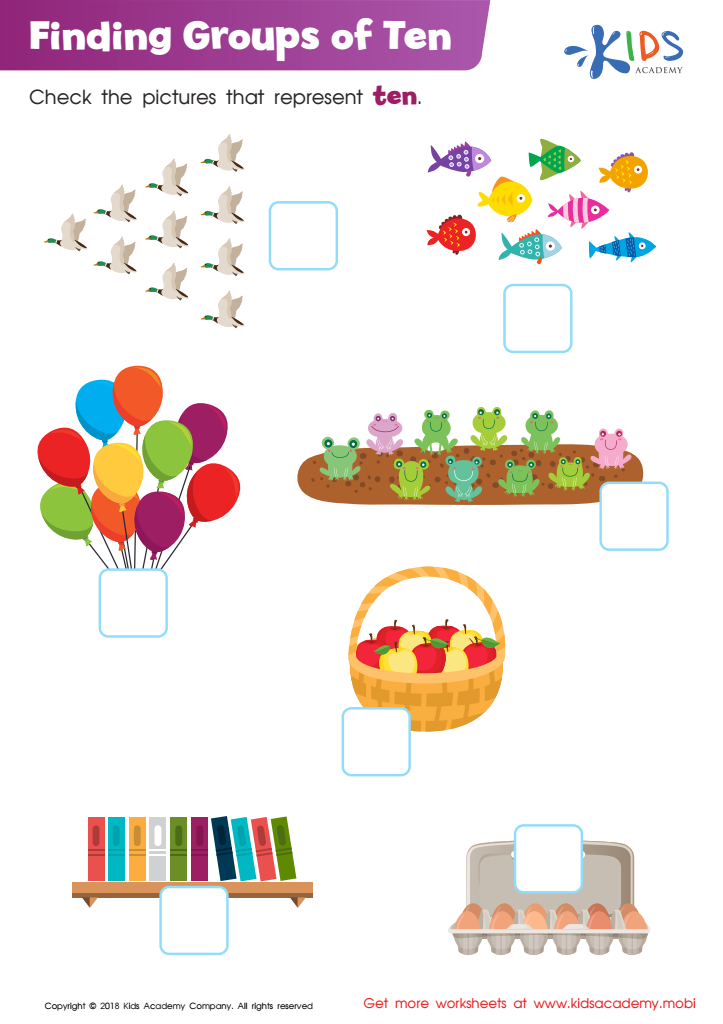
Finding Groups of Ten Worksheet
Can your kids count? If they can't go higher than tens, introduce them to this worksheet. Counting can be fun and easy with this exercise. Ask if they can identify the pictures, then help them count each group. Help them check the pictures that represent ten.
Finding Groups of Ten Worksheet
Worksheet
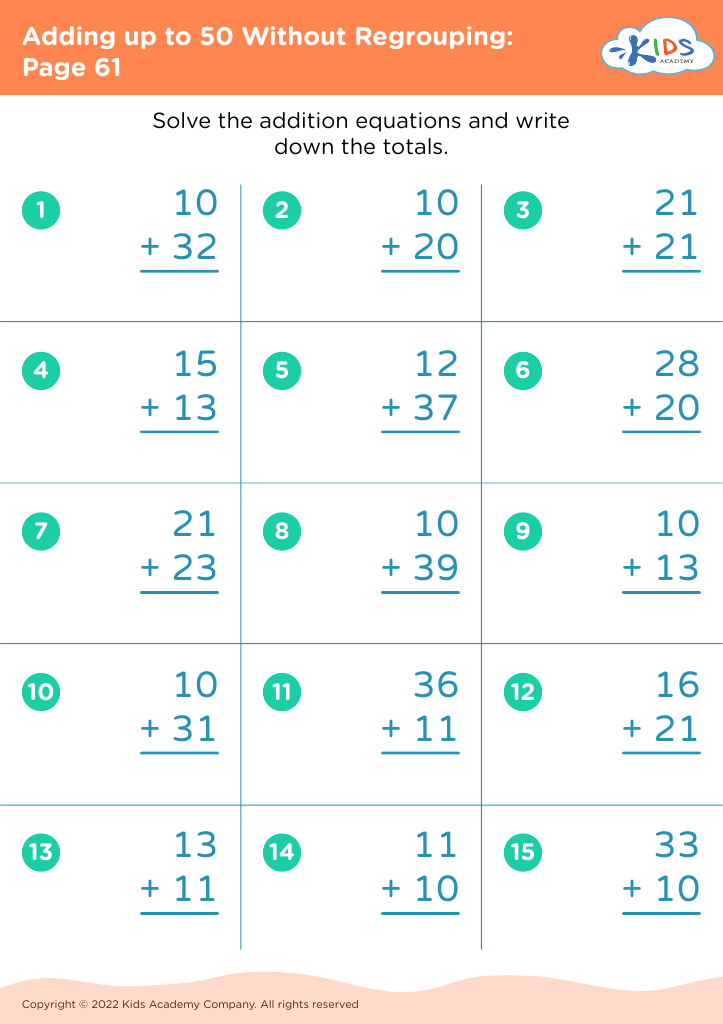
Join Kids Academy for Free
Who is primarily going to use this learning content?








Understanding grouping in math, also known as place value or the concept of grouping numbers into tens, hundreds, etc., is fundamental for children ages 5-9. During these early years, kids develop essential cognitive skills that form the foundation for more complex math operations in later years.
First, grasping grouping helps children make sense of numbers in a structured way. For example, recognizing that the number 25 consists of two groups of ten and five single units enables students to understand how numbers relate to one another. This comprehension is crucial for performing basic addition, subtraction, and eventually multiplication and division.
Moreover, early exposure to grouping aids in developing crucial problem-solving skills. When students learn to break down numbers into manageable groups, they can approach math problems with more confidence and efficiency. For instance, understanding that 48 + 36 can be grouped into (40 + 30) + (8 + 6) helps simplify and solve the problem faster.
For teachers and parents, promoting a strong foundation in grouping prepares children for future academic success. Math skills bolster critical thinking, logical reasoning, and even day-to-day tasks such as budgeting and time management. By prioritizing early math education, we provide children with essential tools that benefit lifelong learning and development.








