Understanding length Math Worksheets for Ages 5-9
3 filtered results
-
From - To
Explore our "Understanding Length Math Worksheets" designed for children aged 5-9! These interactive and engaging worksheets help young learners grasp the concept of length through fun activities and vivid illustrations. Kids will measure, compare, and order various objects, enhancing their understanding of shorter and longer items while developing critical thinking skills. Perfect for home or classroom use, our worksheets cater to different learning styles, ensuring every child can confidently explore length concepts. Foster a love for math with these age-appropriate resources that make learning about length enjoyable and effective! Visit our site to access these worksheets today and watch math skills grow!
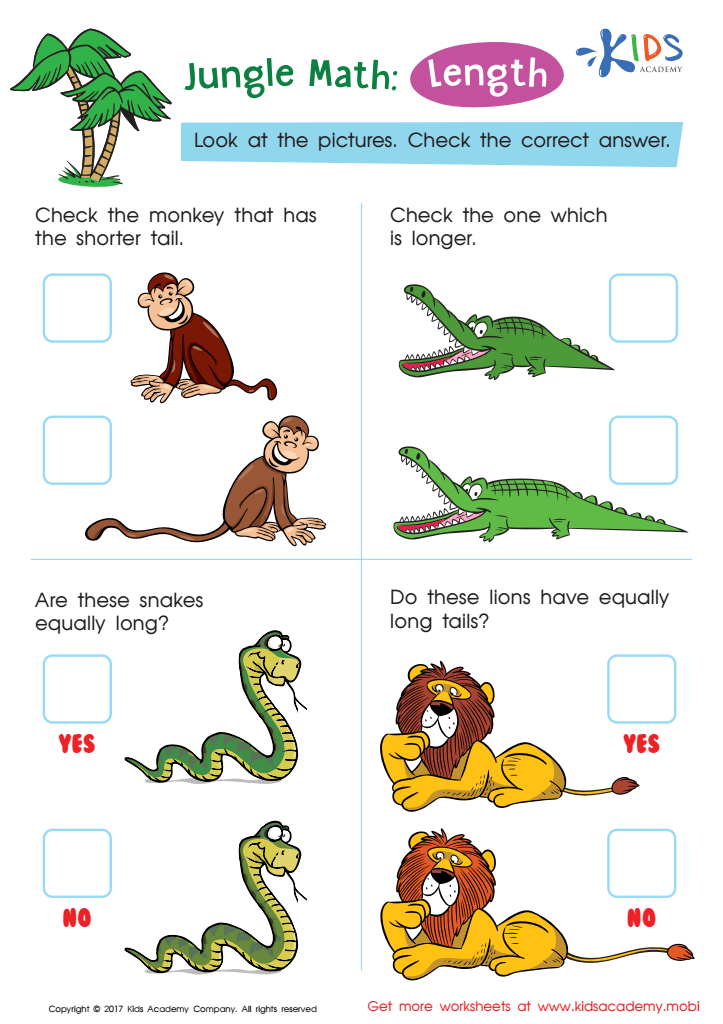
Which One Is Longer - Length Worksheet
 Assign to My Students
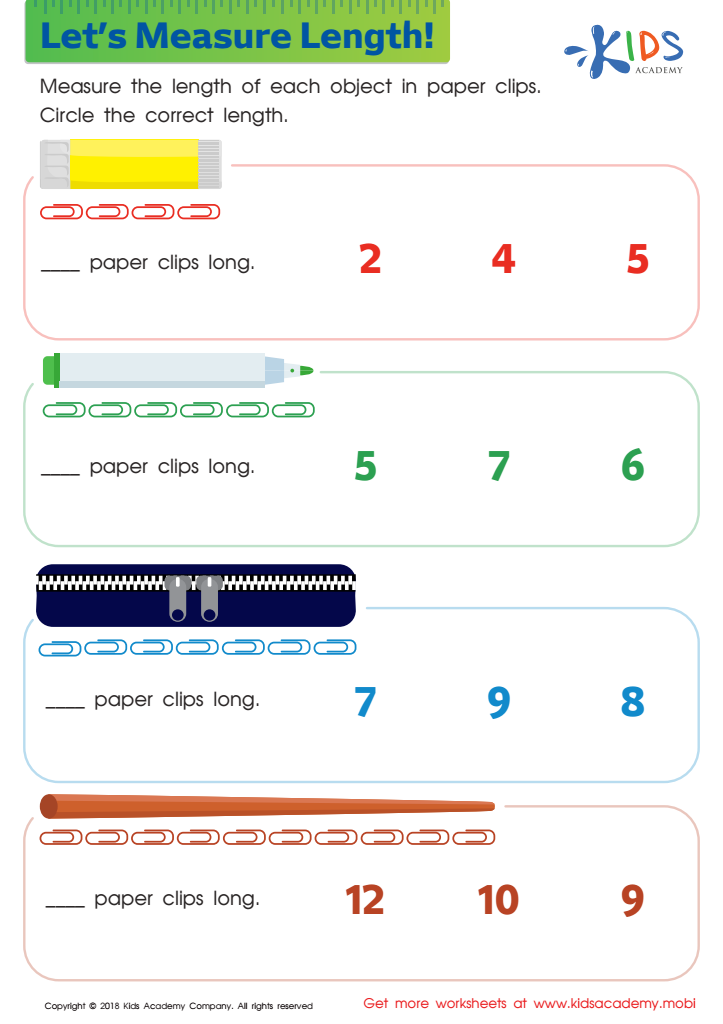
Lets Measure Length Worksheet
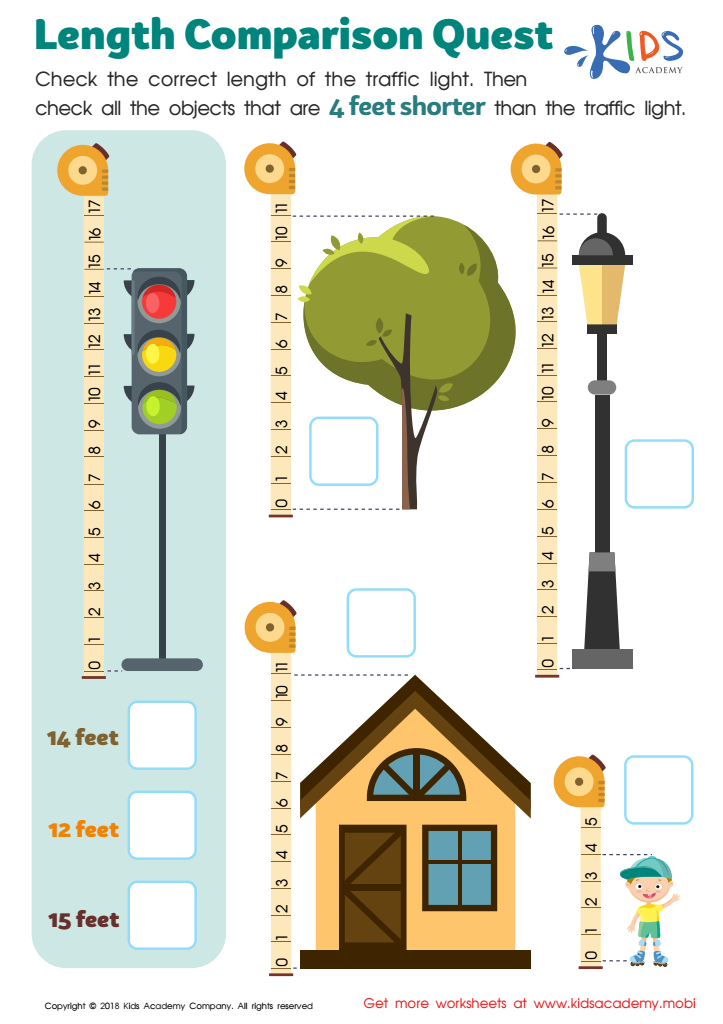
Length Comparison Quest Worksheet







Understanding length is a fundamental mathematical concept that significantly impacts early childhood development in children aged 5-9. For parents and teachers, nurturing this understanding is crucial for several reasons.
Firstly, grasping length concepts lays the groundwork for future mathematics learning. Children learn to compare lengths, measure objects, and understand units of measurement, which are essential skills in geometry and data interpretation. This foundational knowledge encourages logical thinking and problem-solving abilities essential for academic success.
Moreover, understanding length has practical, everyday applications. Children encounter measuring tasks in various contexts, whether it's helping to set the table, measuring ingredients for a recipe, or comparing the heights of friends. These experiences foster confidence and competence in their ability to interact with the world around them.
Additionally, activities involving length can promote fine motor skills and spatial awareness. By engaging in hands-on activities like using rulers, measuring tapes, or creating art projects, children strengthen their cognitive and physical abilities.
Lastly, incorporating understanding length in playful learning environments nurtures a positive attitude towards math, making it enjoyable rather than intimidating. Therefore, both parents and teachers play a vital role in facilitating this foundational understanding, setting children on a path towards lifelong mathematical literacy.








