Understanding symmetry Math Worksheets for Ages 5-9
30 filtered results
-
From - To
Unlock the magic of math with our "Understanding Symmetry" worksheets, crafted for children ages 5-9! These engaging and educational activities are designed to help young learners grasp the fundamental concepts of symmetry through fun, hands-on exercises. Your child will explore lines of symmetry, symmetrical shapes, and pattern recognition, fostering critical thinking and visual-spatial skills. Each worksheet is thoughtfully created to support varied learning styles, making math an interactive and enjoyable journey. Perfect for both classroom use and at-home practice, our worksheets provide the perfect blend of learning and fun. Ignite your child’s mathematical curiosity today!
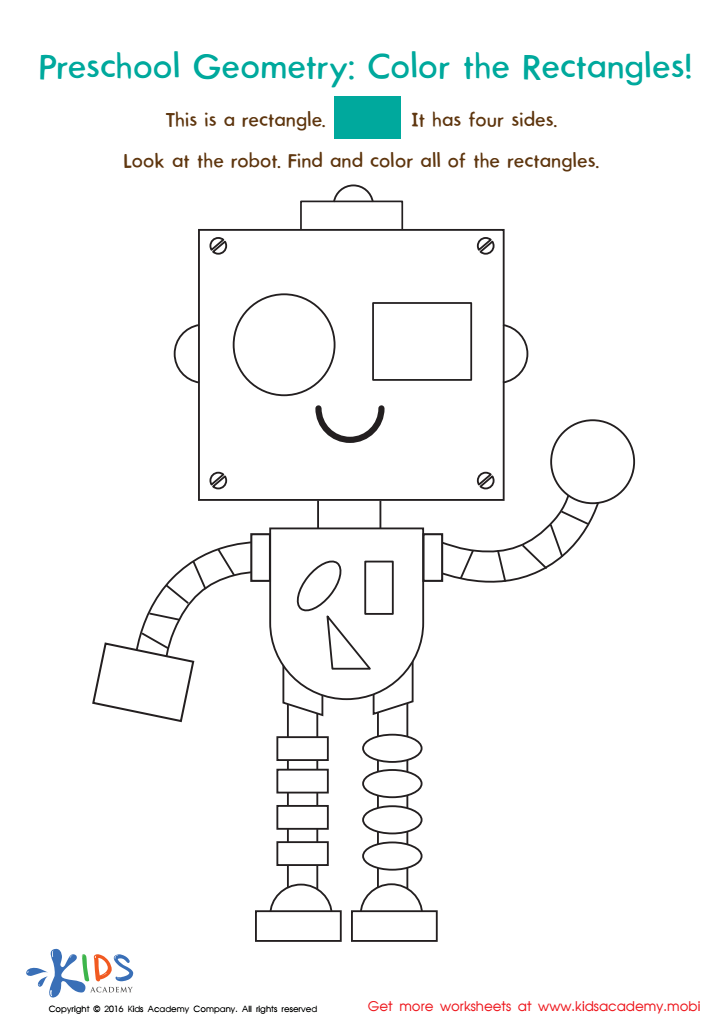
Geometry Worksheet
 Assign to My Students
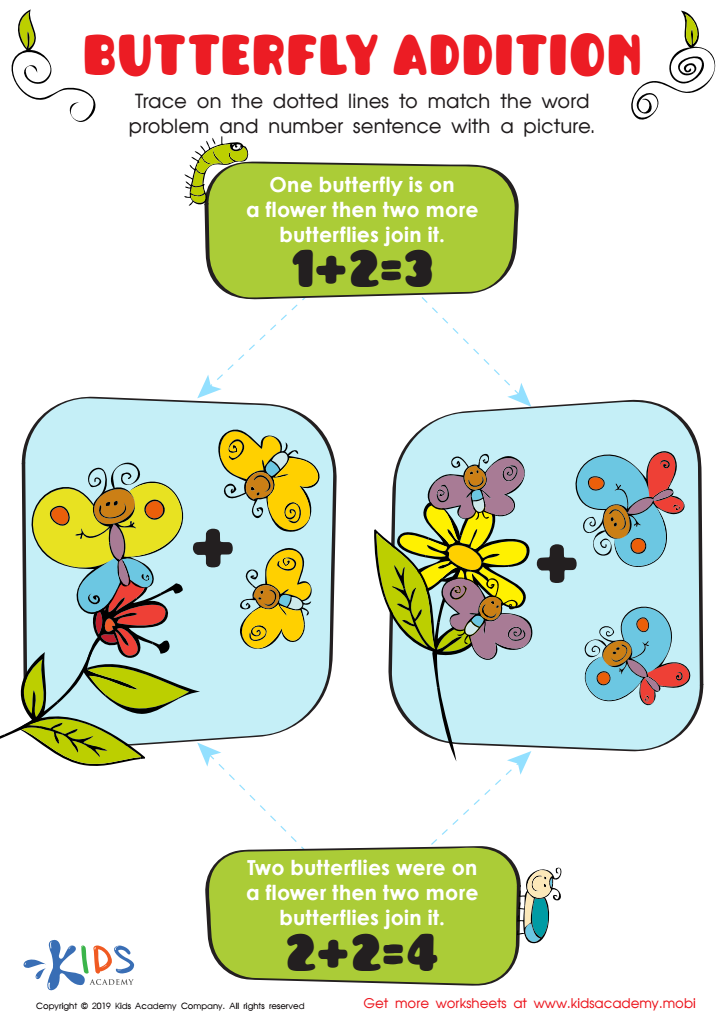
Butterfly Addition Worksheet
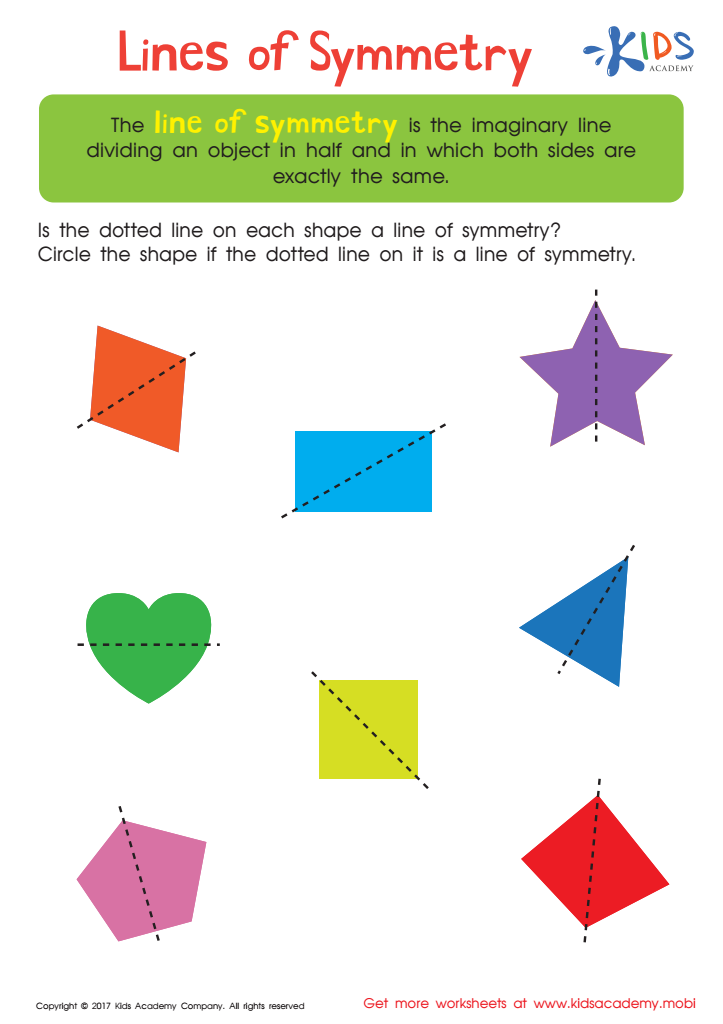
Lines of Symmetry Printable
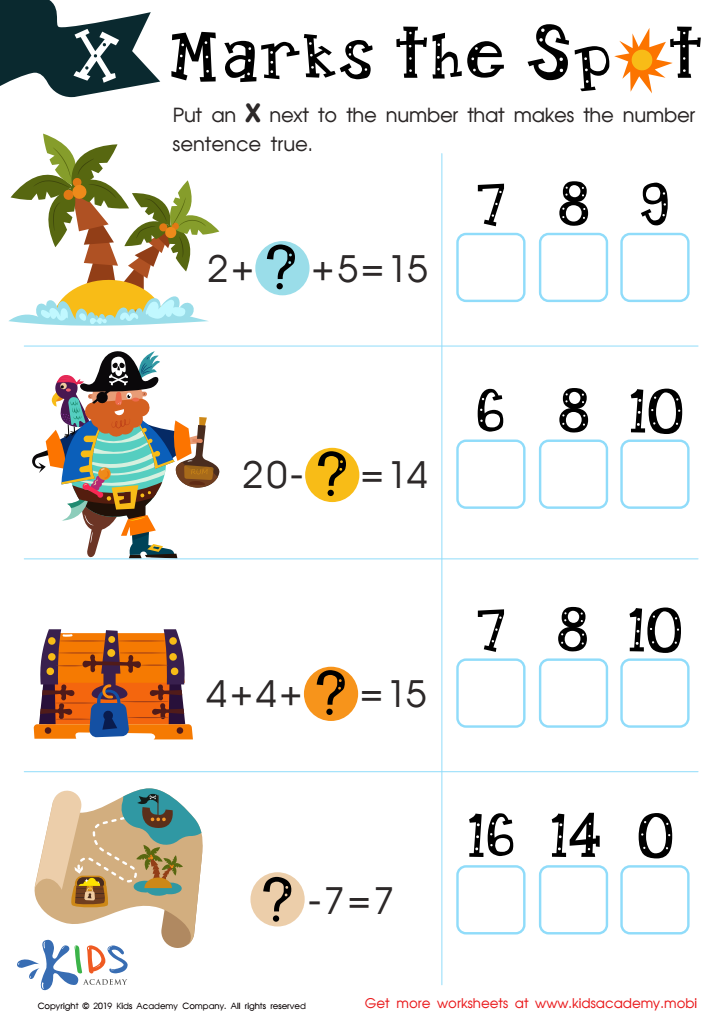
X Marks the Spot Worksheet
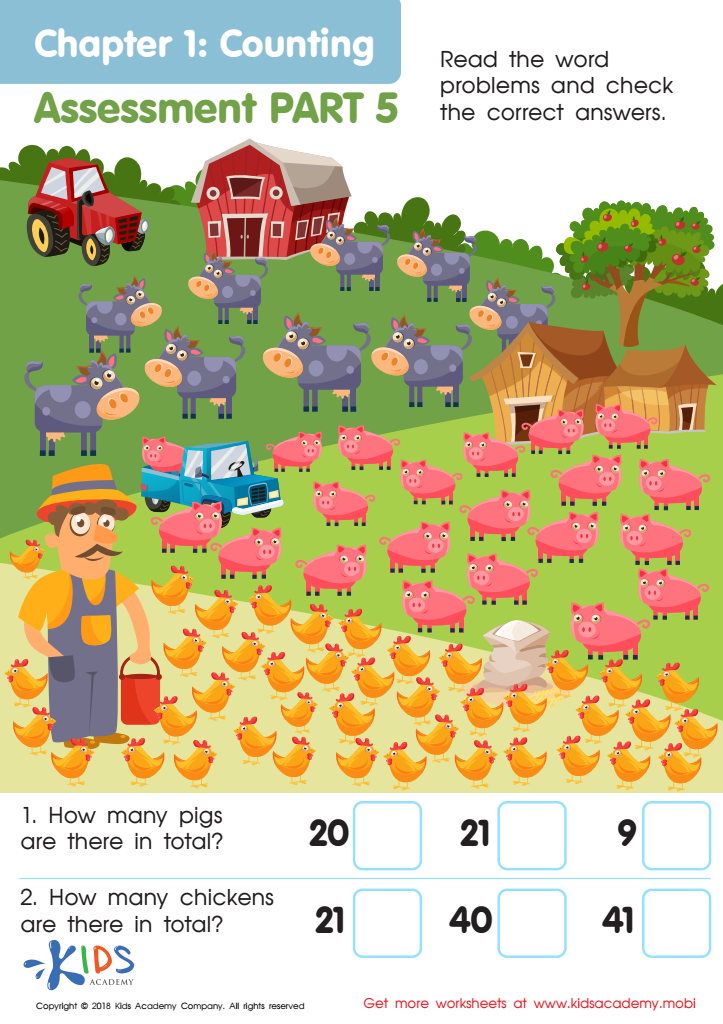
Counting: Assessment 5 Worksheet
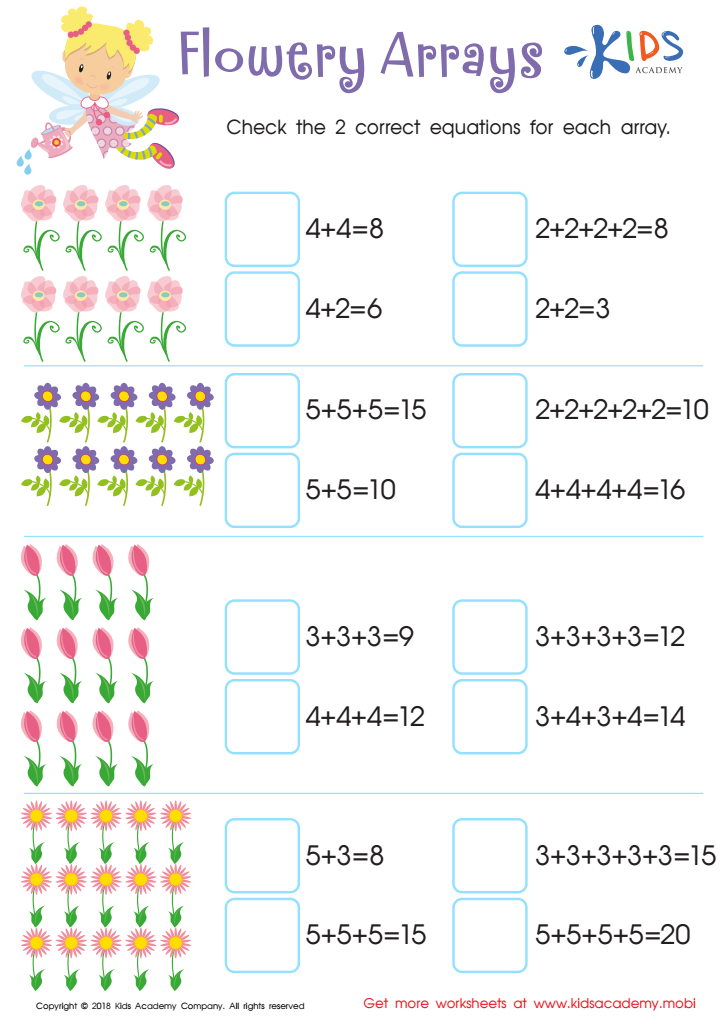
Flowery Arrays Worksheet








Understanding symmetry is crucial for young learners as it lays the foundation for foundational mathematical concepts and cognitive development. For ages 5-9, symmetry is found everywhere, from butterflies to everyday objects, helping kids connect math to the real world and engage actively with their surroundings.
Firstly, recognizing symmetry improves spatial awareness and geometric understanding. These skills are vital as they form the basis for more complex mathematical learning, such as algebra and geometry, later on. When children understand symmetry, they learn to identify patterns, make predictions, and become adept at problem-solving, all attributes needed across various life and academic disciplines.
Introducing concepts like reflective symmetry, rotational symmetry, and line symmetry encourages critical thinking. It challenges children to analyze visual information and divide shapes into equal parts, essential components of fractions and proportions. By visually and kinesthetically learning symmetry, children also enhance their fine motor skills through drawing and crafting symmetrical figures and designs.
Moreover, understanding symmetry has a significant interdisciplinary impact, reinforcing science, technology, and art education (STEAM). For someone building a robot or crafting an animation design, the understanding of symmetry ensures balanced and aesthetically pleasing results.
Therefore, prioritizing symmetry in early education equips children with essential skills for holistic development, unleashes their creativity, and sets a robust groundwork for future academic and real-world challenges.








