Visual Learning Math Worksheets for Ages 5-9 - Page 5
101 filtered results
-
From - To
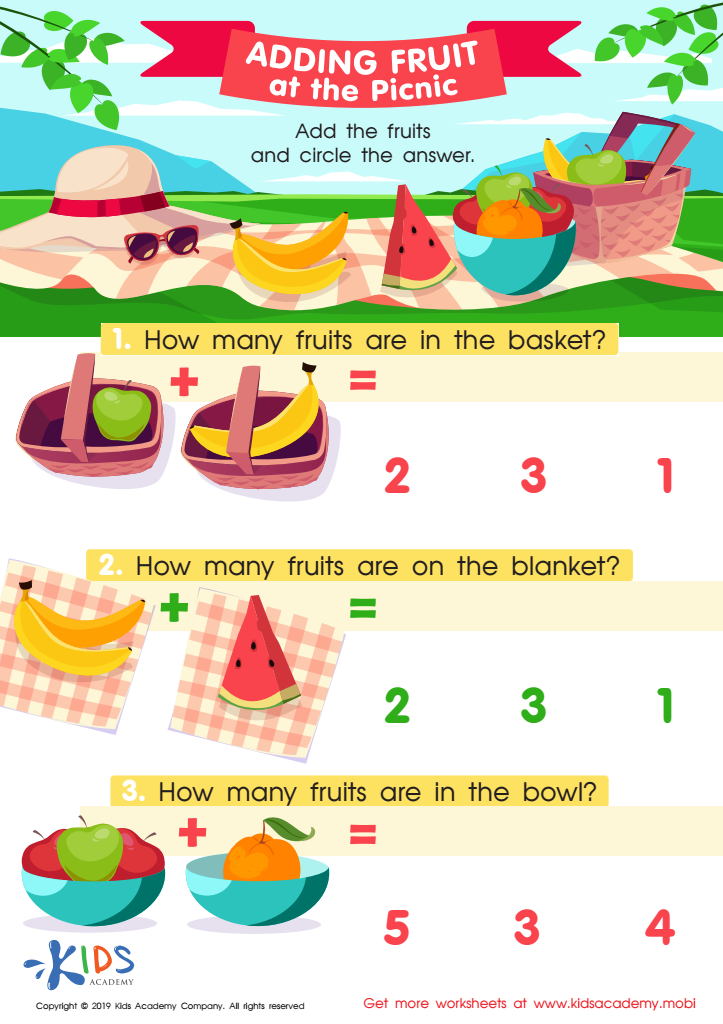
Adding Fruit at the Picnic Worksheet
 Assign to My Students
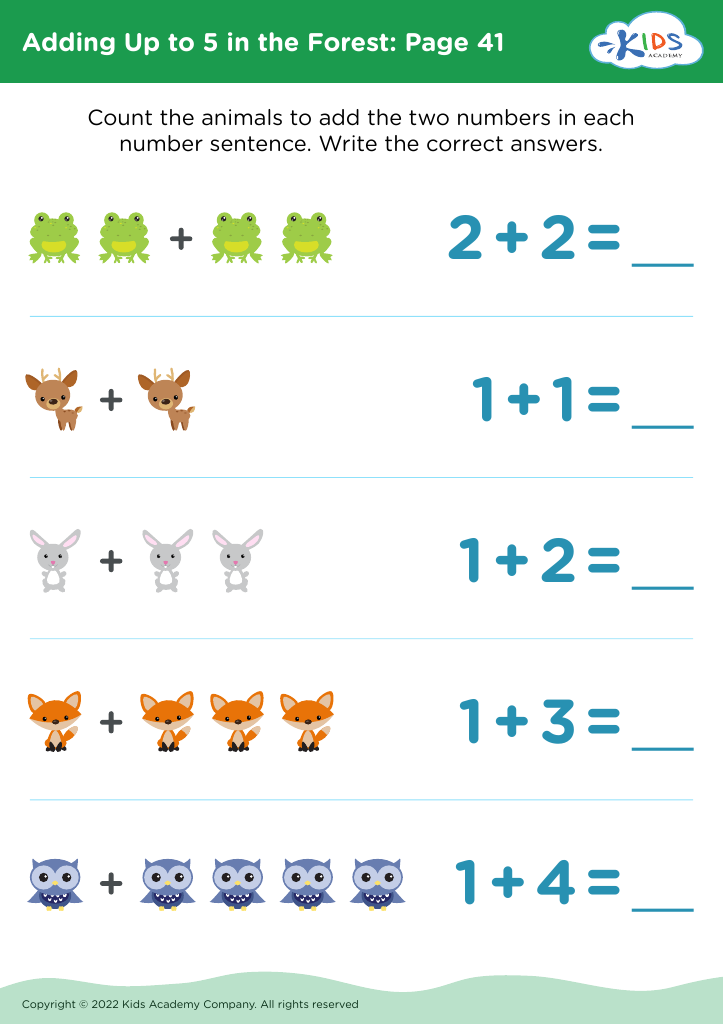








Parents and teachers should care about Visual Learning Math for ages 5-9 because it builds a strong conceptual foundation critical for later mathematical understanding. For young learners, being able to see and manipulate visual representations of math concepts—such as shapes, number lines, or visual aids—makes abstract ideas more concrete and comprehensible. This visual approach aligns with the developmental stage of children in this age group, who often lack the cognitive maturity to grasp purely abstract concepts.
By incorporating visual elements, educators cater to various learning styles, particularly for visual learners, improving engagement and retention. Research consistently shows that students better understand and remember information when it is presented in multiple ways, combining both visual and verbal explanations. Visual learning in math enhances problem-solving skills by allowing children to visualize problems and see relationships between numbers and shapes, fostering deeper thought processes and critical thinking.
Additionally, interactive and visual math practices can boost confidence in young learners, turning math from a potentially intimidating subject into an exciting and accessible one. Early positive experiences with math can shape attitudes towards the subject and encourage a lifelong appreciation and competence. Therefore, fostering visual learning in math during these formative years sets a strong educational foundation, promoting both short-term and long-term academic success.








