
Visualization skills Math Worksheets for Ages 5-9
5 filtered results
Difficulty Level
Grade
Age
-
From - To
Subject
Activity
Standards
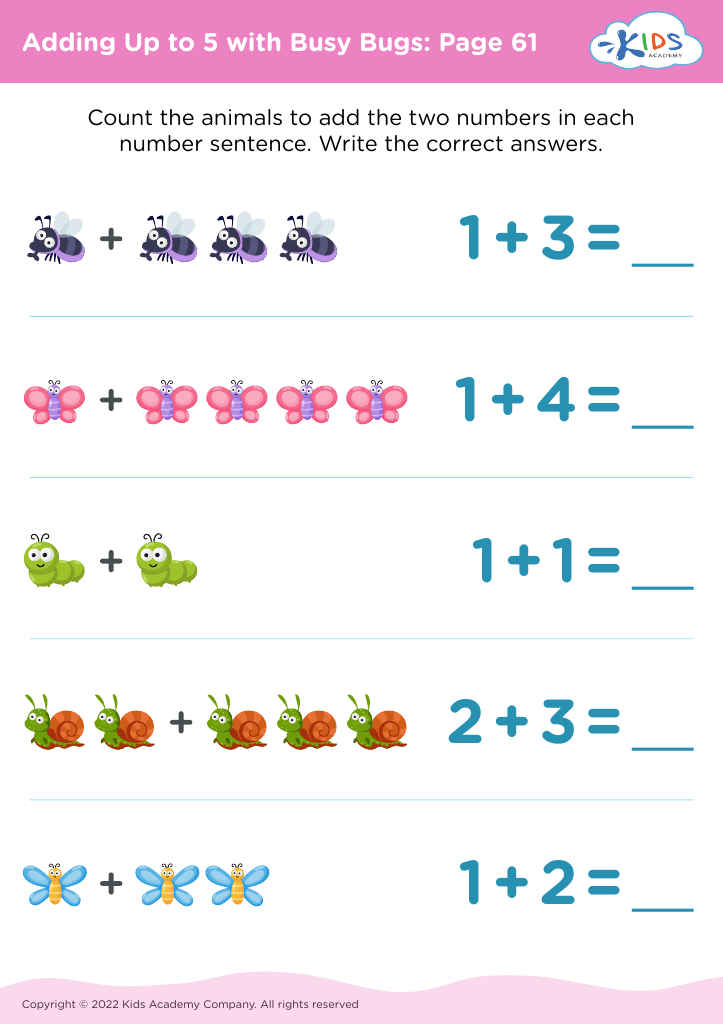
Enhance your child's understanding of math concepts with our Visualization Skills Math Worksheets designed for ages 5-9. These engaging and interactive worksheets help young learners develop critical visualization abilities, laying a strong foundation for problem-solving and analytical skills. With colorful illustrations and various activities, children will explore shapes, patterns, and spatial relationships in a fun and stimulating way. Our carefully crafted worksheets cater to different learning styles, making math enjoyable and accessible for everyone. Unlock your child's potential and boost their confidence in math today with these essential visualization skills resources! Perfect for home or classroom use.
Favorites
With answer key
Interactive
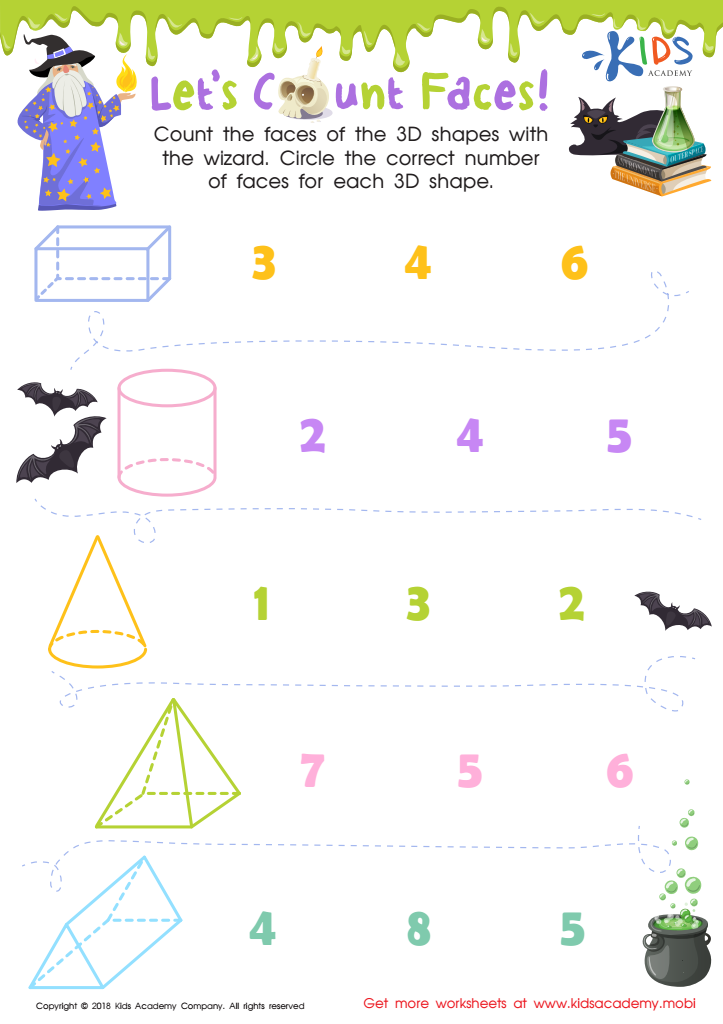
Let's Count Faces! Worksheet
Help the wizard count the faces of 3D shapes! Ask your kids to identify the shapes before beginning, then have them circle the correct number of faces. Enjoy this fun wizard-themed worksheet with your kids!
 Assign to My Students
Let's Count Faces! Worksheet
Worksheet
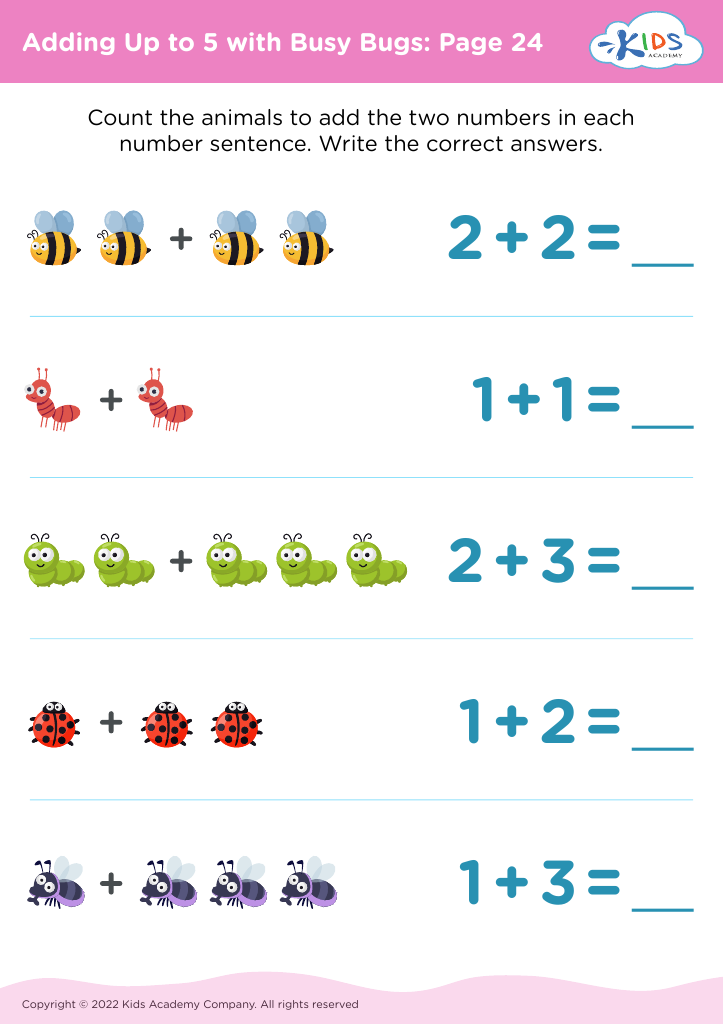
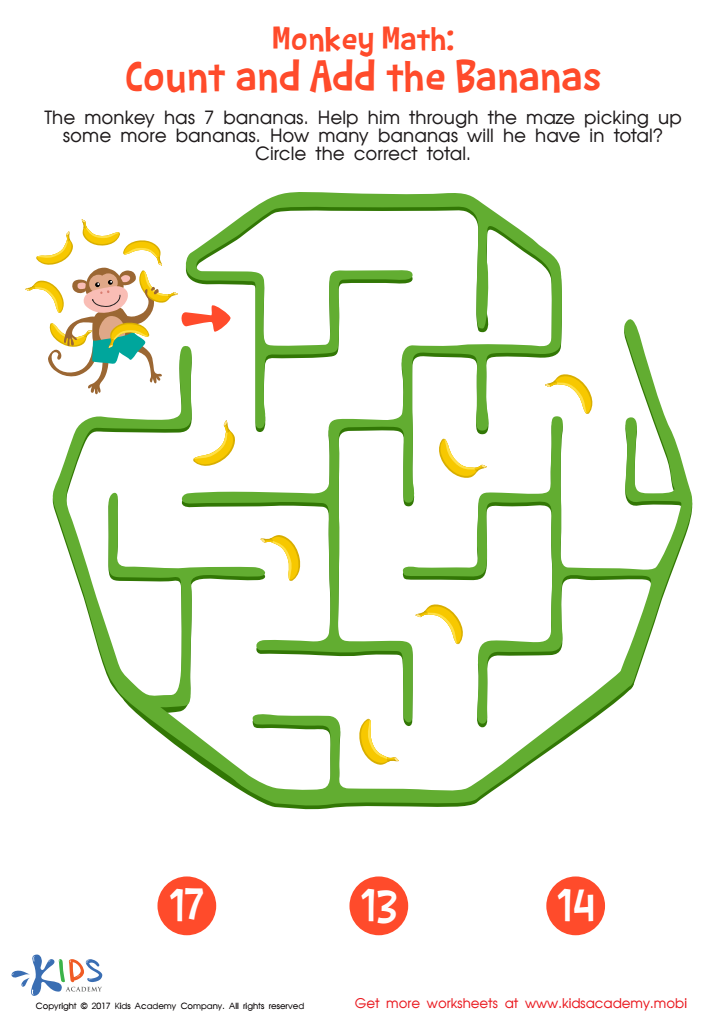
Monkey Math Worksheet
Worksheet
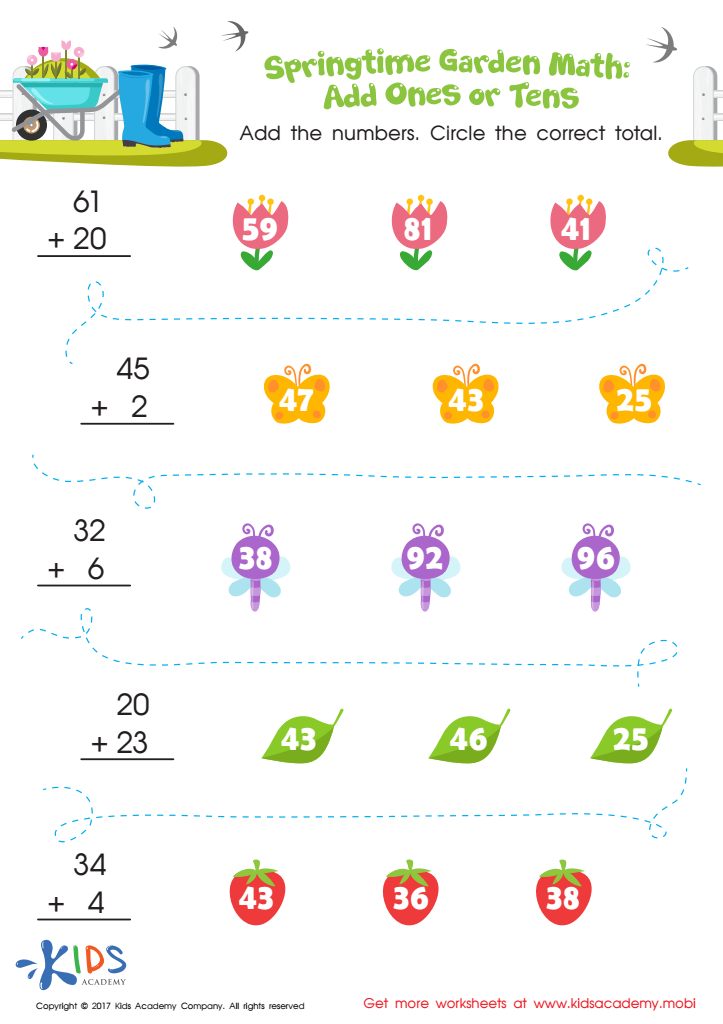
Springtime Garden Math Worksheet
Get your kid ready for math success with this bright garden-themed addition worksheet! They'll practice adding two-digit numbers and check their answers with the choices provided. It's an effective way to help kids build skills, as practice strengthens understanding. Get printing for math mastery!
Springtime Garden Math Worksheet
Worksheet
Join Kids Academy for Free
Who is primarily going to use this learning content?








Visualization skills in mathematics are crucial for children aged 5-9, as they lay the foundation for their understanding of complex concepts. At this developmental stage, children are naturally inclined to learn through imagery and hands-on experiences. Encouraging visualization skills allows them to manipulate and understand mathematical ideas, such as shapes, sizes, and relationships between numbers, in a more tangible way.
When parents and teachers focus on developing these skills, they help children build mental models that enhance problem-solving abilities and foster a deeper numerical understanding. Visualization aids in bridging the gap between concrete and abstract thinking, enabling children to visualize patterns and relationships, making math less intimidating and promoting a positive attitude toward the subject.
Moreover, strong visualization abilities can improve spatial reasoning, which is essential not just for math, but also for everyday tasks and future STEM learning. This skill set also enhances critical thinking, which is vital as children progress through their education. Ultimately, by prioritizing visualization skills in math, parents and teachers equip children with essential tools that can lead to academic success and a lifelong appreciation for mathematics. This foundational skill supports their confidence, creativity, and ability to tackle mathematical challenges in the future.








