Comparing objects Measurement Worksheets for Ages 5-9
3 filtered results
-
From - To
Discover our engaging "Comparing Objects Measurement Worksheets" designed for children aged 5-9! These interactive worksheets help young learners grasp the concept of measurement through fun comparisons of size, length, and weight. Children will enjoy hands-on activities that encourage critical thinking and foster a deep understanding of mathematical concepts. Perfect for both home and classroom use, our resources include colorful visuals and straightforward instructions to make learning enjoyable. With a variety of exercises tailored to different skill levels, students will build confidence in their measuring abilities while enhancing their math skills. Start exploring the world of measurement with your child today!
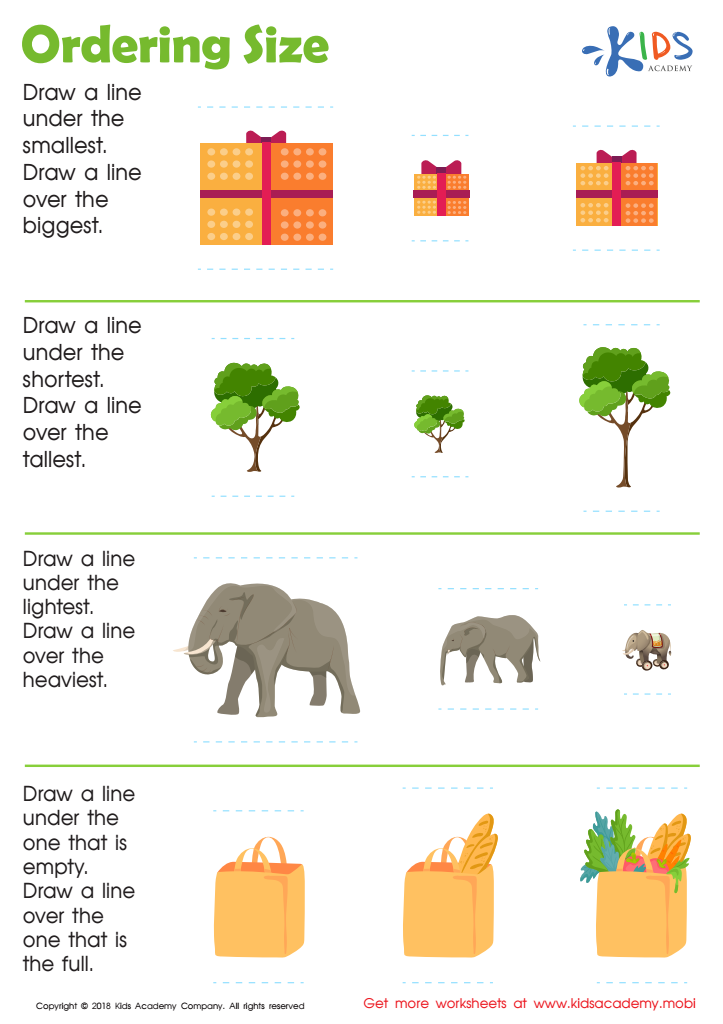
Ordering Size Worksheet
 Assign to My Students
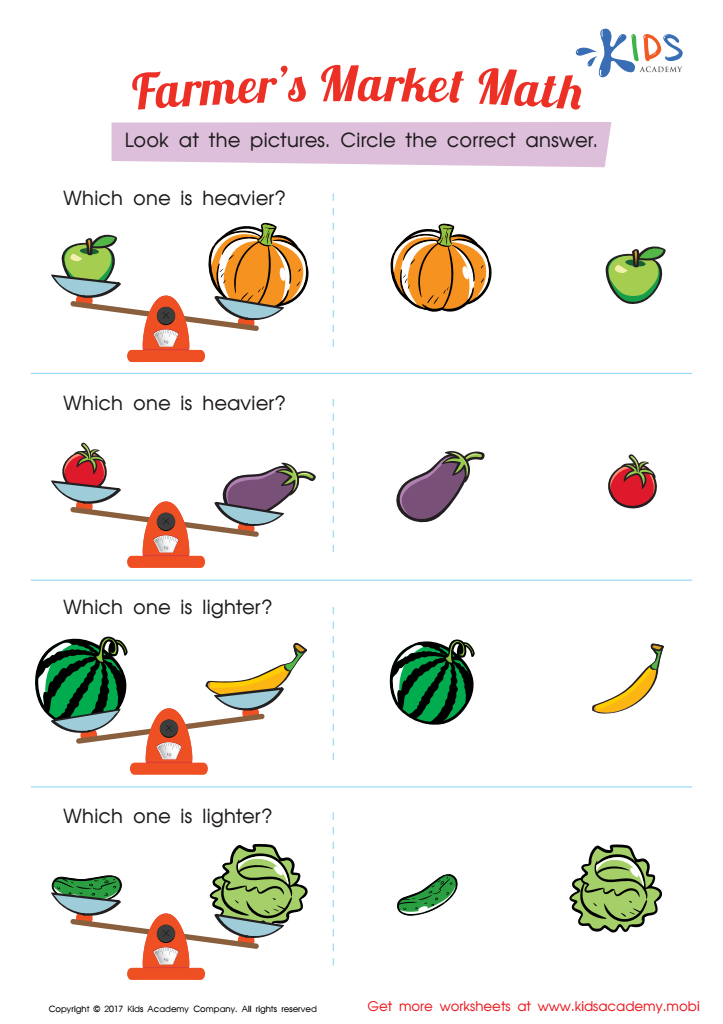
Which One Is Heavier Worksheet
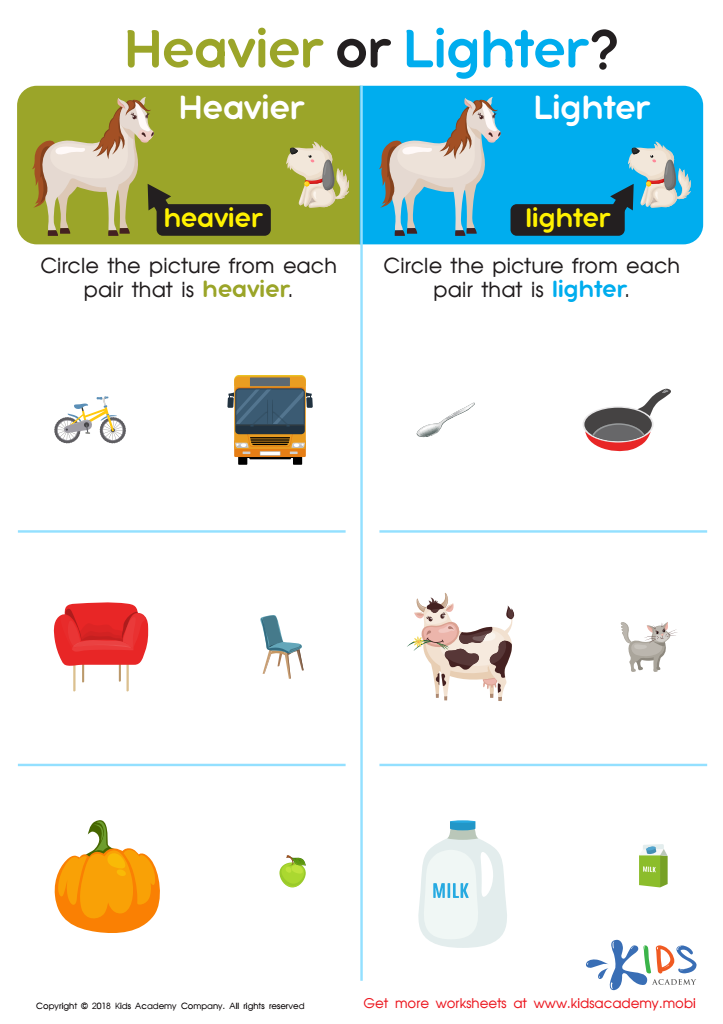
Heavier or Lighter? Worksheet








Comparing objects through measurement is a fundamental concept in early education that lays the groundwork for critical thinking and problem-solving skills. For children ages 5-9, engaging in measurement activities fosters a strong understanding of size, weight, length, and other attributes of objects, making abstract concepts more tangible.
Parents and teachers should care because these skills are essential for everyday life and future academic success. Learning to compare objects helps children develop their observational skills and promotes mathematical thinking. For instance, when kids compare apples based on size or weight, they learn about numbers, scales, and properties that form the core of mathematical reasoning.
Moreover, measuring and comparing diverse objects enhance children's vocabulary and comprehension. They learn terms related to measurement, such as "longer," "heavier," or "smaller," enriching their language development. These activities also encourage collaboration, as children often work together, sharing their observations and reasoning, which builds social skills.
Incorporating measurement into play and daily routines not only makes learning enjoyable but also instills confidence and excitement in children as they discover the world around them. Thus, measurement offers a wonderful opportunity for parents and teachers to nurture curiosity and foundational skills in young learners.








