Interpreting data Measurement Worksheets for Ages 5-9
5 filtered results
-
From - To
Explore our engaging "Interpreting Data Measurement Worksheets" designed specifically for children aged 5-9. These printable worksheets introduce young learners to essential concepts of data interpretation and measurement through fun and interactive activities. Students will develop critical thinking skills as they organize, analyze, and interpret various types of data. Our colorful designs and kid-friendly examples makelearning enjoyable and accessible. Ideal for both classroom and home use, these worksheets help reinforce math skills while making data-friendly learning a delightful experience. Dive into a world of numbers and measurements, and watch your child's confidence in math grow!
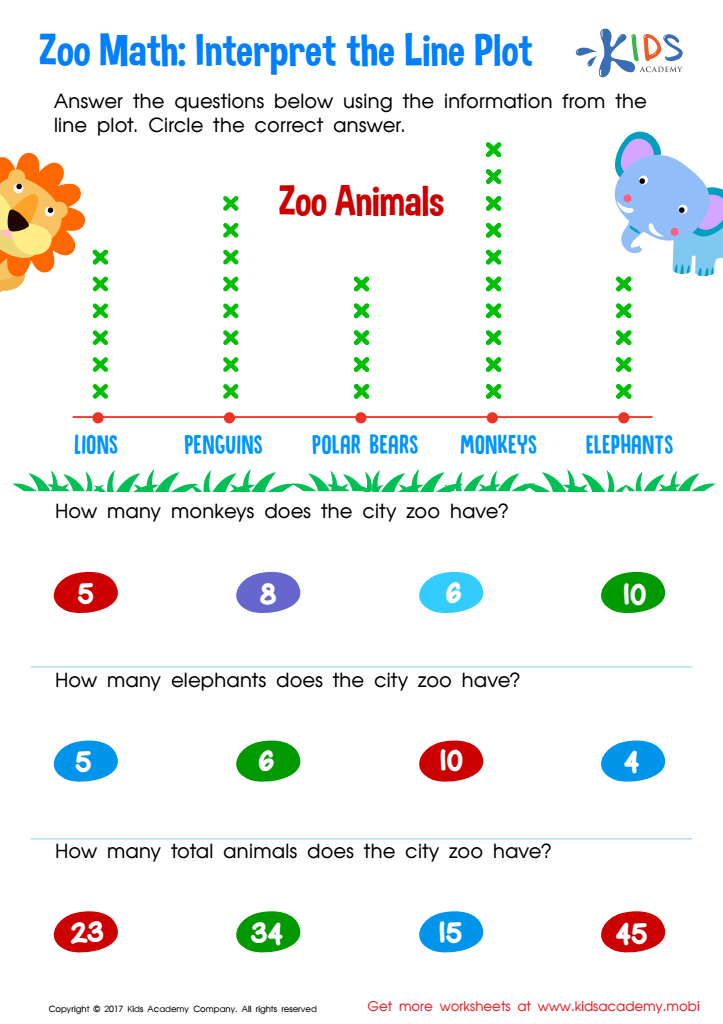
Interpret Line Plot Worksheet
 Assign to My Students
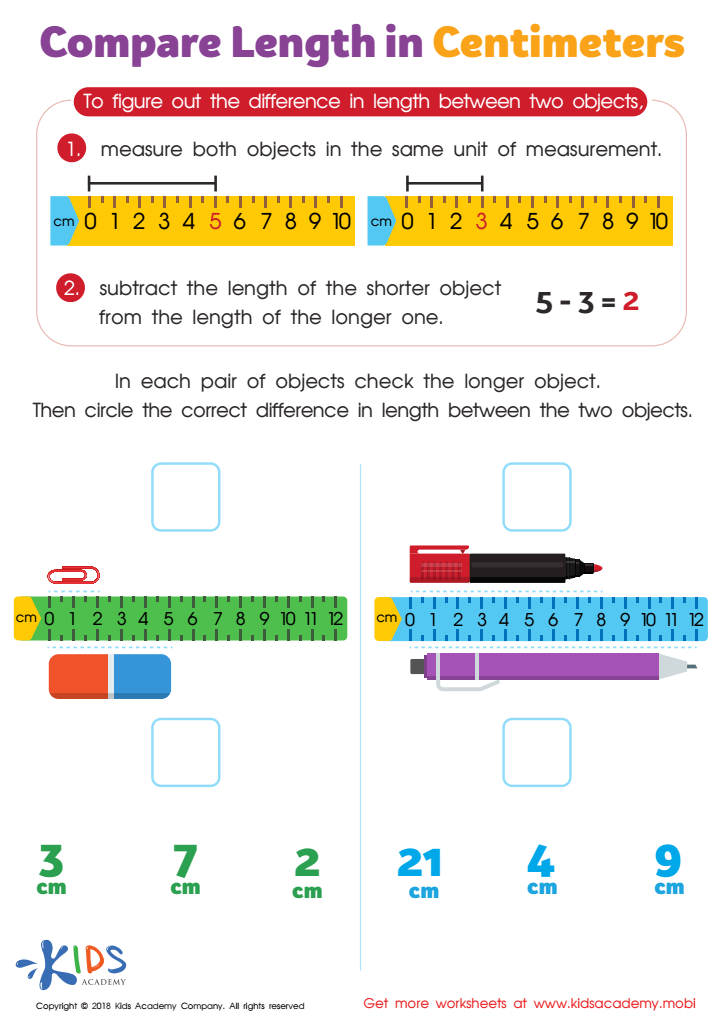
Compare Length in Centimeters Worksheet
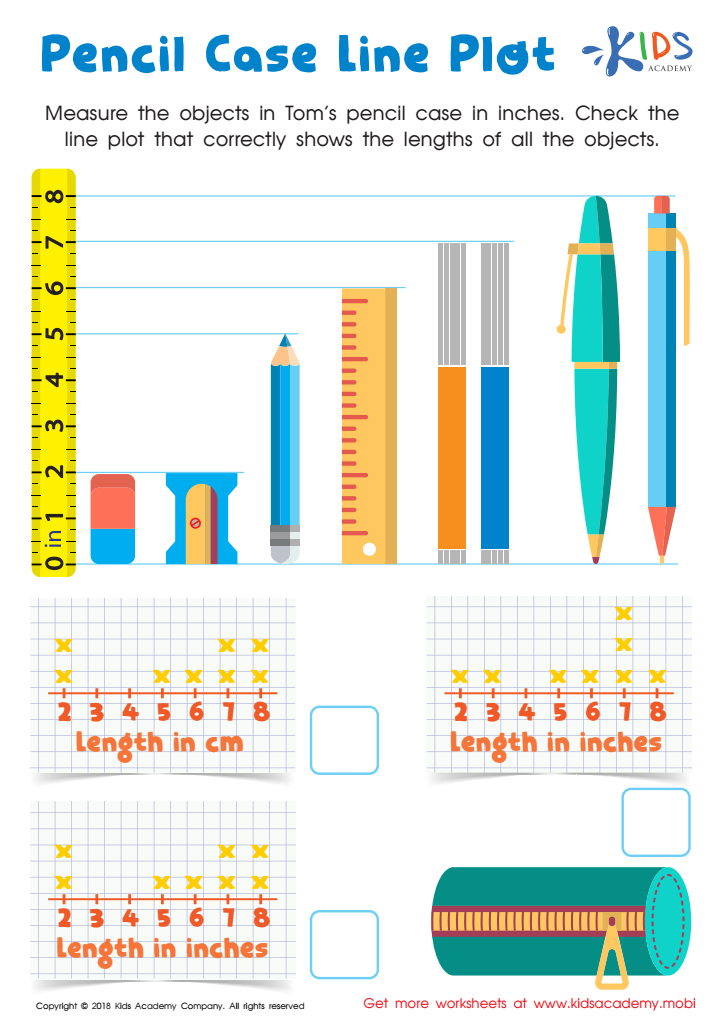
Pencil Case Line Plot Worksheet
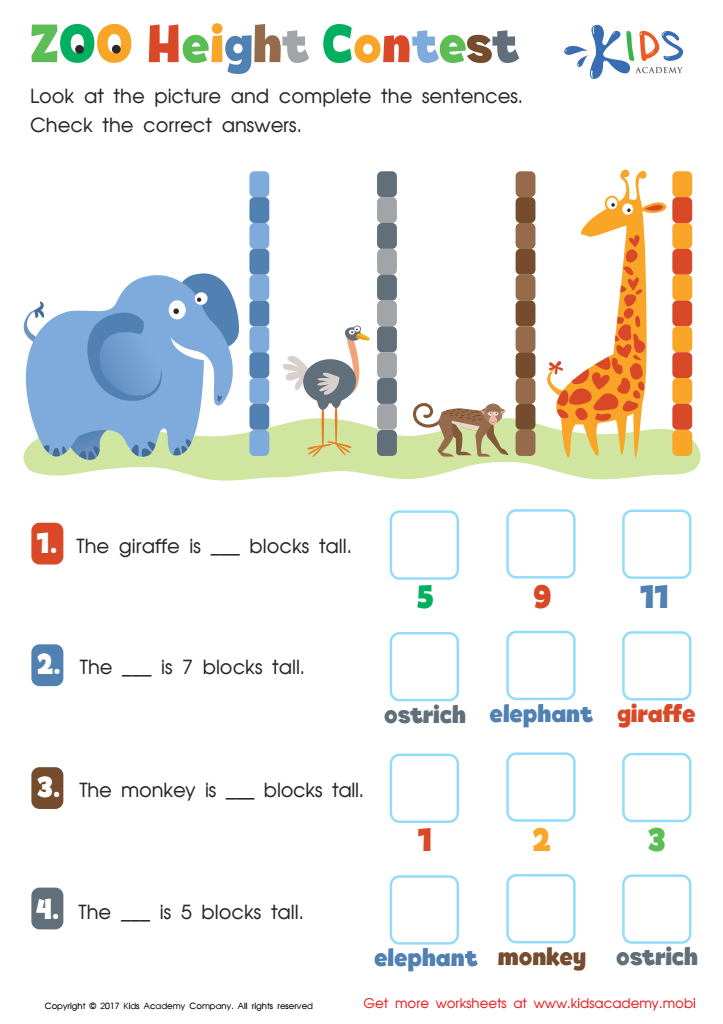
Zoo Height Contest Worksheet
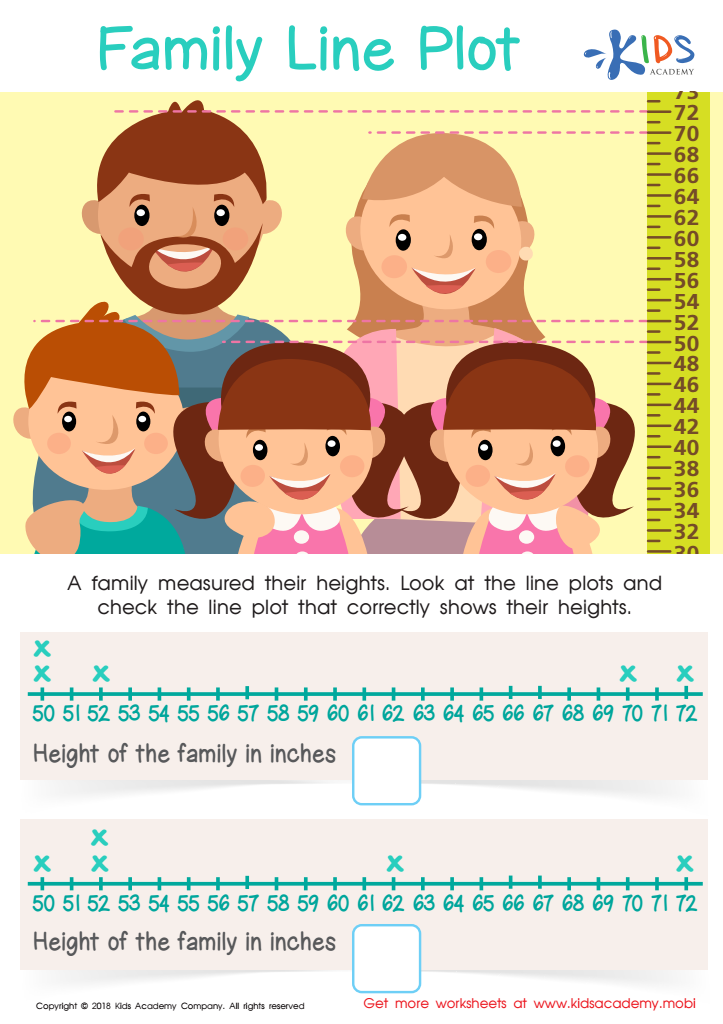
Family Line Plot Worksheet








Interpreting data measurement is crucial for parents and teachers of children aged 5-9, as it fosters essential skills in young learners. At this developmental stage, children are beginning to explore their environment and make sense of the world around them. Understanding data measurement allows them to develop critical thinking, reasoning, and analytical skills.
Parents and teachers can help children grasp concepts such as comparisons, patterns, and basic arithmetic through engaging activities like measuring objects, collecting data, and analyzing results. This process promotes not only numeracy but also confidence and curiosity. By involving children in the interpretation of data, adults demonstrate its relevance in everyday life, including topics like temperature, weight, and distance, making learning more relatable and practical.
Furthermore, data interpretation encourages communication skills, as children learn to articulate their findings and draw conclusions, essential for effective collaboration and social interaction. By emphasizing data measurement, educators and parents also prepare children for more complex mathematical concepts in the future.
Ultimately, nurturing a solid foundation in interpreting data measurement at a young age instills a love for learning, equipping children with the skills they need to thrive in a data-driven world.








