Visual perception Measurement Worksheets for Ages 5-9
4 filtered results
-
From - To
Discover our engaging Visual Perception Measurement Worksheets for ages 5-9, designed to enhance your child's cognitive abilities through fun and interactive activities. These printable worksheets help young learners develop essential visual discrimination, spatial awareness, and pattern recognition skills. Each activity is curated by educational experts to challenge students while keeping them entertained. Perfect for both classroom and at-home learning, these resources support overall academic growth and are suitable for various learning styles. Boost your child's visual perception abilities and set the foundation for lifelong learning success with our expertly crafted worksheets.
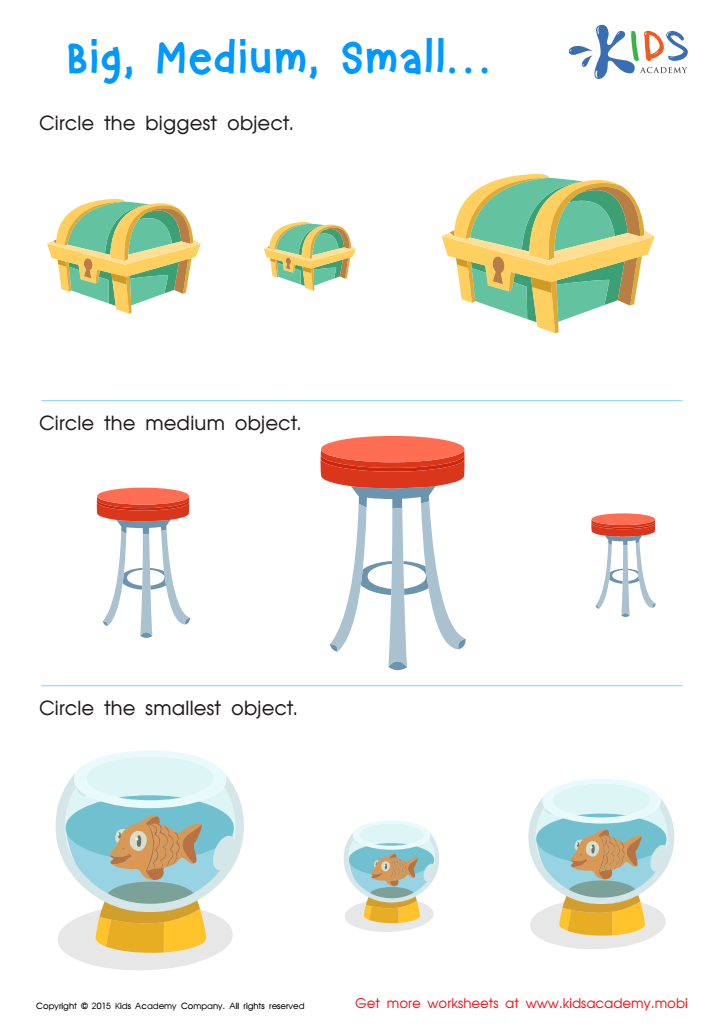
Big Medium Small Worksheet
 Assign to My Students
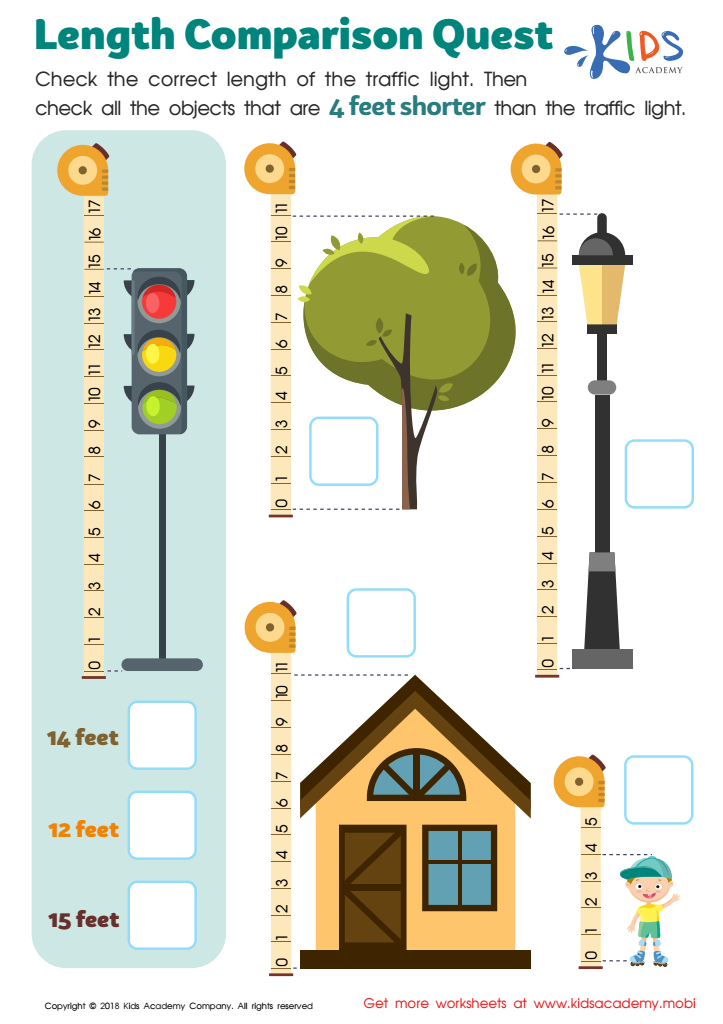
Length Comparison Quest Worksheet
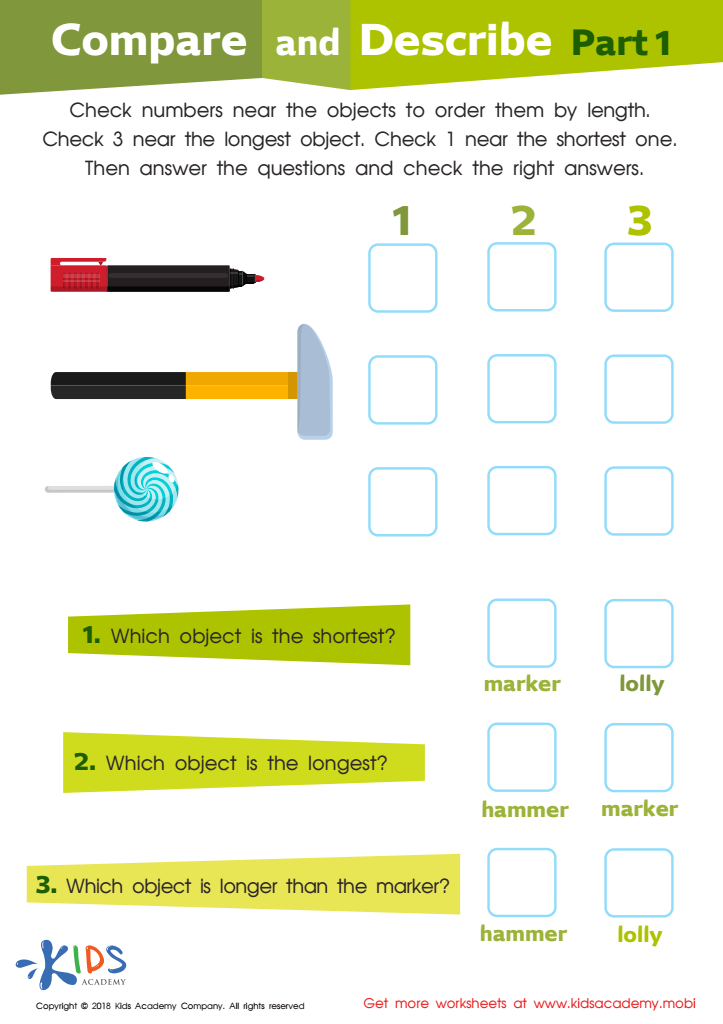
Compare and Describe: Part 1 Worksheet
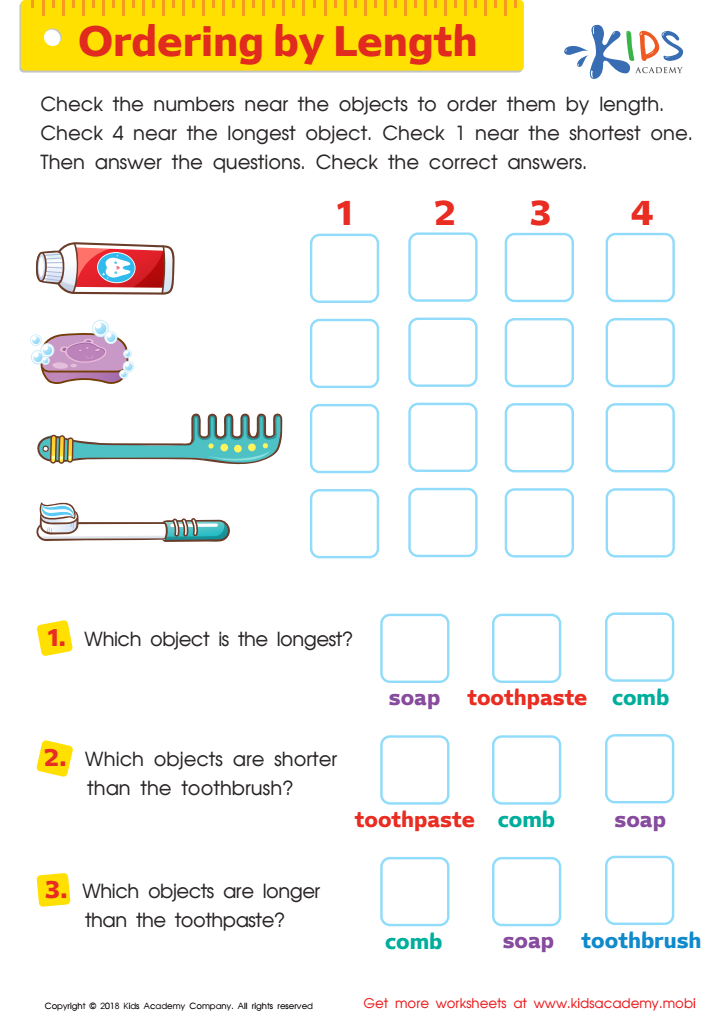
Ordering by Length Worksheet








Parents and teachers should care about visual perception measurement for children ages 5-9 because it directly influences key areas of a child’s development and learning abilities. Visual perception is the brain's ability to interpret and make sense of visual information from the environment. In young children, these skills are crucial for tasks such as reading, writing, and comprehending visual instructions.
A child with inadequate visual perception may struggle with distinguishing letters that look similar, like 'b' and 'd,' or have difficulties understanding spatial relationships, leading to challenges in subjects such as math. Without early identification and interventions, these struggles can cause frustration, lowered self-esteem, and academic difficulties.
Measuring visual perception can help identify specific issues such as poor hand-eye coordination, difficulty with puzzles, or challenges copying shapes and letters. These insights allow professionals to provide targeted activities and strategies to boost visual integration skills. Effective early interventions can enhance a child’s ability to process visual information accurately, improving their overall academic performance and confidence.
Moreover, fostering strong visual perceptual skills facilitates smoother social interactions and involvement in extracurricular activities, creating a more engaging and enjoyable school experience. Therefore, prioritizing visual perception measurement is a proactive step in ensuring every child has the necessary foundational skills for their educational journey.








