Times table familiarity Multiplication Worksheets for Ages 5-9
3 filtered results
-
From - To
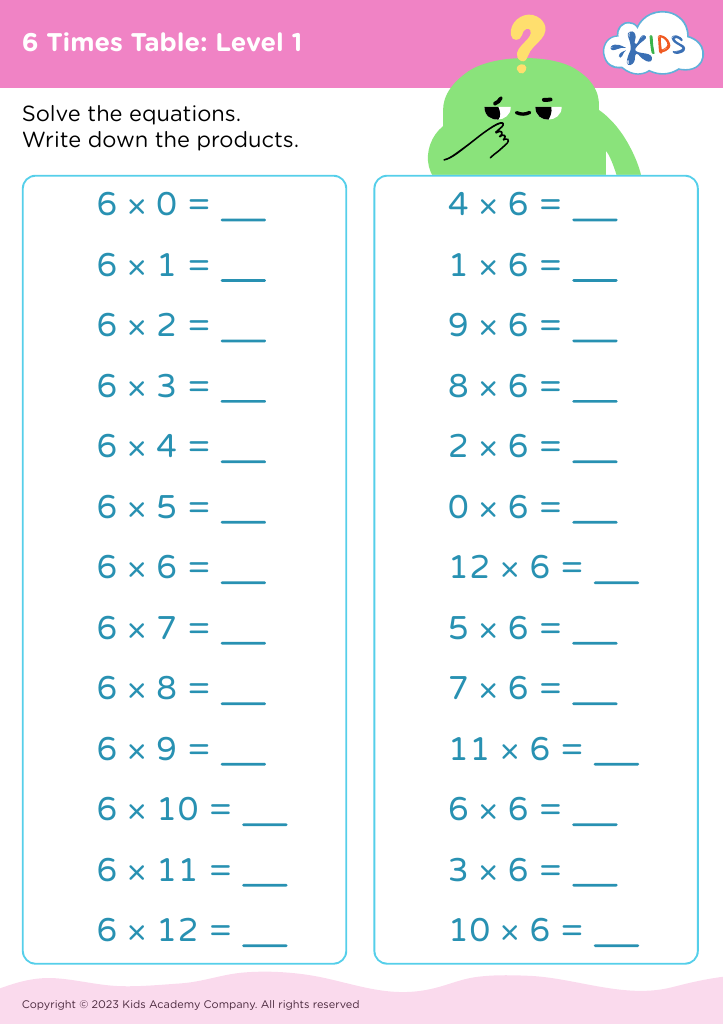
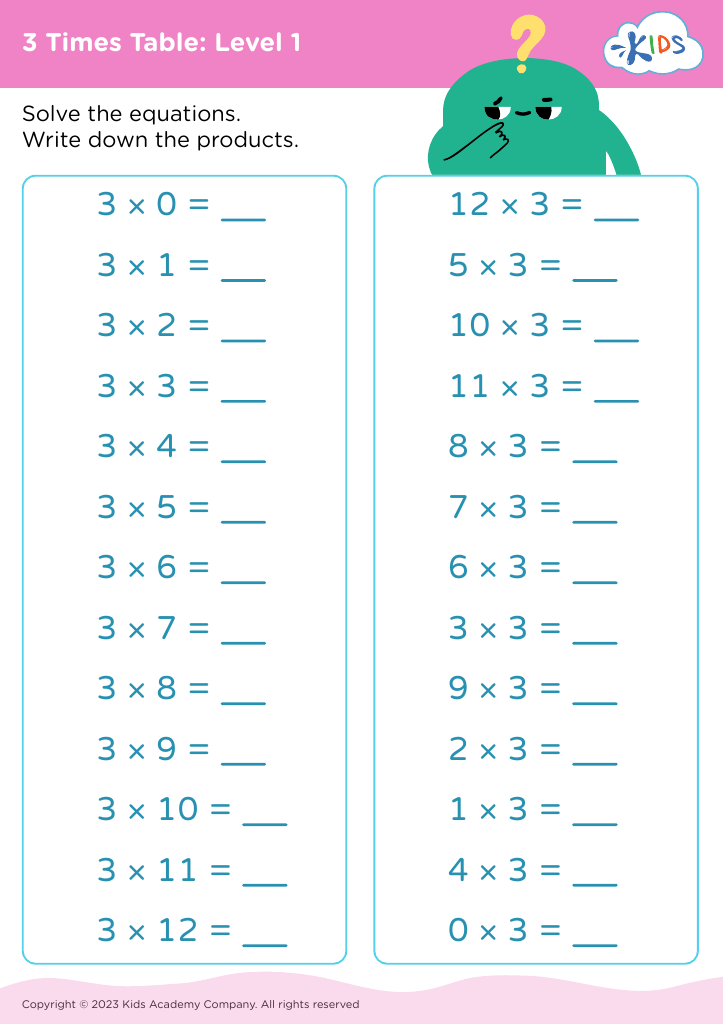
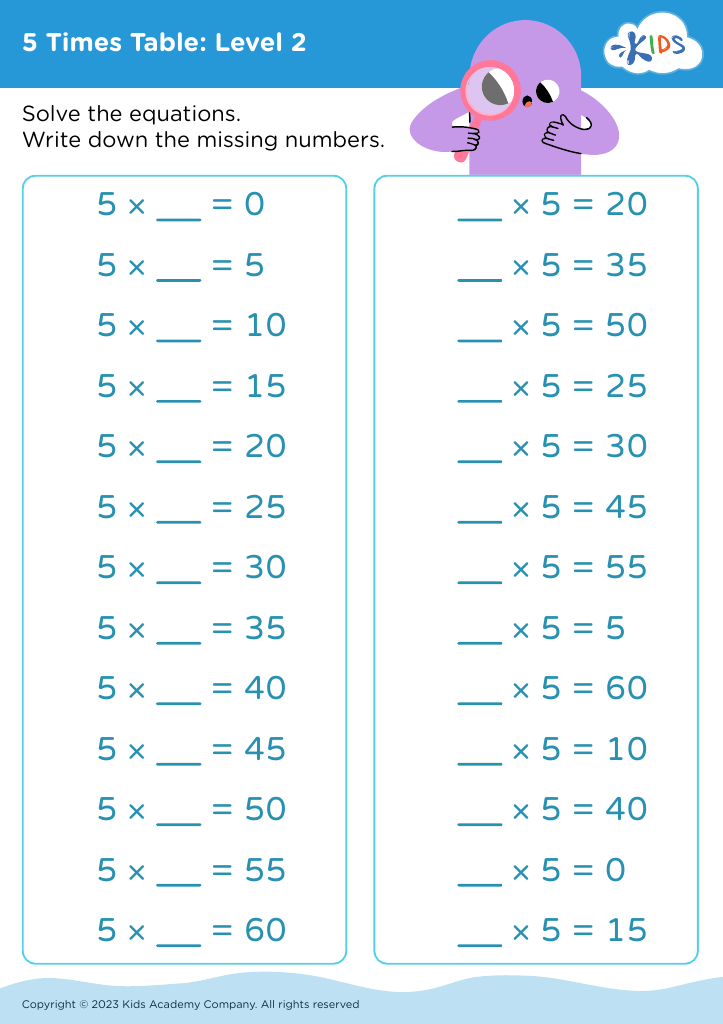
Enhance your child’s math skills with our engaging Times Table Familiarity Multiplication Worksheets tailored for ages 5-9. Designed to build confidence and mastery, these worksheets introduce multiplication concepts in a fun and interactive way. Each worksheet focuses on different times table patterns, providing children with ample practice opportunities. Our resources not only reinforce basic multiplication skills but also foster a deep understanding of number relationships. With colorful visuals and engaging exercises, kids will enjoy learning while improving their multiplication fluency. Perfect for classroom use or at-home practice, these worksheets are an essential tool for budding mathematicians ready to conquer their times tables!








Familiarity with multiplication and times tables is crucial for children aged 5-9 as it lays the foundation for their mathematical understanding and overall academic success. During these formative years, children develop essential cognitive skills, and mastering multiplication fosters critical thinking and problem-solving capabilities. When students are comfortable with times tables, they can tackle more complex mathematical concepts, making it easier to understand division, fractions, and algebra later in their education.
Furthermore, proficient multiplication skills bolster students' confidence in math, reducing anxiety and fostering a positive attitude toward the subject. This confidence can translate into improved participation in class and a willingness to engage with challenging problems.
Incorporating multiplication practice into daily activities, such as through games or songs, not only helps children memorize but also supports retention through enjoyable and interactive methods. Moreover, a strong grasp of multiplication aligns with various educational standards, ensuring that children meet developmental milestones.
Overall, teachers and parents play a pivotal role in cultivating a supportive learning environment. By prioritizing times table familiarity, they can equip students with a vital skill set that not only aids academic progress but also builds resilience and perseverance in facing future mathematical challenges.








