Sorting skills Numbers 0–10 Worksheets for Ages 5-9
3 filtered results
-
From - To
Boost your child's sorting skills with our engaging Worksheets for Numbers 0-10, designed specifically for ages 5-9! These worksheets offer interactive activities that help young learners categorize and organize numbers, reinforcing their understanding in a fun and accessible way. Children will explore the concepts of sorting through colorful visuals and hands-on exercises that promote critical thinking. Perfect for both classroom use and home practice, our resources support foundational math skills while cultivating curiosity and confidence in young mathematicians. Help your child develop essential sorting abilities as they learn to group numbers and enhance their overall numeracy!
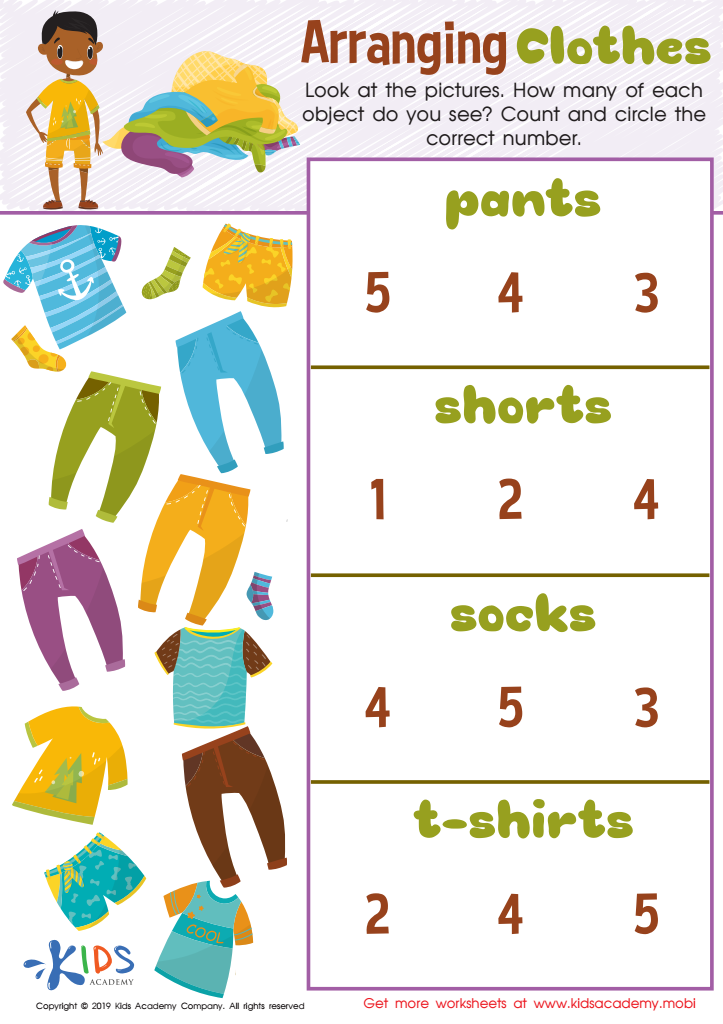
Arranging Clothes Worksheet
 Assign to My Students
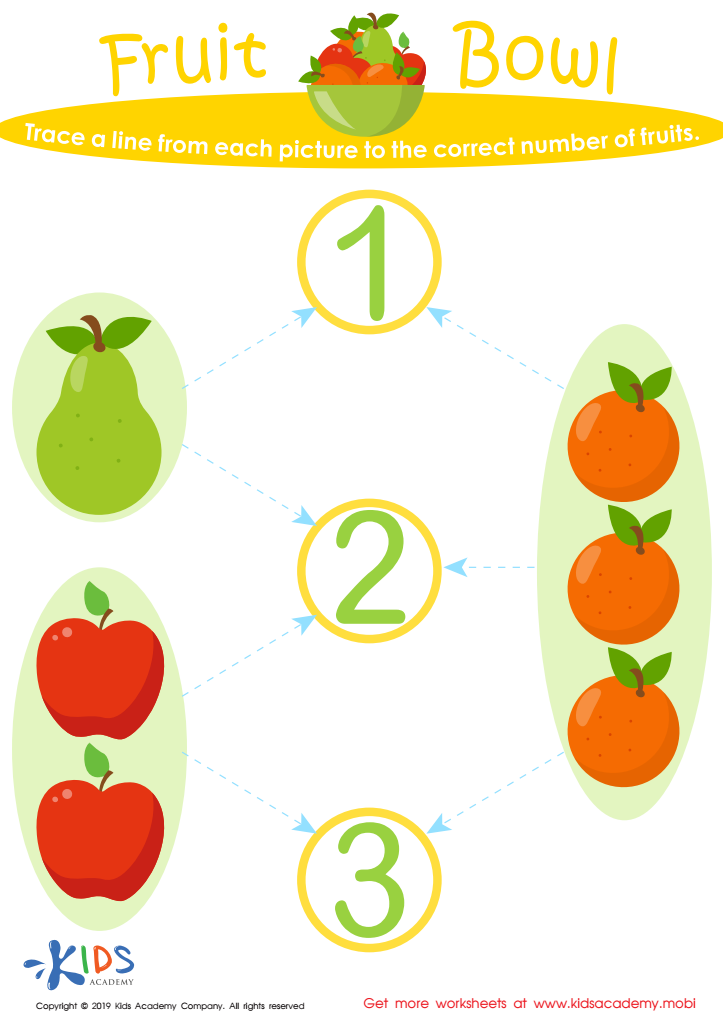
Fruit Bowl Worksheet
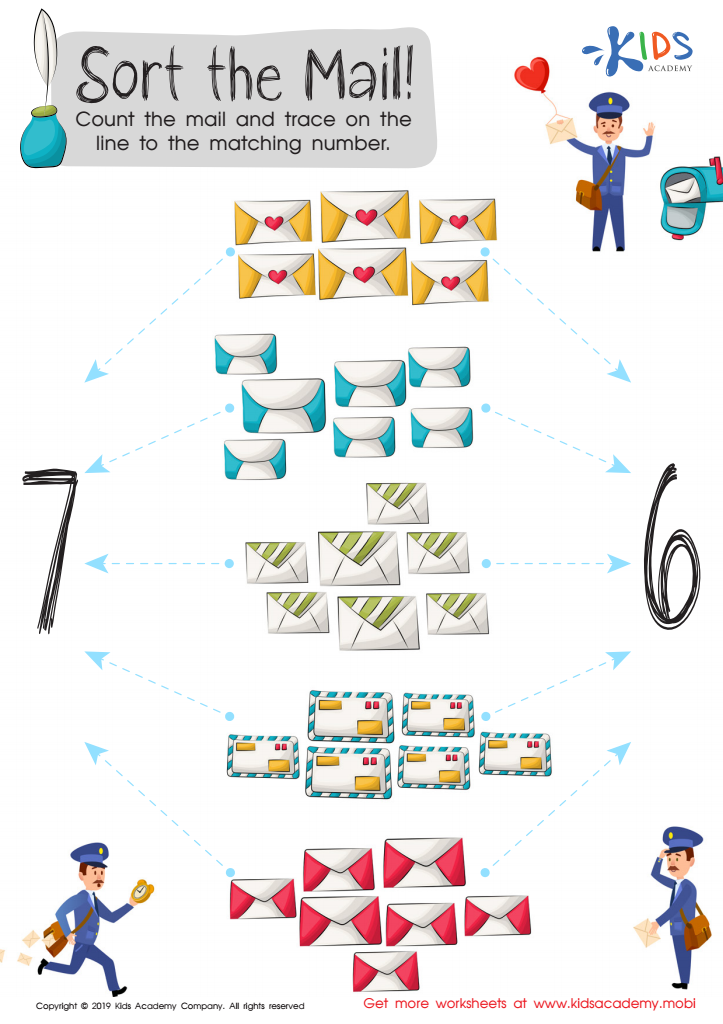
Sort the Mail Worksheet


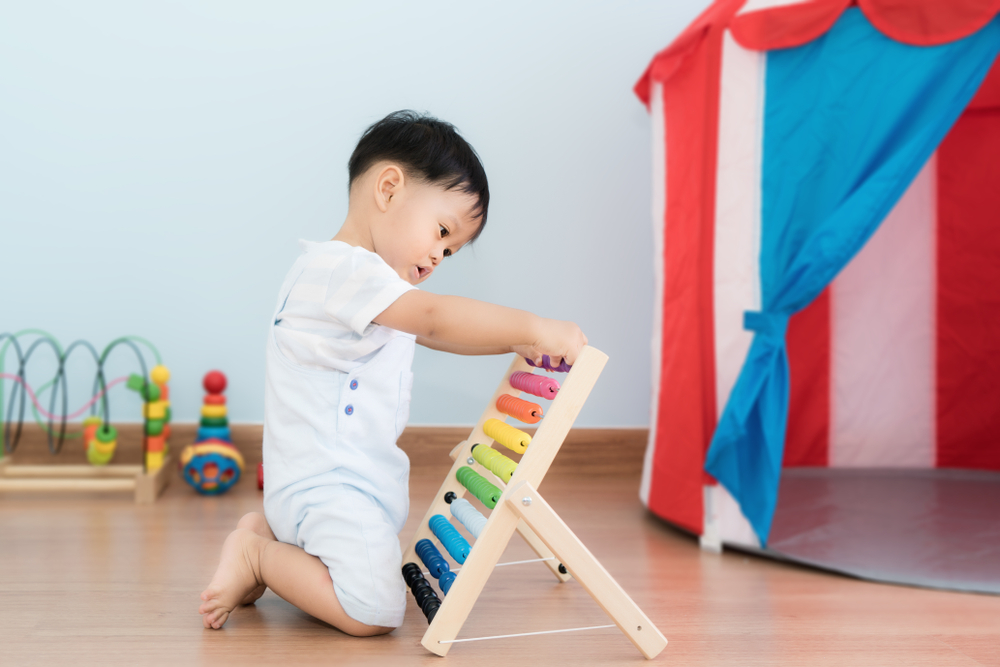





Sorting skills are foundational for young learners, particularly for children aged 5-9. These skills foster critical thinking, categorization, and mathematical understanding, significant for academic success. When we focus on sorting numbers 0-10, we enhance children's numerical literacy and help them grasp the concept of quantity, order, and relationships among numbers.
By engaging in sorting activities, children learn to recognize differences and similarities, laying the groundwork for more complex math skills such as addition, subtraction, and counting. Moreover, sorting encourages organization and comprehension, as children categorize numbers by size, evenness, or oddness, enhancing their problem-solving abilities.
From a developmental perspective, sorting activities support fine motor skills and cognitive development. They promote patience and attention to detail—qualities essential in both academic settings and daily life tasks. Encouraging sorting games and activities at home or in the classroom cultivates an environment where children feel empowered to explore, experiment, and communicate about their thought processes.
In short, parents and teachers should prioritize sorting skills because they form the building blocks of mathematical competence and critical thinking, guiding children toward a more comprehensive understanding of the world around them.








