Understanding patterns Numbers 0–10 Worksheets for Ages 5-9
3 filtered results
-
From - To
Foster your child's mathematical development with our "Understanding Patterns Numbers 0–10 Worksheets" designed for ages 5-9. These engaging worksheets help young learners recognize and create numerical patterns, enhancing their critical thinking and problem-solving skills. Perfectly tailored to both classroom settings and at-home practice, these activities make learning interactive and fun. Focusing on numbers 0-10, each worksheet supports the development of early math skills and prepares kids for more advanced concepts. Download our worksheets now for an enjoyable learning experience that builds a strong foundation in mathematics. Empower your child with confidence and knowledge through our expertly crafted resources!
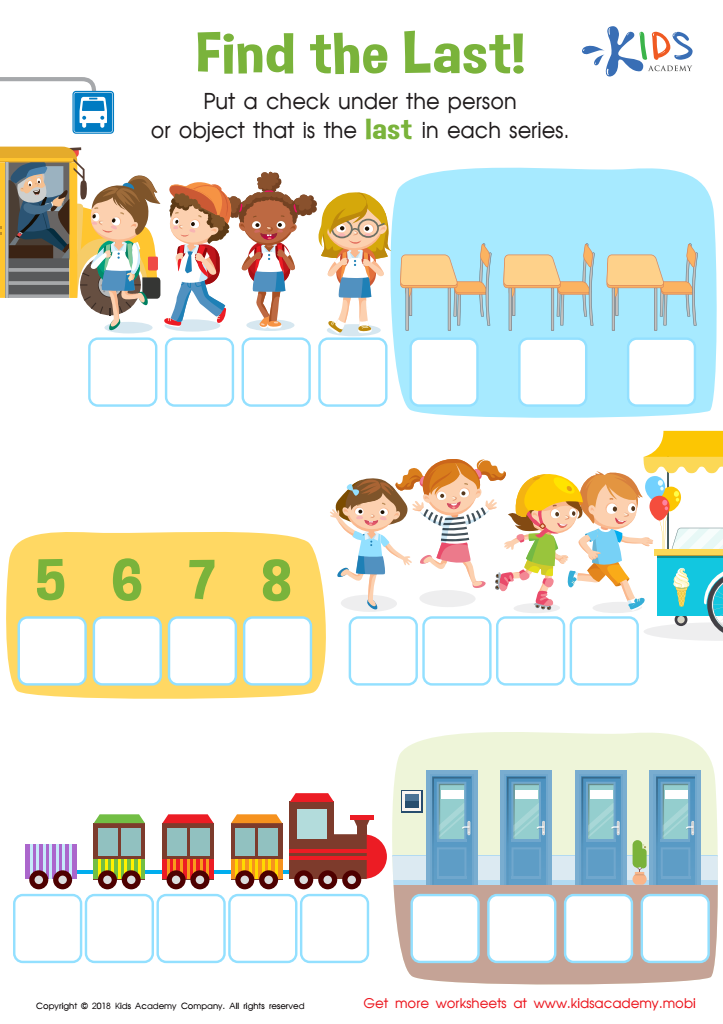
Find the Last! Worksheet
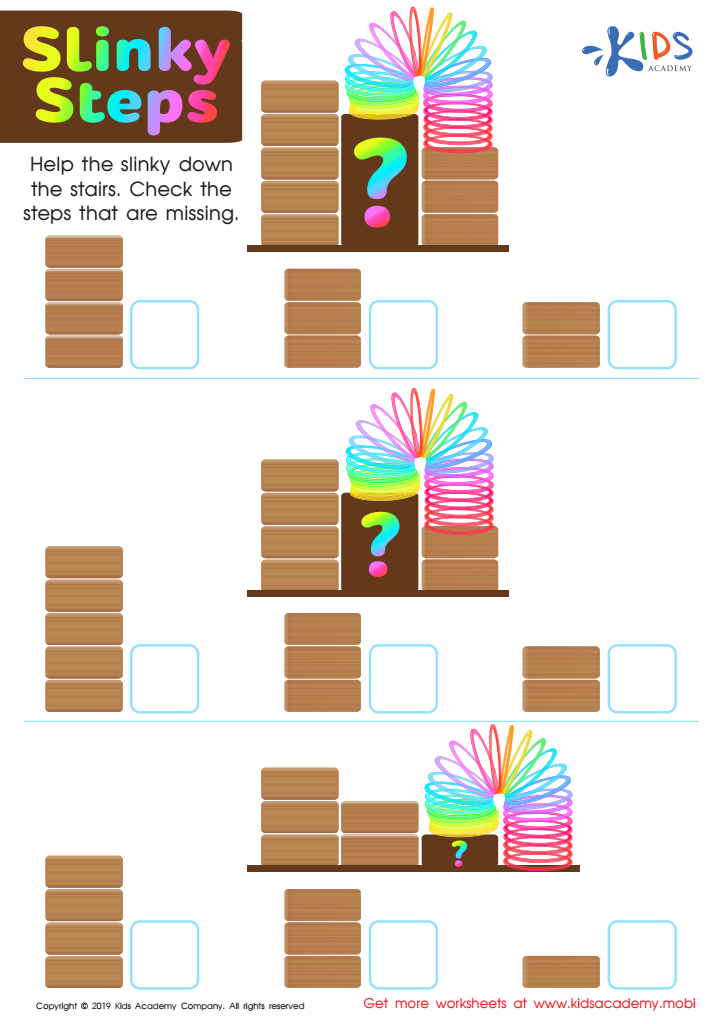
Slinky Steps Worksheet
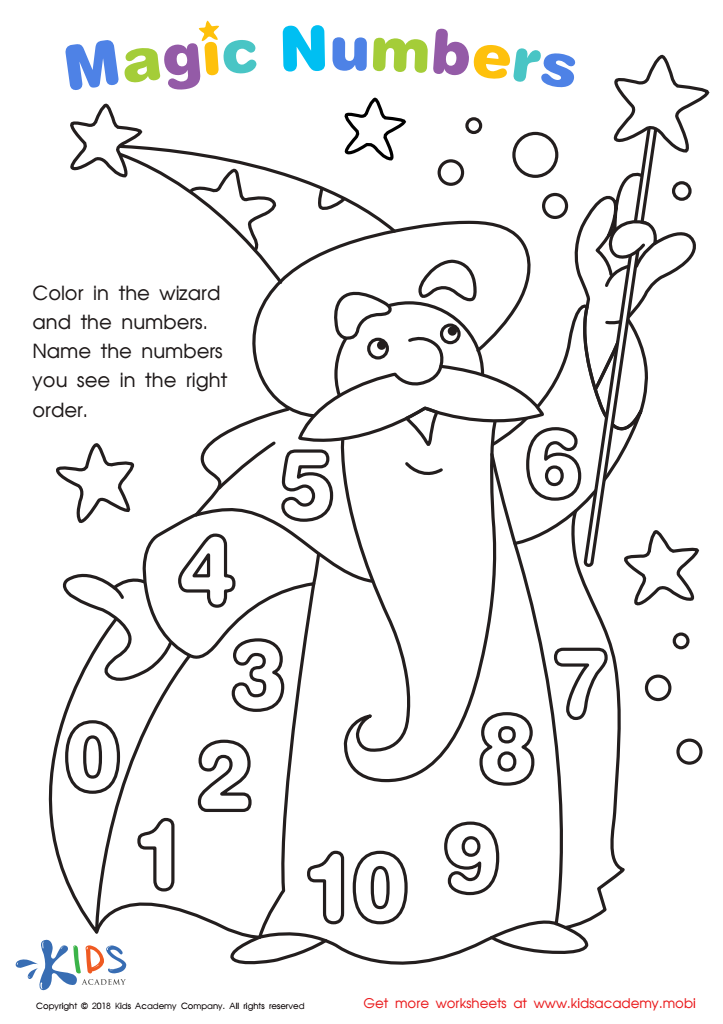
Magic Numbers Worksheet
 Assign to My Students








Understanding patterns and numbers from 0–10 is crucial for children ages 5-9, setting the foundation for their future mathematical success. At this age, children's cognitive abilities are expanding rapidly, and engaging them in recognizing, creating, and extending patterns sharpens their analytical and critical-thinking skills. Patterns form the bedrock of mathematical concepts. For example, counting patterns, such as counting by 2s or 5s, enhance their understanding of multiplication and division later on.
Developing proficiency with numbers 0-10 helps children build a strong numerical sense, where they understand not only the order but also the value and relationship between these numbers. This paves the way for more complex arithmetic skills, such as addition, subtraction, and place value, which are essential for problem-solving.
Moreover, engaging with patterns and numbers boosts memory and logical reasoning. As students identify patterns, they learn to predict and generalize—forming a scientific approach to various scenarios. Socially, these early skills translate into confidence in the classroom as children participate, succeed, and develop a positive attitude toward math.
Parents and teachers, by emphasizing patterns and numbers from an early age, foster a supportive learning environment that encourages curiosity, resilience, and a lifelong appreciation for mathematics. It's more than just numbers; it's about building a framework for critical thinking and problem-solving for the broader spectrum of learning and life.