
Basic math operations Word Problems Worksheets for Ages 5-9
3 filtered results
Difficulty Level
Grade
Age
-
From - To
Subject
Activity
Standards
Explore our engaging "Basic Math Operations Word Problems Worksheets" for children aged 5-9, designed to make learning math fun and accessible! These worksheets focus on essential math skills, reinforcing addition, subtraction, multiplication, and division through relatable real-life scenarios. Ideal for young learners, each word problem engages students’ critical thinking while helping them understand how math applies in everyday situations. Teachers and parents will find these resources invaluable for fostering a solid math foundation. Download our printable worksheets today and watch your child develop confidence and proficiency in basic math operations! Perfect for classrooms, homeschool settings, or extra practice at home.
Favorites
With answer key
Interactive
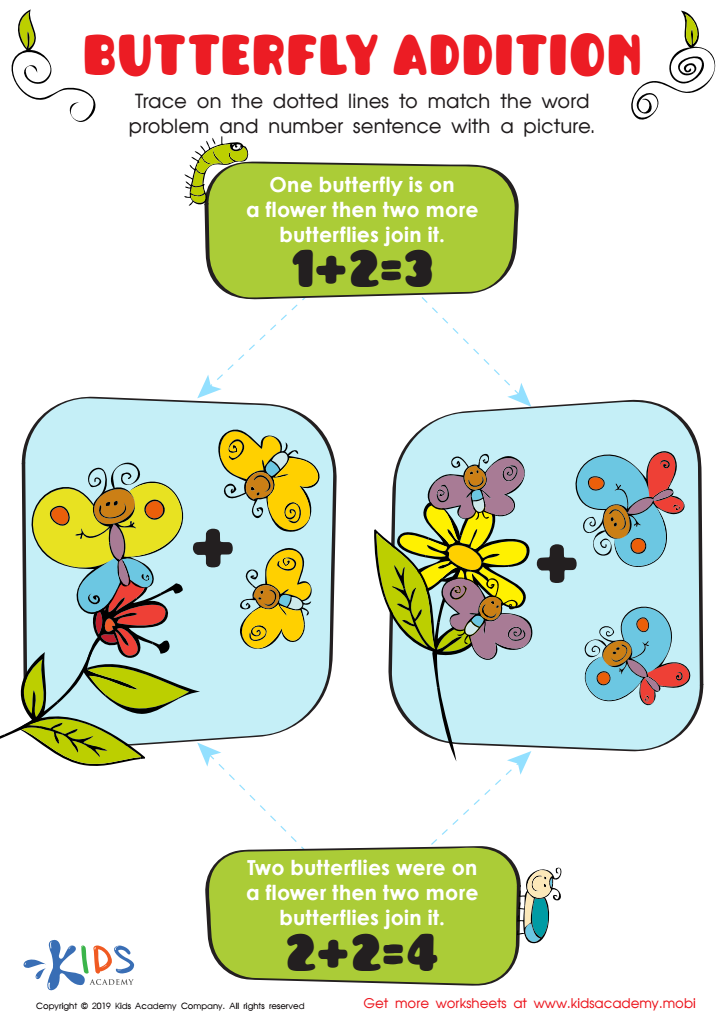
Butterfly Addition Worksheet
This tracing sheet is great for kids to work on math skills and have fun too. Read the word problems to them, then help them trace the dotted lines to match the problem and number sentence to a picture. Not only is it educational, it's beautiful too - your kids will love learning about butterflies!
 Assign to My Students
Butterfly Addition Worksheet
Worksheet
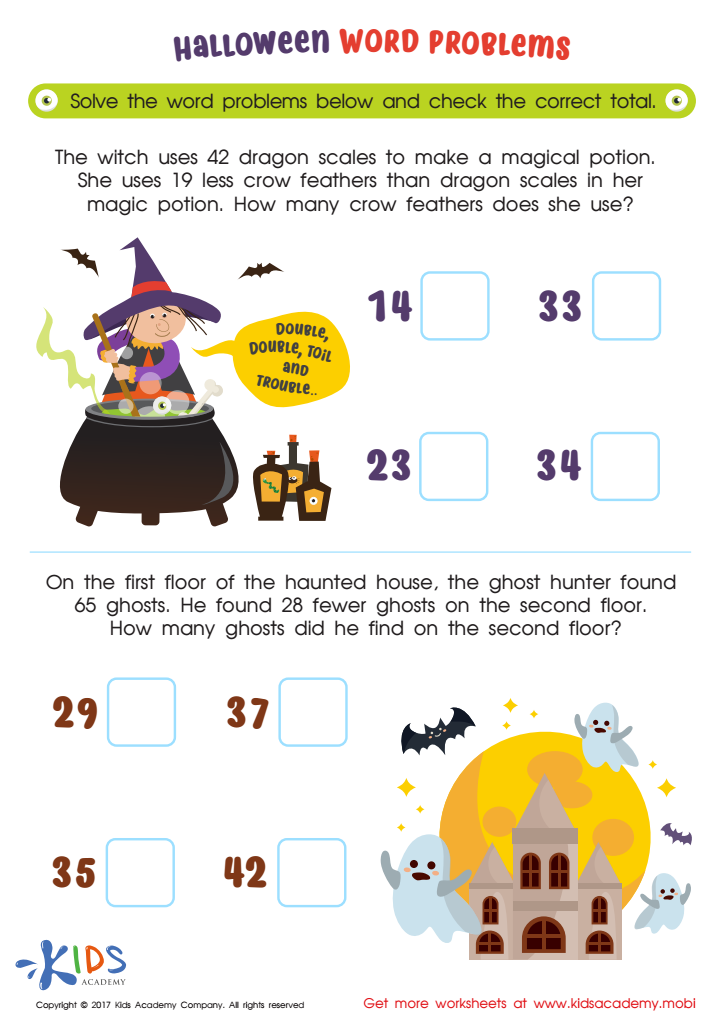
Halloween Word Problems Printable
Ghosts, witches, and other spooky characters make these problems exciting and interactive. Get ready to have some math fun!
Halloween Word Problems Printable
Worksheet
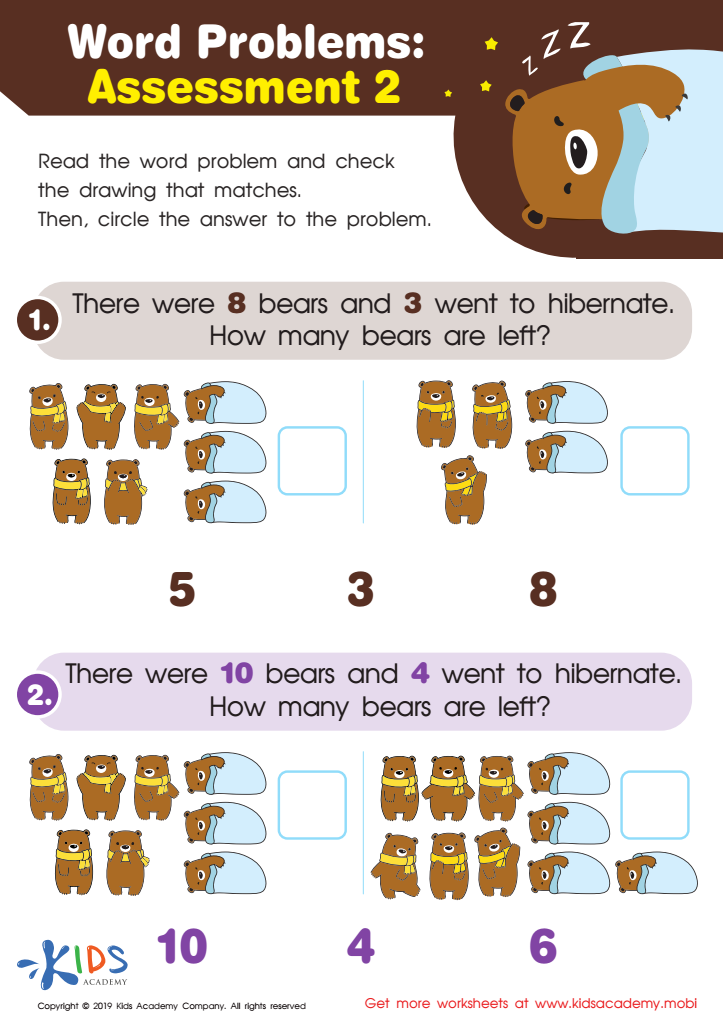
Word Problems: Assessment 2 Worksheet
This bear-themed worksheet is a great way to test subtraction skills. Have your child read the word problems and match the correct drawing with the answer. It's a fun way to quiz them without them even knowing. Enjoy counting cute snoozing bears! (80 words)
Word Problems: Assessment 2 Worksheet
Worksheet
Join Kids Academy for Free
Who is primarily going to use this learning content?






.jpg)

Parents and teachers should prioritize basic math operations word problems for children aged 5-9 because these problems enhance critical thinking and comprehension skills, which are foundational for future learning. Word problems require students to understand and extract relevant information from a narrative, promoting reading comprehension alongside mathematical skills. This dual approach becomes vital as math increasingly intersects with everyday life.
Additionally, engaging with word problems helps children develop problem-solving strategies. They learn to identify keywords, relate mathematical concepts to real-world contexts, and interpret different scenarios which encourage logical reasoning and creativity. This not only solidifies their understanding of addition, subtraction, multiplication, and division, but also makes math feel more relevant and less abstract.
Furthermore, mastering these skills at a young age builds confidence in their abilities. Children who excel in early math exhibit greater self-esteem, paving the way for more advanced studies. It’s important to recognize that strong numeracy skills in early education correlate with academic achievement later in life. Thus, parents and teachers play a critical role in nurturing these abilities, ensuring that young learners possess the tools they need for daily life applications and future educational success.








