
Improve reading skills Building Vocabulary Worksheets for Ages 5-9
13 filtered results
Difficulty Level
Grade
Age
-
From - To
Subject
Activity
Standards
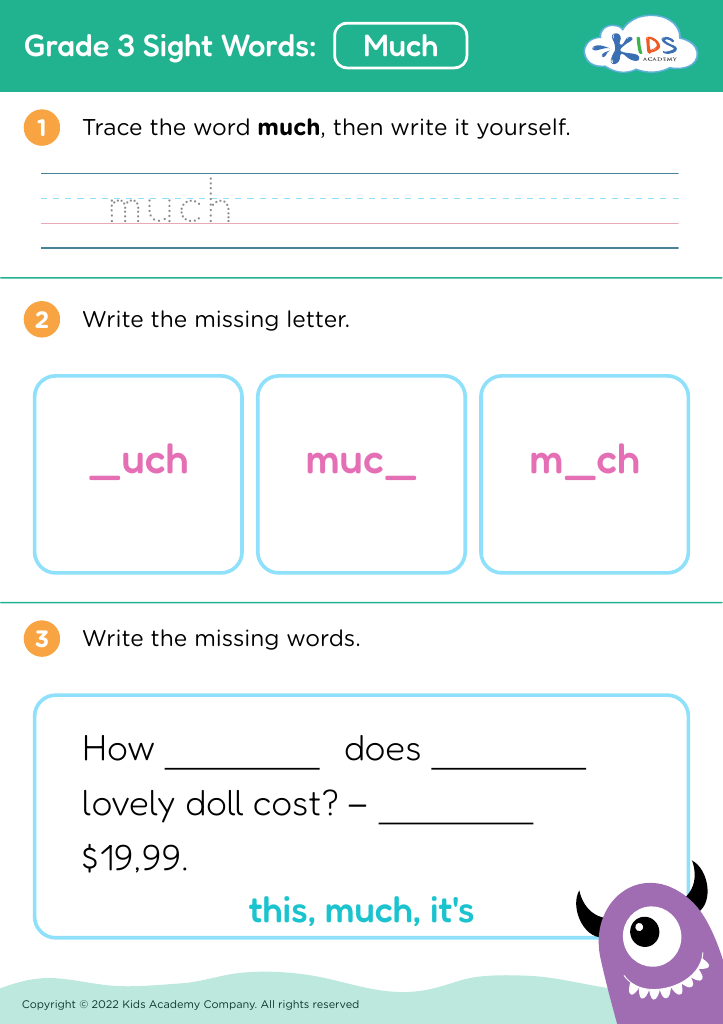
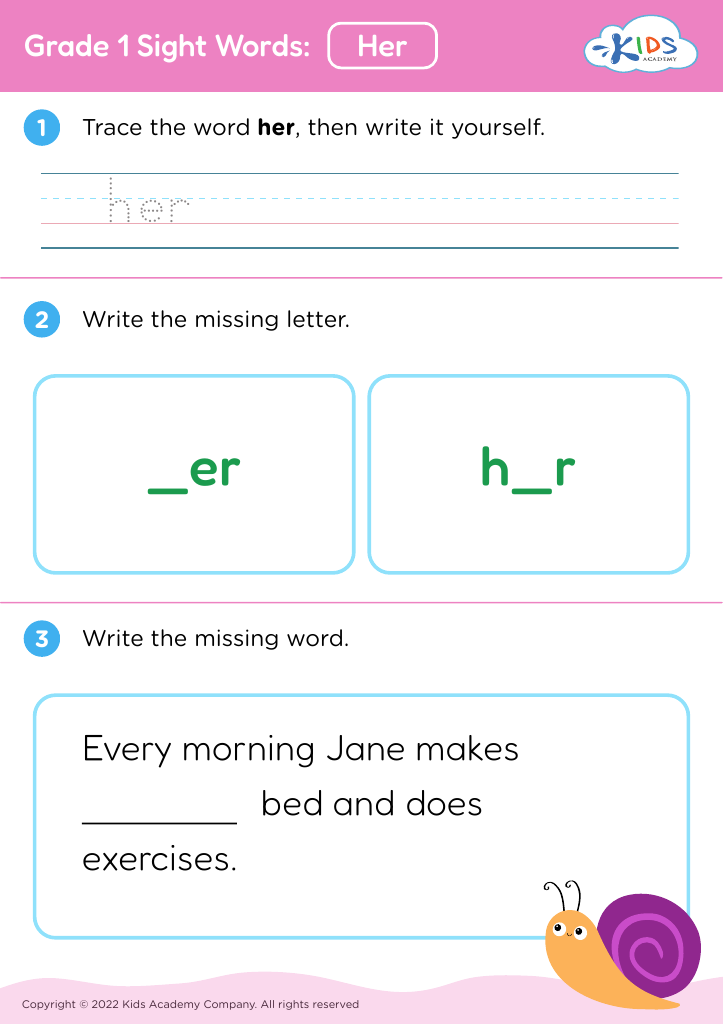
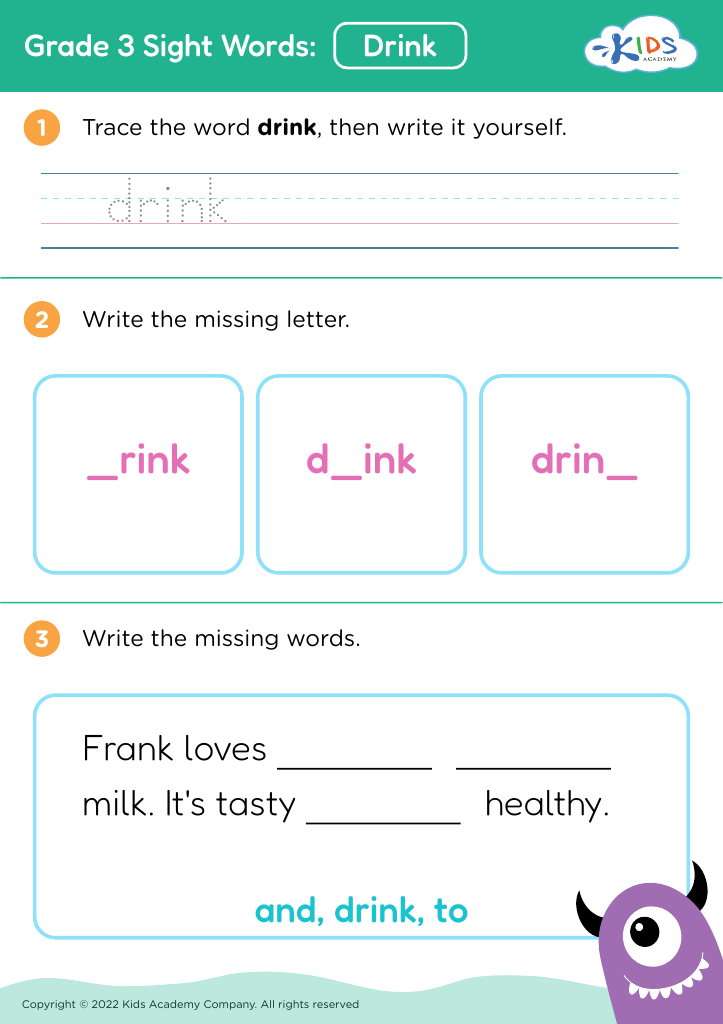
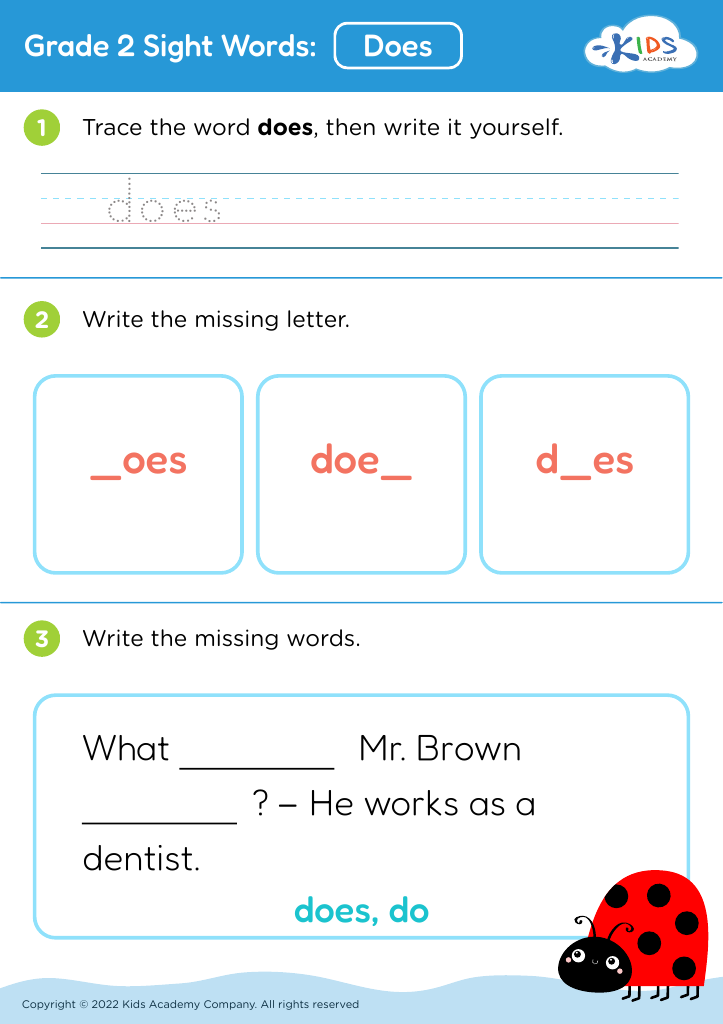
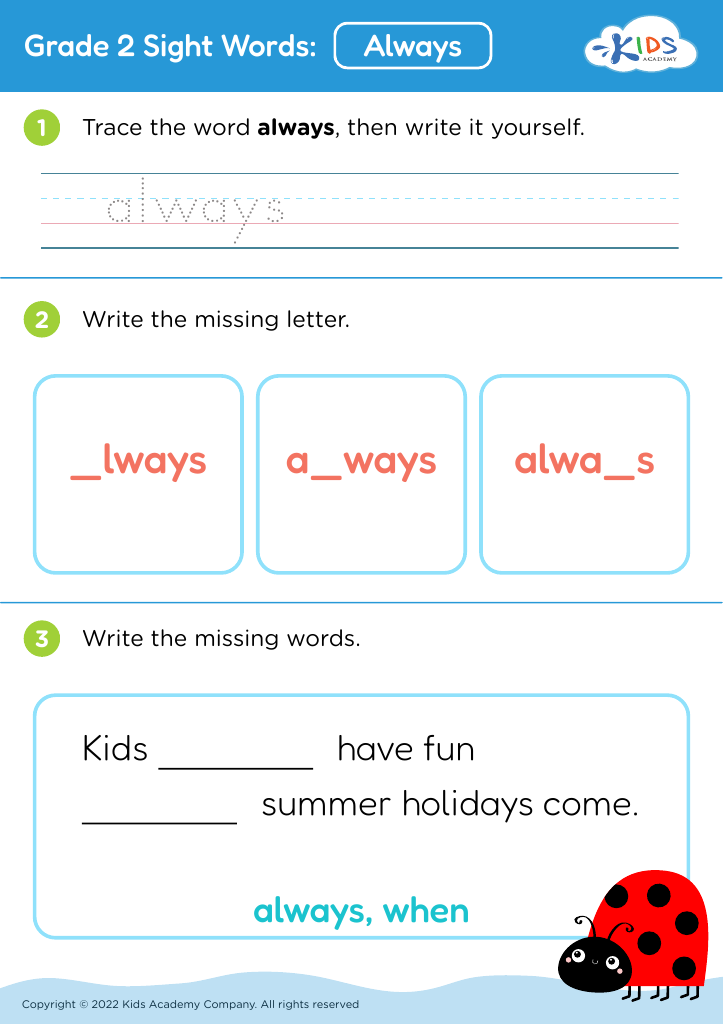
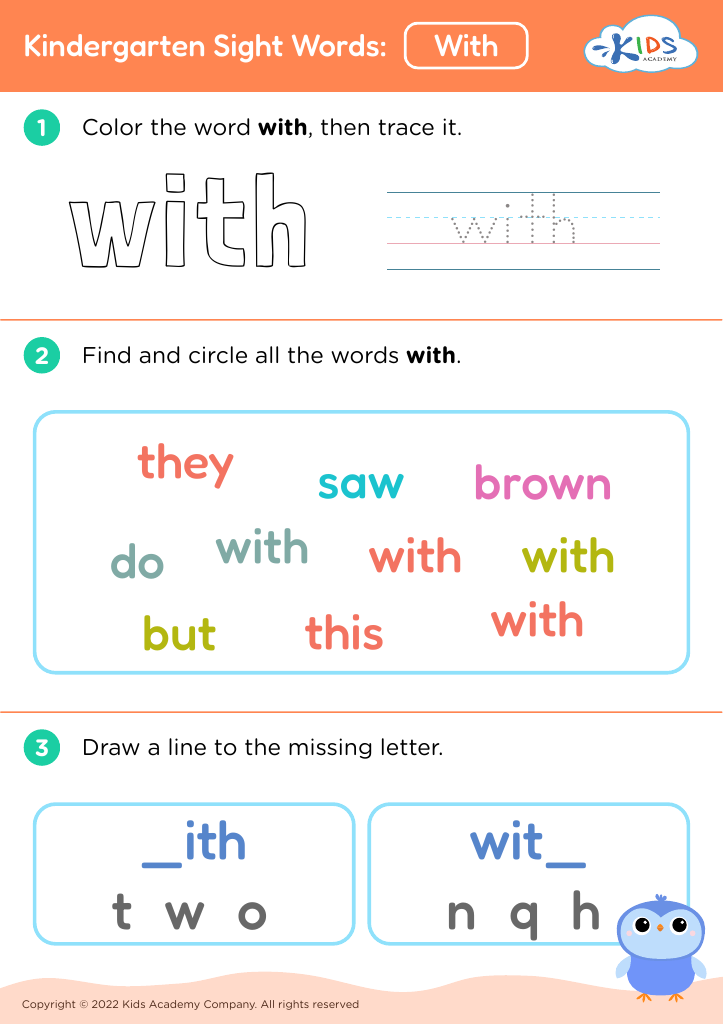
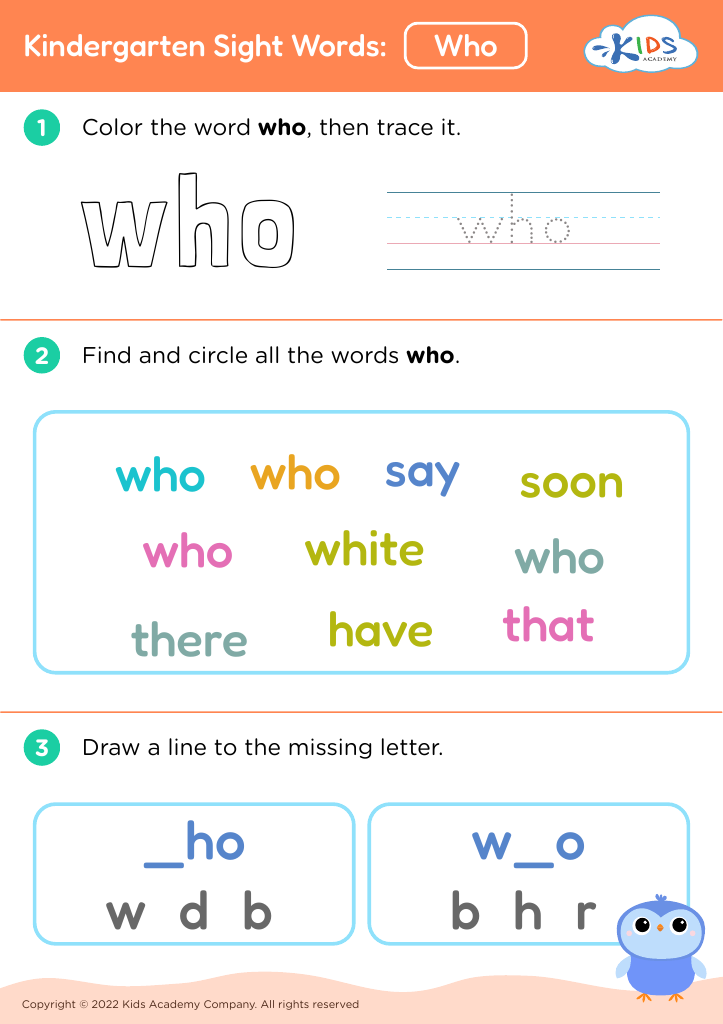
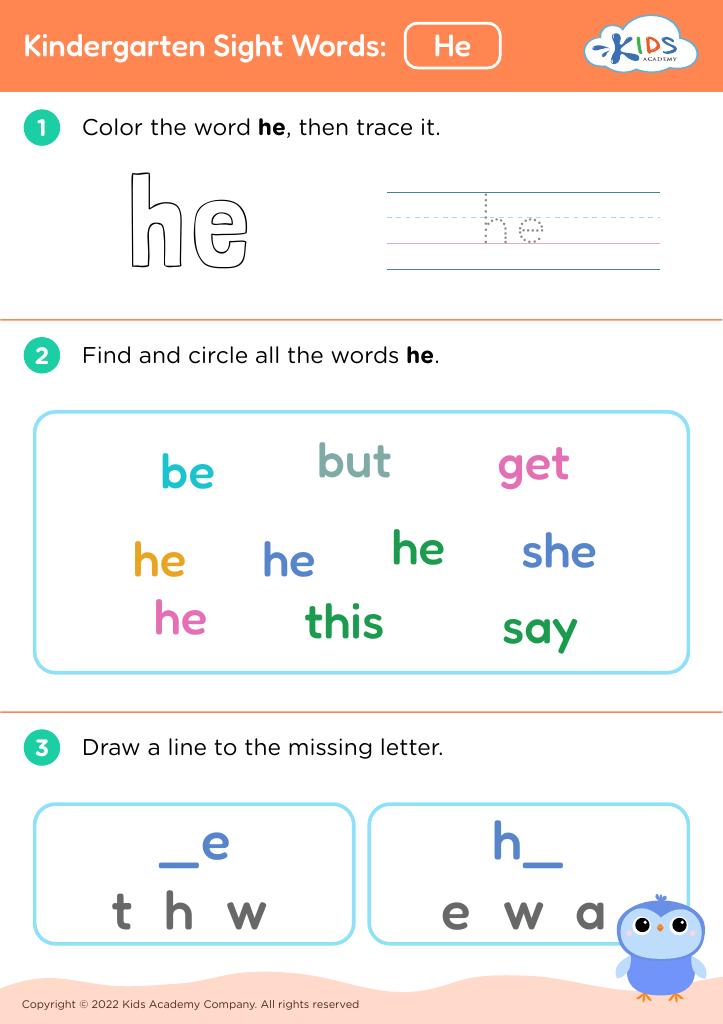
Enhance your child's reading skills with our engaging Building Vocabulary Worksheets designed for ages 5-9. These interactive worksheets are crafted to foster a love for reading while expanding vocabulary through fun activities. Perfect for early learners, each worksheet supports various learning styles, helping children grasp new words and their meanings with ease. From matching exercises to fill-in-the-blank challenges, our resources are tailored to make vocabulary building both educational and enjoyable. Empower your child’s literacy journey today and watch them become confident readers! Explore our collection of worksheets and take the first step toward improving reading skills in a playful way!
Favorites
With answer key
Interactive
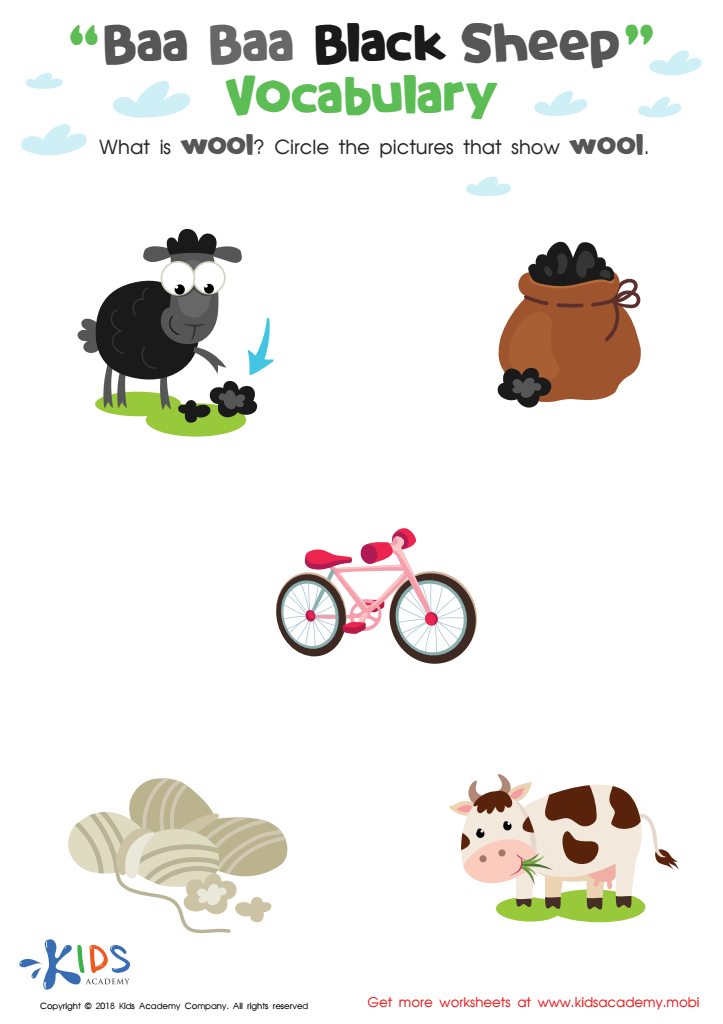
Baa Baa Black Sheep: Vocabulary Worksheet
Exposing readers to various vocab helps their reading abilities grow. This cheery worksheet uses pictures to show what wool is and isn't, helping readers with visual discrimination. Having concrete images for new words is essential for emerging readers, and this is an enjoyable way to strengthen the skill.
 Assign to My Students
Baa Baa Black Sheep: Vocabulary Worksheet
Worksheet











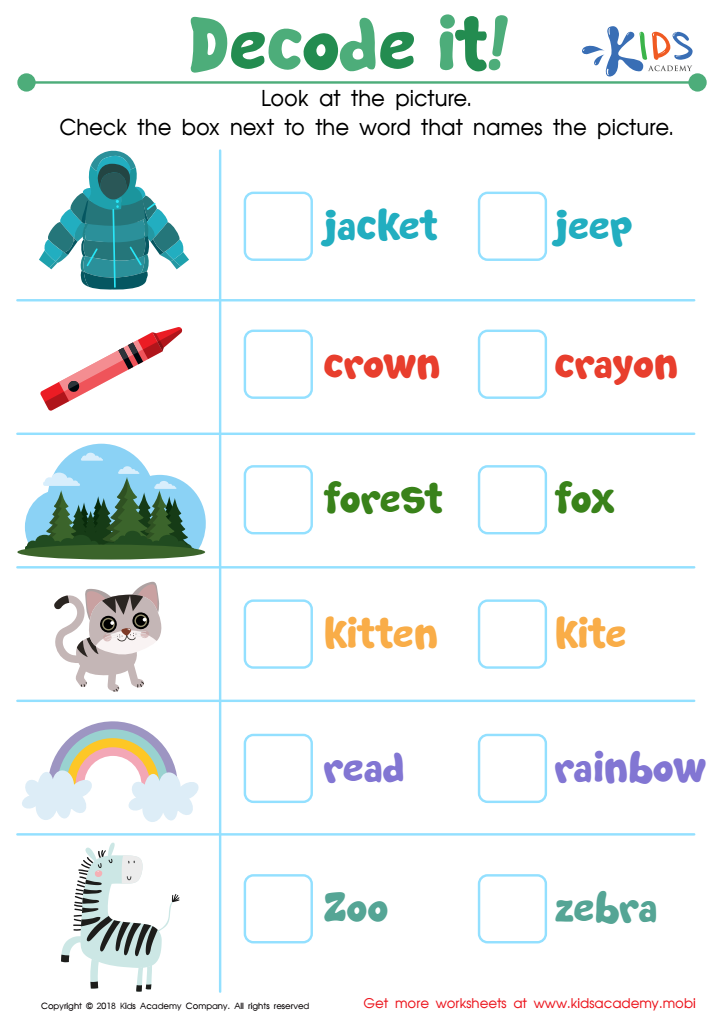
Reading: Decode It Worksheet
Look at the picture and circle the word that names it. This exercise helps kids practice picture cues and decoding words, with the same beginning sound. It builds their fluency and comprehension, giving them the skills to read unfamiliar words.
Reading: Decode It Worksheet
Worksheet
Join Kids Academy for Free
Who is primarily going to use this learning content?








Improving reading skills and building vocabulary in children aged 5-9 is crucial for their overall development. At this stage, children are laying the foundation for their future learning. Strong reading skills promote critical thinking and enhance comprehension across subjects, making it essential for academic success. An expansive vocabulary allows children to express themselves more clearly and understand complex ideas, fostering confidence and communication skills vital for social interactions.
Moreover, vocabulary acquisition enhances a child’s ability to engage with literature, increasing their enthusiasm for reading and learning. Parents and teachers play a pivotal role in this growth by incorporating diverse and rich language experiences through conversations, storytelling, and interactive activities. Early exposure to a variety of words equips children not only to tackle their current curriculum but also to navigate more complex language through subsequent grades, ultimately leading to lifelong literacy skills.
In addition, strong reading and vocabulary skills are closely linked to emotional and social development, as children can better understand and articulate their feelings and thoughts. Therefore, investing time and resources in improving reading skills and vocabulary from ages 5-9 cultivates well-rounded individuals prepared for academic and personal challenges in the future.








