Moral lesson understanding Building Vocabulary Worksheets for Ages 5-9
3 filtered results
-
From - To
Discover our engaging "Moral Lesson Understanding Building Vocabulary Worksheets" designed for children aged 5-9! These interactive worksheets aim to enhance vocabulary while teaching essential moral lessons. Each activity encourages young learners to think critically about character values, empathy, and making positive choices. By exploring relatable scenarios, children will connect new words with moral explorations, reinforcing both comprehension and ethical reasoning. Ideal for classrooms and home learning, our worksheets provide educators and parents with valuable resources to foster discussions about morals while boosting language skills. Help your child develop a strong moral compass and impressive vocabulary with our thoughtfully designed worksheets today!
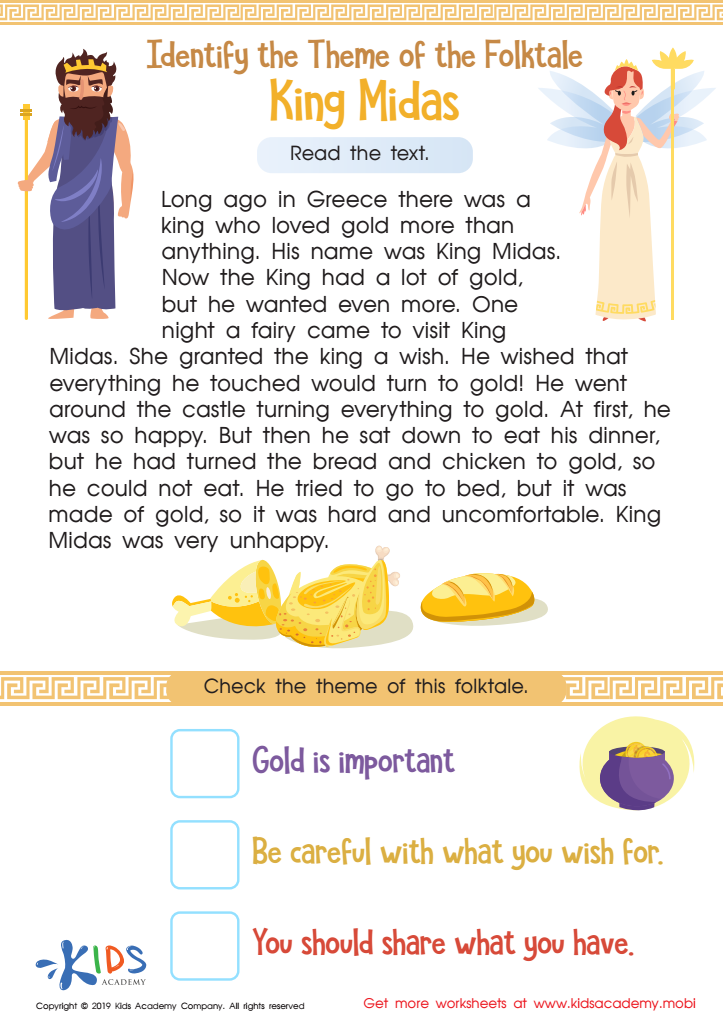
King Midas Worksheet
 Assign to My Students











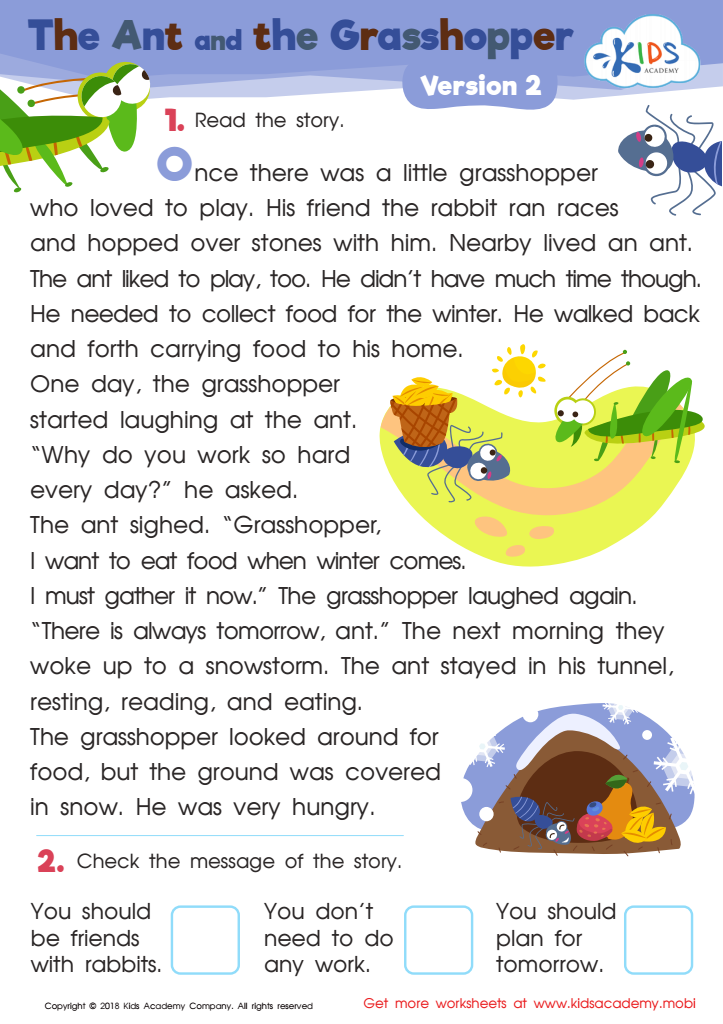
The Ant and The Grasshopper Version 2 Worksheet
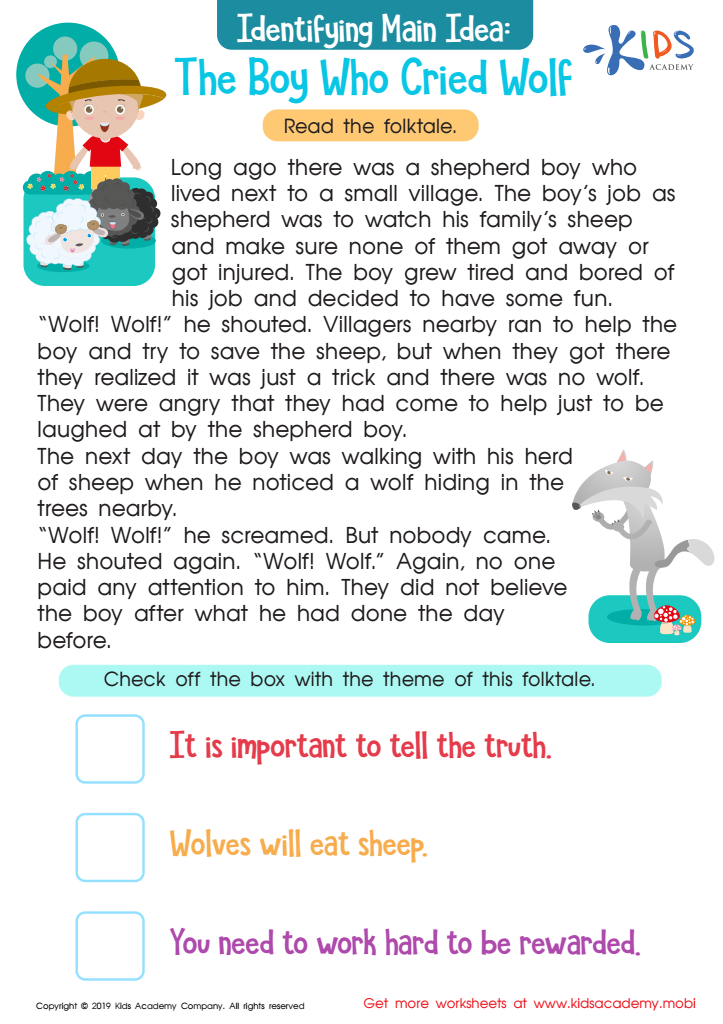
The Boy Who Cried Wolf Part 2 Worksheet


.jpg)




Parents and teachers play a pivotal role in shaping the moral understanding and vocabulary development of children aged 5-9. This age group is crucial for cognitive and emotional growth, where foundational skills are formed. First, teaching moral lessons fosters a sense of right and wrong, helping children develop empathy, compassion, and the ability to make ethical decisions. Instilling strong values during these formative years helps cultivate socially responsible individuals.
Moreover, building vocabulary is equally essential, as it enhances comprehension and communication skills. A rich vocabulary allows children to express their thoughts and feelings effectively, participate in discussions, and understand literature better. The correlation between vocabulary and academic success cannot be overstated; students with a robust lexicon often achieve higher levels of learning and critical thinking.
Integrating moral lessons with vocabulary building creates a holistic learning environment. For example, discussing stories with moral undertones provides an opportunity to introduce new words in context, making lessons more relatable and memorable. Ultimately, prioritizing moral and vocabulary development lays the groundwork for children’s future success, not only in academics but also in social interactions and community involvement. Therefore, it is vital for parents and teachers to invest in these areas for the overall growth of children.








